Enterprise IT spend keeps rising, and a large part of that share is going toward software and end-user devices, along with data centre systems and IT services.
According to Gartner’s latest forecast, global IT spending is expected to reach $6.15 trillion in 2026, which is a 10.8% increase compared to last year. Out of this:
- Software spending is expected to grow to over $1.43 trillion, and
- Device spending is expected to surpass $836 billion
This shows that organizations are spending heavily on software tools and hardware as part of their overall IT growth strategy. Yet many still don’t have complete visibility into their IT environment. They don’t have clear answers to questions like:
- What assets do we own?
- What’s actually deployed?
- What’s being used?
- What assets can we safely retire?
That lack of visibility is getting expensive.
According to AssetSonar’s 2026 State of IT Maturity Report, only 21% of organizations have complete, real-time visibility with automated alerts for gaps. The rest are working with blind spots. On top of that, 46% of teams still depend on disconnected tools and manual updates, which slows down license recovery and cost control.
The financial impact is significant. More than 50% of organizations estimate that 11 to 20 percent of their software licenses are underutilized. That’s a steady drain on IT budgets.
This is why IT Asset Management (ITAM) should be treated as a cost-control function rather than just an inventory tracker.
ITAM is commonly defined as a lifecycle process that ensures IT assets are tracked, deployed, maintained, and eventually retired, using financial, inventory, and contractual data to maximize value and control costs throughout the lifecycle.
From a cost perspective, the biggest leak points are consistent across industries:
- Unused or underused licenses (shelfware, unclaimed seats after employees leave)
- Overbuying or duplicate purchases due to poor visibility into existing stock
- Shadow IT, where teams buy tools outside of IT oversight
- Poor lifecycle discipline, including missing ownership, incomplete records, unknown devices, and weak retirement processes
If your goal is to reduce total IT hardware and software costs, your ITAM platform should be evaluated through a cost lens. IT managers need to look beyond basic asset scanning and focus more on:
- Lifecycle automation
- License visibility and optimization
- Clear procurement and contract tracking
- Audit readiness
In this guide, we compare five leading ITAM solutions that can help reduce the total IT costs, beginning with AssetSonar.
How ITAM software reduces IT hardware and software costs
Eliminating unused software licences
With ITAM tools, you can compare what you’re paying for with what your employees are actually using. Leading ITAM/SAM tooling focuses on reducing spending through software lifecycle automation and enterprise license tracking. When organizations can see unused or rarely used software licenses, they can cancel, reassign, or downgrade them instead of wasting money on renewal.
A good ITAM solution automatically tracks license usage, connects SaaS apps to their contracts, and flags unused seats or duplicate tools.
A company pays for 500 Zoom licenses, but ITAM shows that only 320 people used Zoom in the last 90 days. Instead of renewing all 500, the IT team reduced the renewal to 350, saving thousands annually.
Extending hardware lifecycle
An ITAM solution reduces hardware costs by helping organizations safely extend device use. Instead of replacing laptops or servers too early (or too late), teams can make data-driven decisions based on warranty status, age, and performance.
The goal is simple: replace equipment only when it truly needs to be replaced.
Without an ITAM solution, IT refreshes laptops every 3 years by default. With lifecycle data, they discover that many devices are still healthy at year 4. By extending the refresh cycle by one year, the company delays hundreds of laptop purchases.
Preventing duplicate purchases
Duplicate purchasing often occurs due to disconnected data, especially when teams don’t know what already exists. One department may buy new laptops while others have unused stock, or teams may purchase overlapping SaaS tools.
An ITAM tool helps prevent this by providing a clear view of inventory, ownership, and actual device usage across the organization.
The marketing team requests 25 new laptops. ITAM inventory shows 18 redeployable laptops sitting in storage from recent offboarding. It reassigns those devices and buys only 7 new ones.
Improving procurement visibility
ITAM platforms connect procurement data with asset and usage data, so IT and finance can clearly answer basic cost questions like:
- What did we buy?
- Who is using it?
- What will renew soon?
- What can be retired or reassigned?
This eliminates guesswork and prevents surprise renewals.
Finance asks which SaaS contracts are about to renew next quarter. Instead of checking spreadsheets across teams, an ITAM tool shows all upcoming renewals in a single dashboard, allowing the team to cancel low-usage tools before they auto-renew.
Supporting audit readiness and compliance
Software audits and compliance failures are expensive. ITAM tools reduce this risk by keeping a clean record of licenses, assets, and changes over time.
When everything is tracked automatically, companies avoid panic purchases, true-up penalties, and weeks of manual audit prep.
A software vendor initiates a license audit. Because the company uses an ITAM tool with automated usage tracking and audit logs, the IT team produces accurate records in hours instead of scrambling for weeks, avoiding an unnecessary true-up payment.
Best ITAM solutions to reduce IT costs
AssetSonar: Best overall ITAM solution for cost optimization
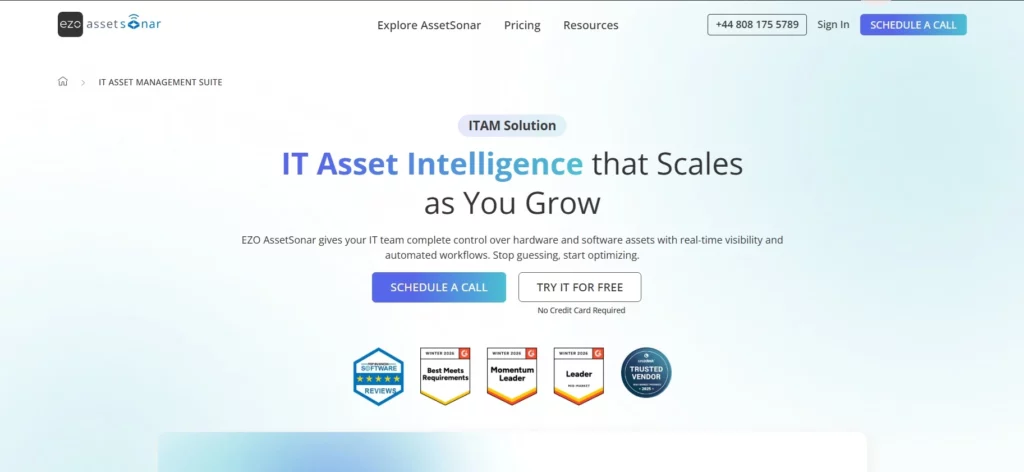
AssetSonar is positioned as an IT asset management platform that centralizes hardware and software tracking, supports end-to-end lifecycle management, and offers modules such as depreciation, purchase orders, contracts, and audits that tie directly to cost outcomes.
Key features
- Hardware and software asset tracking, including software licence compliance tracking.
- IT asset lifecycle management from procurement to retirement.
- CMDB-style dependency visibility (“AssetSonar CMDB”).
- Built-in IT service management (ITSM) capabilities for ticketing and service workflows, helping keep asset data aligned with real support activity.
- Workflow automation for onboarding, offboarding, licence reclamation, and asset state changes to reduce manual effort and improve cost control.
- Patch and vulnerability management to help teams maintain device health, reduce security risk, and support compliance efforts.
- Depreciation management to help with retirement decisions.
- Purchase orders, vendor/procurement cost tracking, and contract visibility in the same system.
- Scan-based audits for transparency and accountability.
- Broad integration coverage across discovery/MDM tools, identity systems, SaaS tools, service desks, procurement sources, and warranty feeds (with “point-and-click” connector positioning).
- Software discovery that explicitly highlights visibility into shadow IT and unused tools (e.g., “Chrome Browser Tracking”).
Why AssetSonar stands out for cost reduction
AssetSonar stands out because it goes beyond basic network discovery and inventory. Many tools can tell you what devices exist, but AssetSonar focuses on helping IT teams control and optimize actual spend across hardware and software.
The AssetSonar ITAM platform connects key cost drivers in one system, including:
- Purchase orders and vendors
- Software licenses
- Hardware lifecycle and depreciation
- Asset custody and ownership
- Warranties and maintenance
- Audit trails and compliance data
- Workflow automation through integrations
This matters because cost savings rarely come from visibility alone. They come from being able to take action on accurate, connected data, whether that means reclaiming licenses, redeploying devices, or preventing unnecessary purchases.
AssetSonar also places strong emphasis on integrations to unify hardware, software, identity, and service workflows. By reducing manual reconciliation between tools, IT teams can maintain cleaner data, automate routine tasks, and improve compliance posture, areas where many ITAM initiatives typically burn time and lose trust.
Pros
- Balanced coverage across cost drivers
AssetSonar connects procurement, asset lifecycle, license management, and audit readiness in one platform, helping teams manage spend end-to-end rather than in silos.
- Strong hardware and software tracking
The platform provides real-time visibility into both physical assets and software usage, supporting better renewal decisions and device redeployment.
- Broad integration ecosystem
AssetSonar integrates with common MDM/UEM tools, identity providers, service desks, and discovery sources, enabling automated data sync and workflow orchestration.
- Fast time to value
Compared with heavier enterprise ITAM tools, AssetSonar is widely recognized for relatively quick deployment and easier onboarding for mid-market and enterprise teams.
- Automation-driven lifecycle management
Built-in workflows help teams automate onboarding, offboarding, license reclamation, and asset state changes, reducing manual effort.
- Strong custody and ownership tracking
User-to-asset mapping improves accountability and helps prevent asset loss, duplicate purchases, and shadow IT risk.
- Clean, user-friendly interface (frequent review-site feedback)
Users commonly highlight ease of use, intuitive reporting, and straightforward navigation compared to more complex ITAM suites.
- Good fit for hybrid environments
- Supports tracking across on-prem, remote, and cloud-connected assets, which is critical for modern distributed workforces.
Potential considerations
If your primary requirement is highly complex, publisher-specific license modeling (for example, advanced Oracle, SAP, or IBM sub-capacity licensing scenarios), you should validate whether you need a more SAM-specialized enterprise platform built specifically for deep license entitlement modeling and vendor audit defense.
AssetSonar is strongest for practical cost visibility and operational control, rather than the most niche, high-complexity licensing edge cases.
Best for
AssetSonar is best for mid-size to enterprise IT teams that prioritize cost control and quick ROI. It is also a better option for IT teams that are looking for unified hardware and software visibility. Organizations struggling with tool sprawl and manual reconciliation can also benefit from this ITAM solution. On the other hand, IT groups that want strong automation without heavy ITAM overhead can also use AssetSonar.
In short, AssetSonar works especially well when cost savings depend on connecting procurement, lifecycle, and service workflows through strong integrations and automation.
InvGate Asset Management: Best for lifecycle and CMDB visibility with a simple operational feel
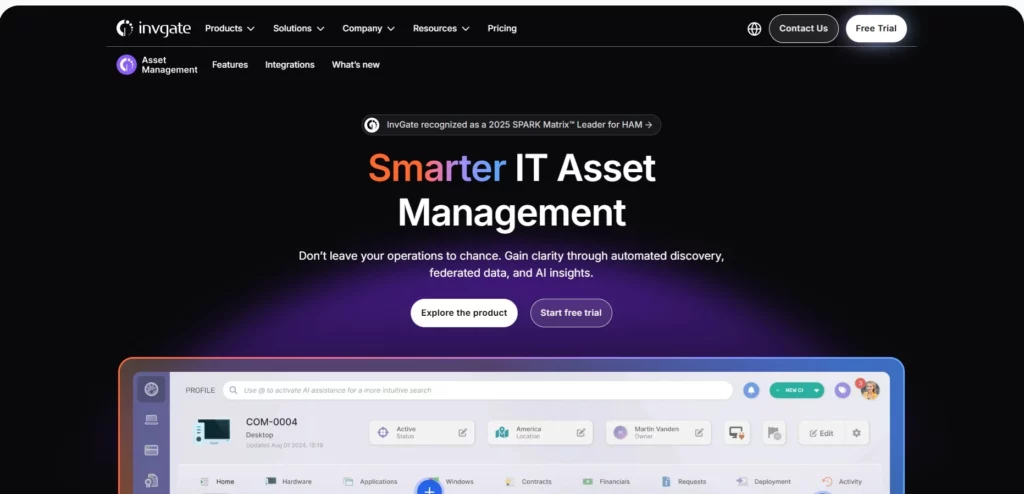
InvGate Asset Management helps IT teams discover, track, and manage hardware and software across their environment. It combines asset inventory, CMDB visibility, license tracking, and vendor information into a single platform, so teams can understand what they own, how it’s used, and where they may be overspending.
Key features (cost-focused)
- Asset discovery and inventory to build a reliable source of truth across physical, virtual, and cloud assets.
- CMDB-style infrastructure mapping to understand relationships between assets and reduce risk from unknown or unmanaged devices.
- Software license management and software metering to identify underused applications and reclaim unnecessary licenses.
- IT financial and vendor visibility to track suppliers, contracts, and costs tied to IT assets.
- Automation tools that reduce manual updates and help keep asset records accurate.
- Integration with service management tools so asset data connects directly with IT service workflows.
- Evaluation access through a 30-day free trial, allowing teams to test the platform before adopting it.
Why InvGate stands out for cost reduction
InvGate takes a practical approach to IT asset management. Instead of focusing solely on discovery, it integrates several cost-related areas into a single system. Teams can move from identifying assets to understanding their relationships, tracking software usage, managing vendors, and automating routine updates.
This combination helps IT managers make better decisions about renewals, device replacements, and vendor spending without turning ITAM into a complex, consultant-heavy project.
Pros
- Easy-to-use interface
Many users highlight that InvGate is intuitive and quick to learn, which helps teams adopt it faster. - Strong asset and CMDB visibility
The platform helps IT teams understand how infrastructure components relate to one another, thereby improving operational awareness. - Useful software metering capabilities
License usage insights help organizations identify underused tools and reduce unnecessary renewals. - Good alignment with IT service workflows
Integrations with service management tools help link asset data with support and operational processes.
Potential considerations
Some reviewers note limitations in certain operational capabilities, including expectations for remote software deployment. Organizations should confirm during evaluation that the platform supports their specific workflow requirements.
Best for
InvGate Asset Management is best suited for organizations that want to reduce IT costs by combining asset inventory, CMDB visibility, license usage insights, and vendor tracking. It works especially well for IT teams looking for a straightforward ITAM solution that integrates easily with service management workflows and can be deployed without heavy implementation effort.
Axonius: Best for unified asset visibility across IT, security, and SaaS environments
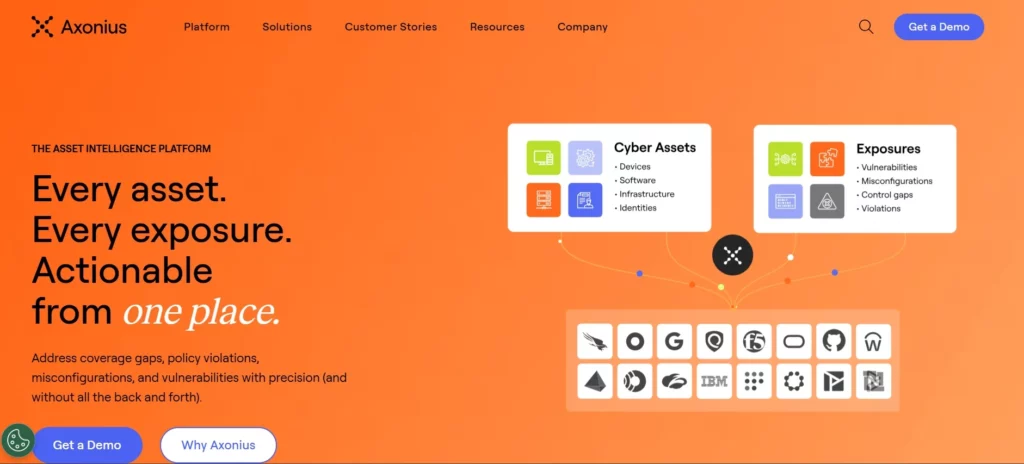
Axonius is designed to give organizations a single view of all assets across their technology environment. It integrates with many existing tools (such as security, IT, identity, and cloud systems) to collect asset data and highlight visibility gaps.
The platform focuses heavily on asset discovery, normalization, and security posture management. By identifying unmanaged devices, unused accounts, and software sprawl, Axonius helps organizations reduce risk and uncover hidden IT costs.
Key features (cost-focused)
- Unified asset inventory that aggregates asset data from hundreds of IT and security tools.
- Continuous asset discovery across endpoints, cloud services, SaaS apps, and identity systems.
- Asset correlation and normalization to create a consistent view of devices, users, and applications.
- Security posture visibility to identify unmanaged devices or risky configurations.
- Policy automation that triggers actions when asset conditions change.
- Extensive integrations with security, IT management, cloud, and identity platforms.
Why Axonius stands out for cost reduction
Axonius helps organizations reduce costs by improving visibility across disconnected systems. Many IT environments store asset data across dozens of tools, making it difficult to understand what actually exists.
By aggregating this information into a single platform, Axonius helps IT teams identify unused assets, duplicate systems, and unmanaged devices that may lead to unnecessary spending or security risks.
This visibility can help organizations make better purchasing decisions and reduce tool sprawl.
Pros
- Very strong asset visibility across multiple systems
Axonius is widely recognized for connecting data from many existing IT and security tools. - Large integration ecosystem
The platform supports hundreds of integrations across IT, security, identity, and cloud platforms. - Helpful for security-driven IT environments
Many organizations use Axonius to improve both asset visibility and cybersecurity posture.
Potential considerations
Axonius focuses strongly on discovery and visibility. Organizations that require deeper IT asset lifecycle management (such as procurement workflows, depreciation tracking, or contract management) may need additional systems alongside it.
Best for
Axonius is best suited for organizations looking to improve asset visibility across multiple existing IT and security tools. It works particularly well for enterprises focused on discovering unmanaged assets, reducing tool sprawl, and gaining a unified view of devices, users, and applications.
Torii: Best for managing SaaS applications and reducing SaaS waste
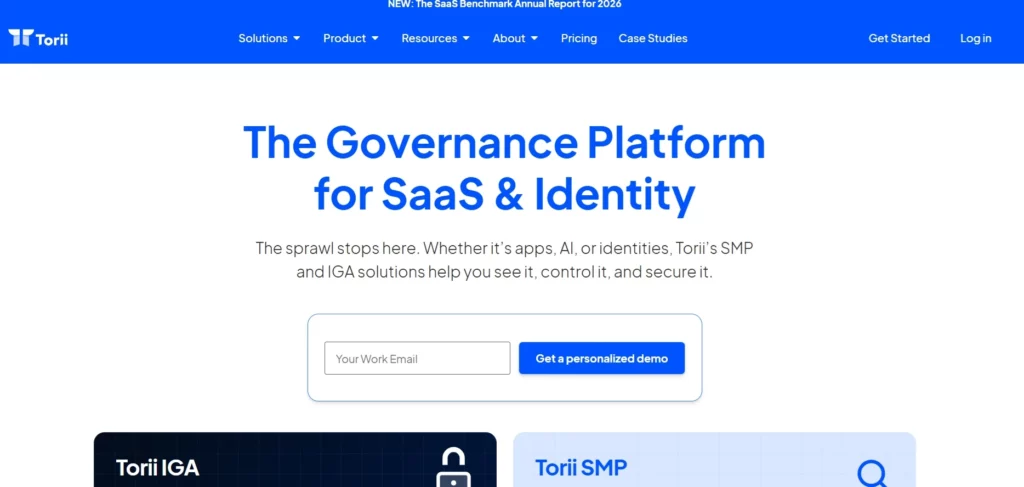
Torii is a SaaS management platform designed to help organizations control their growing SaaS environments. Instead of focusing on hardware devices, Torii focuses primarily on SaaS applications, licenses, and user access.
As companies adopt dozens or even hundreds of SaaS tools, costs often increase quickly due to unused licenses, duplicate apps, and shadow IT. Torii helps IT teams gain visibility into these applications and optimize spending.
Key features (cost-focused)
- SaaS application discovery to identify all apps used across the organization.
- License usage monitoring to detect inactive or underused subscriptions.
- Automated user lifecycle workflows for onboarding and offboarding.
- SaaS cost visibility dashboards showing application spend across teams.
- Access and permission management to control who uses which tools.
- Integration with identity providers and HR systems to automate account management.
Why Torii stands out for cost reduction
Torii focuses specifically on SaaS cost optimization, which has become one of the fastest-growing areas of IT spending.
Many organizations discover dozens of unmanaged SaaS tools after implementing a SaaS management platform. By identifying inactive accounts and redundant applications, Torii helps organizations eliminate unnecessary subscriptions and reduce renewal costs.
This is particularly valuable for companies with distributed teams and high SaaS adoption.
Pros
- Strong SaaS visibility
Helps IT teams understand which SaaS applications are actually being used. - Useful license utilization insights
Identifies unused accounts and opportunities to reduce subscription costs. - Automation for employee onboarding and offboarding
Helps reclaim SaaS licenses automatically when employees leave.
Potential considerations
Torii focuses mainly on SaaS management rather than full IT asset management. Organizations that need deep hardware lifecycle management, device inventory, or procurement workflows may require additional tools.
Best for
Torii is best suited for organizations that want to control SaaS spending and reduce license waste. It works particularly well for companies with many SaaS applications and distributed teams where shadow IT and unused subscriptions are common.
Device42: Best for infrastructure visibility and data center asset management
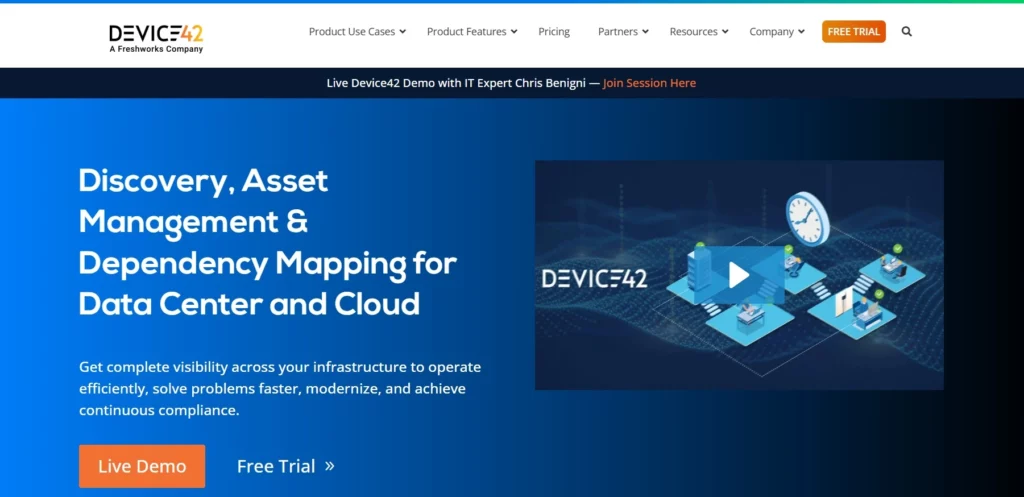
Device42 focuses on infrastructure discovery and data center asset management. The platform is designed to help organizations track servers, network devices, cloud resources, and application dependencies.
It is commonly used in environments where infrastructure visibility and dependency mapping are critical, such as data centers and hybrid cloud environments.
Key features (cost-focused)
- Automated infrastructure discovery for servers, network devices, and virtual machines.
- Dependency mapping that shows how applications and infrastructure components are connected.
- Detailed asset inventory for hardware, software, and infrastructure resources.
- Data center asset tracking, including racks, power, and hardware relationships.
- IP address management and network discovery tools.
- Integration with ITSM and automation platforms.
Why Device42 stands out for cost reduction
Device42 helps organizations reduce costs by improving visibility into infrastructure environments. In many data centers, organizations lose track of unused servers, orphaned virtual machines, and outdated hardware.
By mapping dependencies and maintaining an accurate infrastructure inventory, Device42 helps teams identify unused resources and optimize infrastructure planning.
This can reduce unnecessary hardware purchases and improve data center efficiency.
Pros
- Strong infrastructure discovery capabilities
Provides detailed visibility into servers, network devices, and infrastructure assets. - Dependency mapping features
Helps teams understand how applications rely on underlying infrastructure. - Useful for data center and hybrid cloud environments
Supports environments with high infrastructure complexity.
Potential considerations
Device42 focuses heavily on infrastructure and data center visibility. Organizations primarily looking for end-user device management, SaaS license optimization, or procurement workflows may need additional ITAM tools.
Best for
Device42 is best suited for organizations that need strong infrastructure discovery and dependency mapping. It works especially well for data center environments where visibility into servers, networks, and application dependencies is critical for capacity planning and cost control.
How to choose the right ITAM solution for cost reduction
1. Evaluate your asset complexity
Start by understanding how complex your IT environment really is. The more complex your infrastructure, the more advanced your ITAM tool needs to be.
- If you manage hybrid cloud, complex licensing (such as Oracle or SAP), and frequent audits, you may need a more robust enterprise ITAM/SAM platform built for deep license modeling and audit defense.
- If your environment is mostly endpoints (laptops, mobile devices, remote users) that change frequently, prioritize tools that focus on continuous discovery and on maintaining a reliable single source of truth.
A global enterprise running Oracle, SAP, and multi-cloud workloads chooses a SAM-heavy platform to manage complex licensing rules. Meanwhile, a fast-growing SaaS company with thousands of laptops selects a discovery-first ITAM tool to keep endpoint inventory accurate and prevent duplicate purchases.
2. Prioritize license visibility
Many cost-reduction efforts fail because organizations can’t clearly reconcile their license position. You should choose an ITAM solution that makes it easy to see:
- What you bought (entitlements)
- What is installed
- What is actually being used
Look for tools that highlight underused licenses, SaaS usage trends, warranty status, and upcoming renewals; these are the metrics that directly drive savings.
During evaluation, an IT team asks vendors to show a report of unused Microsoft 365 licenses. One tool only shows installations, while another shows entitlement vs usage vs cost. The team selects the second tool because it clearly identifies reclaimable licenses and potential savings.
3. Consider integration requirements
Cost-focused ITAM only works when your data is connected. In most organizations, the real source of truth is spread across multiple systems such as MDM tools, identity providers, service desks, procurement systems, and SaaS platforms. Your ITAM solution should integrate with these systems so that asset data stays accurate without constant manual updates.
When evaluating vendors:
- AssetSonar emphasizes creating a single connected view across discovery tools, identity systems, SaaS applications, procurement platforms, and service desks. Its integrations are designed to help IT teams quickly connect data sources and automate asset workflows.
- InvGate Asset Management integrates closely with service management platforms, helping organizations link asset records with support tickets and operational processes. This connection improves lifecycle tracking and helps keep asset data aligned with day-to-day IT operations.
- Axonius focuses on connecting to a large ecosystem of IT and security tools. It aggregates asset data from these sources to create a unified inventory, helping organizations identify unmanaged devices, duplicate assets, and visibility gaps.
- Torii integrates with identity providers, HR systems, and SaaS applications to track application usage and automate account lifecycle processes. These integrations help organizations manage SaaS subscriptions and reduce unused licenses.
- Device42 integrates with infrastructure management tools, ITSM platforms, and automation systems. Its integrations help organizations maintain accurate infrastructure inventory and understand relationships between servers, applications, and network devices.
The key question during evaluation is simple: How easily will this tool connect to the systems we already use?
For example, an IT team might discover that license data lives in one tool, device data in another, and procurement data in spreadsheets. By choosing an ITAM platform with native integrations to their MDM and service desk, they ensure asset records stay automatically synced instead of being manually updated across multiple systems.
4. Balance deployment speed vs depth
Enterprise ITAM platforms can provide very deep governance, but they often require longer implementations and ongoing data maintenance.
If your main goal is near-term cost savings, prioritize tools that deliver value quickly, including:
- Fast discovery and inventory linking
- Practical lifecycle workflows
- Built-in reports that highlight savings opportunities
Heavier platforms may make sense if you have very complex compliance needs, but they can delay time-to-value.
A mid-market company evaluates two tools. One requires a 6–9 month implementation; the other can start showing unused licenses within weeks. Because leadership wants savings this quarter, they chose the faster-to-deploy platform.
5. Look for automation and reporting that drive action
The real purpose of ITAM for cost reduction is not just visibility; it’s automatic action. The best tools help you:
- Reclaim unused licenses
- Reassign idle devices
- Retire ageing assets at the right time
- Avoid surprise audit true-ups
Here are the key signals that you need to validate during evaluation:
- Lifecycle alerts (arrival, warranty expiry, end of life, lease end)
- Dashboards focused on cost and contract exposure
- Automation tied to service workflows so data stays accurate
An ITAM platform automatically flags laptops that haven’t checked in for 30 days and creates a service ticket for investigation. The IT team recovers dozens of unused devices each quarter and redeploys them instead of buying new hardware.
Why do many ITAM tools fail to reduce costs
Many ITAM projects don’t fail because the tool can’t discover devices. They fail because the organization never moves from basic inventory to active cost control.
In other words, knowing what you have is helpful, but savings only happen when you manage the full asset lifecycle and take action on the data.
Below are the most common reasons ITAM tools fail to deliver real cost reduction.
Inventory without lifecycle control
Some ITAM tools mainly focus on scanning the network and listing assets. But true IT asset management covers the entire lifecycle:
- Planning
- Procurement
- Deployment
- Maintenance
- Refresh
- Retirement and disposal
If your tool only tells you “what exists,” you miss most of the opportunities to save money.
Your ITAM tool shows you own 1,000 laptops. But it doesn’t track warranties, age, or redeployment opportunities. As a result, IT replaces devices on a fixed schedule instead of extending the life of healthy devices, increasing hardware spend unnecessarily.
Poor ownership mapping and low-trust data
Even good data is useless if teams don’t trust it.
When asset records are incomplete or scattered across silos, IT teams spend time fixing data rather than acting on it. Low trust leads to hesitation, and hesitation kills cost optimization.
Modern ITAM approaches emphasize a single, reliable source of truth to reduce this friction.
The ITAM tool says 200 Microsoft 365 licenses are unused, but managers don’t trust the report because user mapping is inconsistent. The team renews all licenses “just to be safe,” thereby losing the savings opportunity.
Lack of automation
Manual ITAM processes rarely hold up in busy environments. When tasks like renewals, license reclamation, and refresh planning rely on spreadsheets or human memory, cost control becomes inconsistent.
Automation is what turns visibility into repeatable savings.
Offboarding is handled manually. When employees leave, their SaaS licenses are sometimes reclaimed, but often missed during busy periods. Over time, hundreds of unused licenses continue to renew automatically.
Weak license governance
Software and SaaS spend is now one of the largest parts of the IT budget. Without strong license governance, meaning clear tracking of entitlements, usage, and renewals, waste and audit risk quickly grow.
Industry research consistently shows:
- Rising SaaS waste
- Increasing audit exposure
- Difficulty proving license compliance
Without governance, cost optimization efforts stall.
A company uses 120 SaaS tools, but no one tracks overlap between products. Multiple teams buy similar tools, and the organization pays for duplicate functionality year after year.
Slow time to value
Some enterprise ITAM platforms are powerful but heavy to implement and maintain. If setup takes too long or requires constant manual data work, organizations often lose momentum before savings appear.
The reality: if your team can’t sustain the operational effort, the expected ROI may never materialize.
An enterprise tool takes 9 months to fully configure. During that time, leadership sees no visible savings and deprioritizes the project, leaving the ITAM initiative underutilized.
This is where the AssetSonar ITAM platform can be compelling for cost-focused teams.
Instead of stopping at inventory, AssetSonar connects multiple cost-control surfaces in one system, including:
- Purchase orders and vendors
- Contracts and renewals
- Depreciation and lifecycle timing
- Audits and compliance tracking
- automated flags for unused licenses, duplicate tools, and idle devices
- Broad integrations that keep data continuously in sync
By combining lifecycle visibility with automation and integrations, the platform is designed to help teams act on cost data rather than just report on it.
Conclusion
IT costs continue to rise, especially across software subscriptions and end-user devices, so effective cost control now depends more on execution than intent. Most organizations already know waste exists; the challenge is to consistently identify and act on it.
Visibility is the foundation. You can’t eliminate waste you can’t see, and industry research shows many organizations still lack a complete, trusted view of their hardware, software, and SaaS usage.
Automation is what turns that visibility into real savings. When ITAM workflows automatically reclaim unused licenses, reallocate idle devices, optimize refresh timing, and surface audit risks early, cost optimization becomes repeatable instead of reactive.
Organizations that combine accurate asset visibility with strong lifecycle automation are the ones most likely to reduce total IT hardware and software spend in a measurable, sustainable way.