



The Problem Isn’t Tickets. It’s Everything Behind Them.
AssetSonar runs IT service management in a real operational context.
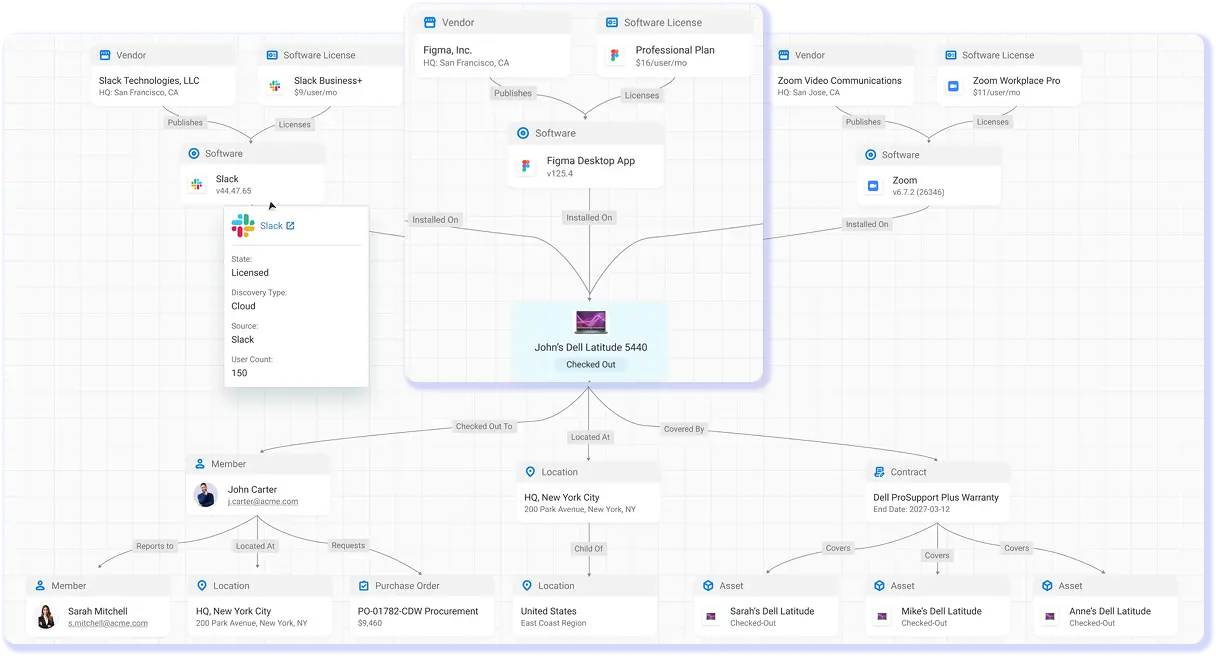
Every ticket, approval, and workflow is powered by a unified IT Graph of users, devices, software, and licenses, so work executes with complete visibility from the start.
SysAid takes a more traditional approach, delivering structured, AI-powered ITSM. But when asset, software, and lifecycle data sit outside the workflow, execution often depends on manual lookup, configuration, or coordination.
That’s the difference between running an IT operation and managing service processes.
Trusted by Teams Running Modern Operations


AssetSonar vs SysAid: Head-to-Head Comparison
Product Comparison
|
Table Header
|
||
|---|---|---|
|
Incident Ticketing |
✔ |
✔ |
|
Service Catalog & Request |
✔ |
✔ |
|
Knowledge Base |
✔ |
✔ |
|
SLA Dashbaord & Escalations |
✔ |
✔ |
|
Workflow Automations |
✔ Execution-focused |
✔ ITSM-centric |
|
Rule-Based Approval Workflows in Service Requests |
✔ |
✔ |
|
Teams/Slack Ticket Intake |
✔ |
✔ |
|
Change Management |
✔ |
✔ |
|
Problem Management |
✔ |
✔ |
|
Release Management |
❌ |
✔ |
|
CMDB/CI Relationships |
✔ Robust Unified IT Graph |
✔ |
|
Real-Time Asset Context in Tickets |
✔ Native & real-time |
⚠️ Via CMDB |
|
Asset Lifecycle Tracking |
✔ Full lifecycle |
⚠️ Limited depth |
|
Hardware Discovery |
✔ Continuous & normalized |
✔ WMI, SNMP, agent-based |
|
Software License Tracking |
✔ |
✔ |
|
SaaS Visibility |
✔ |
✔ |
|
Software Usage Metering |
✔ |
⚠️ Limited |
|
Shadow IT Visibility |
✔ |
⚠️ Limited |
|
AI Capabilities |
✔ Context-aware |
✔ Copilot & AI agents |
|
API + Integrations |
✔ |
✔ |
|
Table Header
|
|
|---|---|
|
Incident Ticketing |
|
|
✔ |
✔ |
|
Service Catalog & Request |
|
|
✔ |
✔ |
|
Knowledge Base |
|
|
✔ |
✔ |
|
SLA Dashboard & Escalations |
|
|
✔ |
✔ |
|
Workflow Automations |
|
|
✔ |
✔ |
|
Rule-based Approval Workflows in Service Requests |
|
|
✔ |
✔ |
|
Teams/Slack Ticket Intake |
|
|
✔ |
✔ |
|
Change Management |
|
|
✔ |
✔ |
|
Problem Management |
|
|
✔ |
✔ |
|
Release Management |
|
|
❌ |
✔ |
|
CMDB/CI Relationships |
|
|
✔ |
✔ |
|
Real-Time Asset Context in Tickets |
|
|
✔ |
⚠️ |
|
Asset Lifecycle Tracking |
|
|
✔ |
⚠️ |
|
Hardware Discovery |
|
|
✔ |
✔ |
|
Software License Tracking |
|
|
✔ |
✔ |
|
SaaS Visibility |
|
|
✔ |
✔ |
|
Software Usage Metering |
|
|
✔ |
⚠️ |
|
Shadow IT Visibility |
|
|
✔ |
⚠️ |
|
AI Capabilities |
|
|
✔ |
✔ |
|
API + Integrations |
|
|
✔ |
✔ |
Legend:
✔ = Explicitly offered
❌ = No clear public evidence
⚠️ = Supported but dependent on configuration, integrations, or narrower scope
Why AssetSonar?
AssetSonar is built to solve what most ITSM platforms don’t: execution.
It runs service on a unified IT Graph of users, devices, software, and lifecycle—so every ticket, approval, and workflow operates with real-time context from the start.
Because the problem isn’t missing features. It’s missing operational truth. Service workflows run, but asset context is incomplete, software visibility is fragmented, and lifecycle data isn’t connected.
SysAid takes a more traditional approach by delivering practical ITSM breadth with automation, self-service, and AI in a more approachable platform. It helps manage service processes only.
If your priority is execution, visibility, and control powered by asset truth, AssetSonar is built for how IT actually runs.
What We Bring to the Table
Service That Runs on Asset Truth
SysAid offers asset discovery and CMDB, giving teams visibility into infrastructure and linking assets to service workflows.
AssetSonar takes a different approach. It makes the asset and software context the foundation of service. Every ticket, request, and workflow runs on a unified IT Graph of users, devices, software, licenses, and lifecycle state, so context isn’t something you look up; it’s already there. No chasing ownership. No reconciling data. No guessing what changed.
SysAid helps you see your environment. AssetSonar helps you run it.
Automation That Executes Work, not Just Moves Tickets
SysAid offers strong workflow automation from routing and escalation rules to templates, dependencies, and AI-assisted actions across tickets.
AssetSonar changes what automation actually does. Instead of triggering actions based only on ticket conditions, automation runs on real operational context—ownership, license state, lifecycle stage, and asset relationships.
While SysAid helps automate workflows, AssetSonar helps complete them. Provision access, enforce entitlements, trigger lifecycle actions, and recover assets and licenses. Workflows don’t just move tickets forward; they execute the work behind them.
Software Governance and Lifecycle Control
Customer Testimonials
Proven by users, Recognized by G2
Turn Tickets Into Outcomes
Frequently Asked Questions
SysAid is a solid ITSM platform for teams that want structured service management with automation, self-service, and asset visibility. It’s often chosen as a more approachable alternative to heavier enterprise tools.
That said, user feedback is mixed. Some teams find it effective, while others report challenges with setup effort, UI experience, and long-term maintenance, especially as workflows become more complex.
In practice, SysAid works best when you’re focused on managing service processes.
AssetSonar takes a different approach by connecting service with real asset, software, and lifecycle context—so workflows don’t just run, they execute.
👉 SysAid helps you manage service. AssetSonar helps you run IT operations.
So the question isn’t really “Is SysAid good?” It’s: “Do you want to manage service workflows or actually execute IT operations?”
SysAid isn’t necessarily difficult to set up, but it’s not plug-and-play. Getting full value typically requires configuring workflows, templates, and integrations to match your processes.
Many teams find that setup and ongoing maintenance depend heavily on internal expertise and how well the system is configured. As workflows grow more complex, so does the effort needed to manage and optimize them.
In practice, SysAid offers flexibility but with higher configuration overhead.
AssetSonar takes a more structured approach by unifying asset, software, and service data from the start, reducing the need for heavy setup.
👉 SysAid requires configuration. AssetSonar reduces it.
SysAid’s UI is functional and has improved in recent updates, but feedback is mixed. Some teams find it easy to use, while others describe it as dated or less intuitive, especially as workflows and configurations become more complex.
In practice, usability often depends on how much the system has been customized and how comfortable teams are navigating multiple layers of configuration.
So while it gets the job done, it may not feel as modern or streamlined as newer platforms.
AssetSonar takes a different approach by simplifying workflows and embedding context directly into tickets, reducing the need to navigate across screens.
👉 SysAid works. AssetSonar makes it easier to work.
SysAid is generally reliable for core ITSM use cases, but performance can vary depending on deployment, configuration, and scale.
Some teams report lag, slower load times, or occasional instability, especially in more complex environments or heavily customized setups. As workflows and integrations grow, maintaining consistent performance can require ongoing tuning and system management.
So while SysAid works well out of the box, performance isn’t always consistent as complexity increases.
AssetSonar takes a different approach by reducing dependence on layered configurations and disconnected systems, helping workflows run more consistently as you scale.
👉 SysAid performs well, but may need tuning. AssetSonar is built for consistent execution.
SysAid supports email-to-ticket conversion, routing, and notifications, making it a reliable intake channel for basic service workflows. But as needs grow, teams can run into limits in flexibility, delays (due to polling), and control over processing rules.
AssetSonar takes a different approach.
While it supports email intake, it doesn’t rely on email as the backbone of service. Instead, it offers multi-channel request intake from email, Slack, Teams, etc., plus workflows run on connected asset, user, and software context, so requests don’t depend on inbox parsing or delayed triggers.
SysAid leans on email to drive workflows. AssetSonar uses context to execute them.
SysAid provides solid escalation rules based on SLAs, time triggers, and ticket conditions. This is effective for routing and prioritizing tickets across teams.
AssetSonar goes a step further for multi-site environments.
Escalations aren’t just about moving tickets. They can act on real context like asset ownership, location, license state, and lifecycle. That means actions like reassignment, access changes, or asset recovery can be triggered automatically across sites.
SysAid manages escalation flow. AssetSonar ties escalation to real operational execution.
Several enterprise ITSM platforms offer asset lifecycle tracking comparable to SysAid. These platforms combine ITSM with asset management, allowing teams to track assets from procurement to retirement, often through CMDB-driven workflows and lifecycle automation.
However, in most cases, asset lifecycle tracking is still designed to support ITSM, not act as the core operating layer.
That’s where AssetSonar stands apart.
Instead of treating lifecycle tracking as an extension of service management, it makes asset, software, and lifecycle data the foundation of every workflow so service decisions are directly tied to ownership, usage, and real-time operational context.
While enterprise tools match lifecycle tracking, AssetSonar operationalizes it.
Yes. Many modern ITSM platforms offer easier database and system integrations than SysAid, especially those with strong APIs and pre-built connectors.
Ease of integration is a key evaluation factor, and tools that support standard protocols and seamless data sync typically reduce the need for custom coding or complex setup.
SysAid supports integrations but setup can become more involved as environments grow, especially across multiple sites and systems.
AssetSonar simplifies this by consolidating asset, software, and service data into a single system, reducing the need for extensive database integrations in the first place.
SysAid integrates systems, but AssetSonar removes the need to stitch them together.
SysAid offers robust workflow capabilities, including a visual workflow designer, automation rules, and AI-assisted actions, making it effective for structuring processes such as approvals, onboarding, and ticket routing.
But real-world feedback is mixed. Some teams find workflows powerful, while others report needing significant setup and ongoing tuning to get them working reliably, especially for multi-step processes or cross-team handoffs.
In practice, SysAid workflows are flexible but configuration-heavy and workflow-driven.
Instead of building workflows from scratch, AssetSonar runs them on real asset, software, and lifecycle context so actions like access provisioning, approvals, and lifecycle changes are already tied to how IT operates.
SysAid helps you design workflows. AssetSonar helps you execute them.
SysAid offers built-in reporting and dashboards that cover standard ITSM needs like ticket volumes, SLAs, and performance tracking. For many teams, that’s sufficient to get basic visibility.
However, some users find reporting limited when they need deeper insights, especially across assets, software usage, or multi-site operations. Advanced reporting often requires additional setup or external tools.
With AssetSonar, because reporting runs on unified asset, software, and service data, you get visibility into not just tickets but cost, usage, compliance, and lifecycle in one place.
SysAid reports on service. AssetSonar reports on holistic operations.