






AssetSonar IT automation
IT Workflow Automation Software
Automation That Powers IT Decisions & Work
Proven Impact Across IT Teams
From Manual Workflows to Autonomous IT Operations
Automate Routine Work at Scale
Define rules once and let the system handle repetitive ticket updates, assignments, and notifications without manual intervention.
Trigger Work From Real Events
Automation runs on real inputs such as asset changes, SaaS events, HR updates, and monitoring alerts; not just ticket creation.
Execute End-to-End Processes
Onboarding, offboarding, and service workflows run as complete systems, not as fragmented checklists.
Connect Your Entire IT Stack
Automation spans ITSM, ITAM, and 30+ SaaS integrations, ensuring workflows that span tools without silos.
Act on Asset Intelligence
Automation decisions are grounded in asset state, ownership, and lifecycle, not just ticket metadata.
Keep Queues Clean Automatically
Auto-close rules, responders, and lifecycle triggers reduce backlog without manual follow-ups.
Trusted by High-Performing Teams


Stop Managing Workflows. Start Running IT Operations.
Run Automation Across Every Layer of IT Operations
Workflow Builder
Asset-Driven Automation
Service Workflow Automation
Onboarding & Offboarding
App Connectors
Multi-Step Orchestration
Auto-Responders & Auto-Close
CSAT Surveys
Workflow Builder
Design Workflows That Execute Across ITAM and ITSM
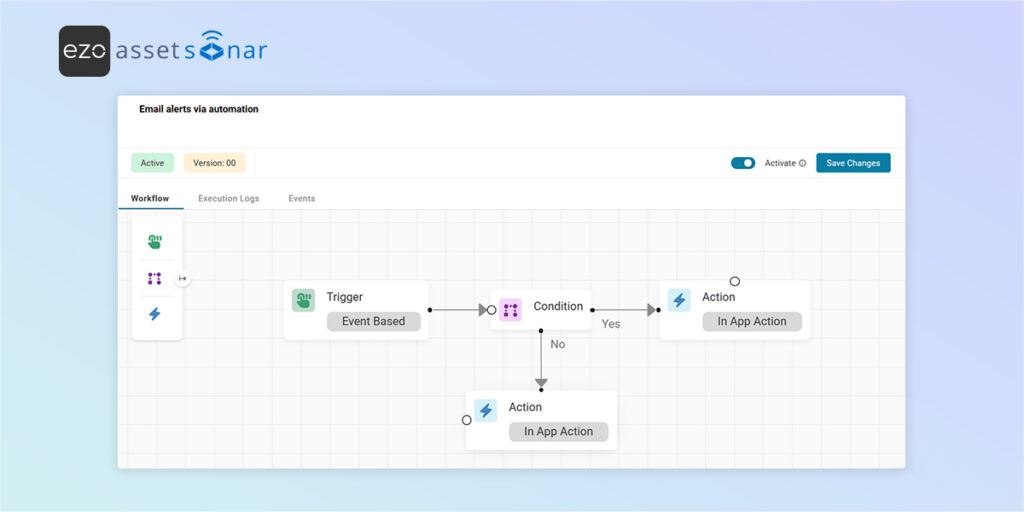
Build automation workflows using triggers, conditions, and actions that run across assets, tickets, users, and external systems. Create event- or time-based automations that respond to real changes without manual intervention. Use a visual builder to connect logic across systems, define execution paths, and ensure processes run consistently. Automation doesn’t just define workflows; it executes them.
Asset-Driven Automation
Turn Asset Events Into Real IT Actions
Trigger workflows from asset lifecycle events like provisioning, assignment, maintenance, or retirement. Automatically update records, initiate service actions, or enforce policies based on real-time asset state and conditions. From procurement to decommissioning, automate the lifecycle to reduce effort, improve accuracy, and maintain control, so that IT operations start with assets and automation follows.
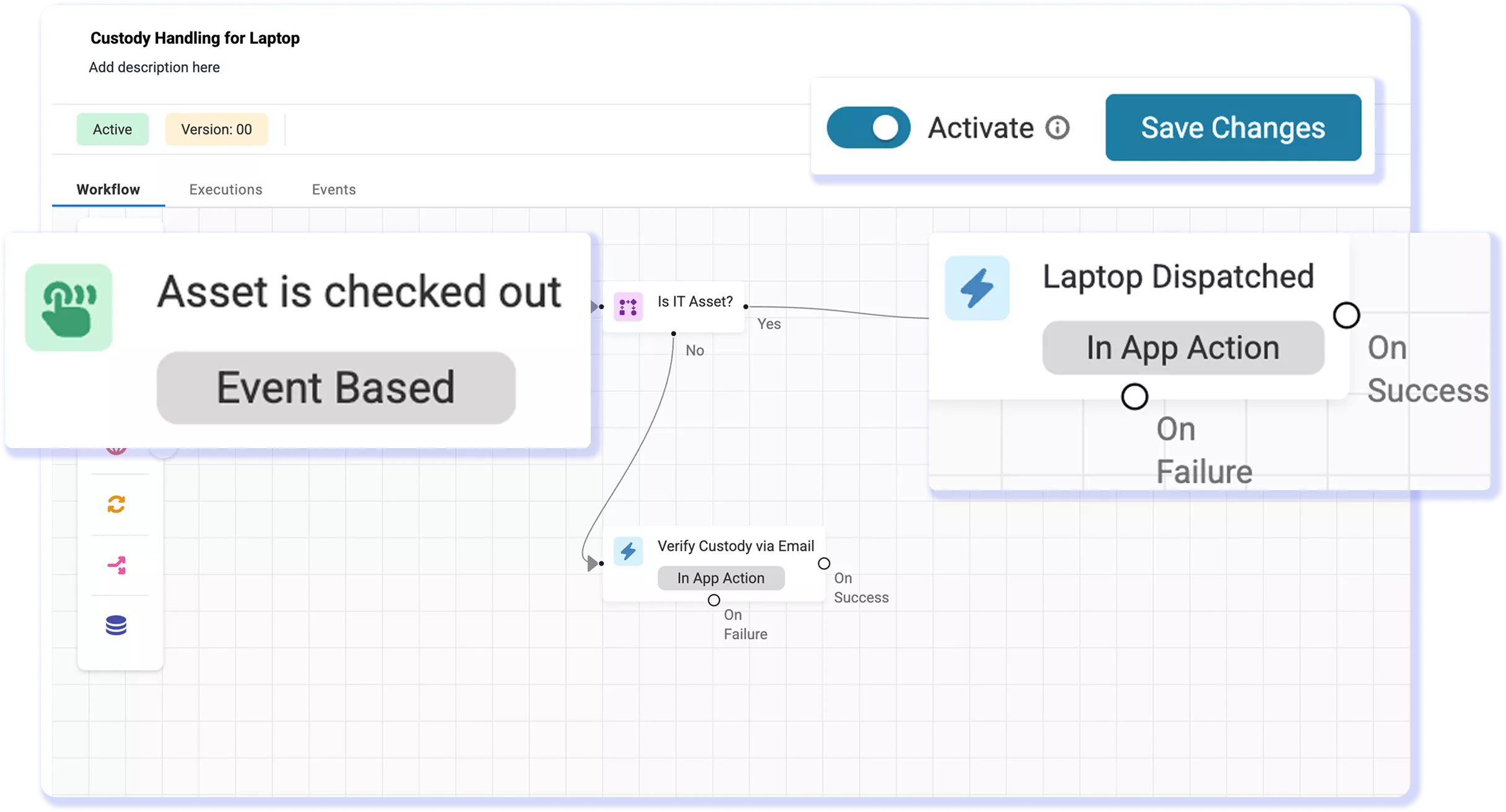
Service Workflow Automation
Execute Work Behind Every Ticket
Automate ticket handling across the full lifecycle, from creation to resolution, using rule-based logic and contextual data. Trigger assignment, prioritization, updates, and notifications based on ticket fields, user context, or real-time conditions. Enrich tickets with asset, user, and software data so workflows execute with full context, reducing back-and-forth and improving resolution speed.
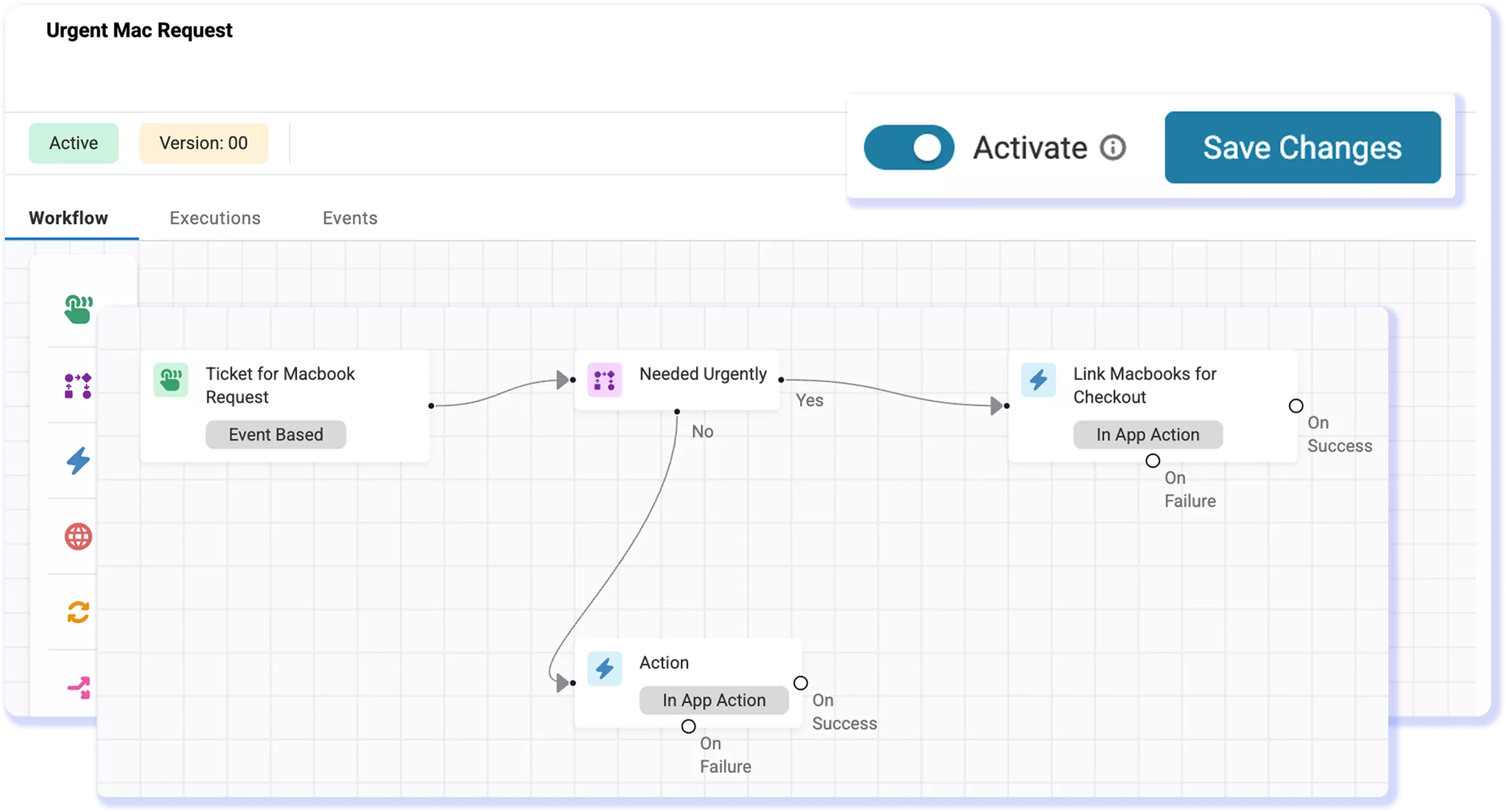
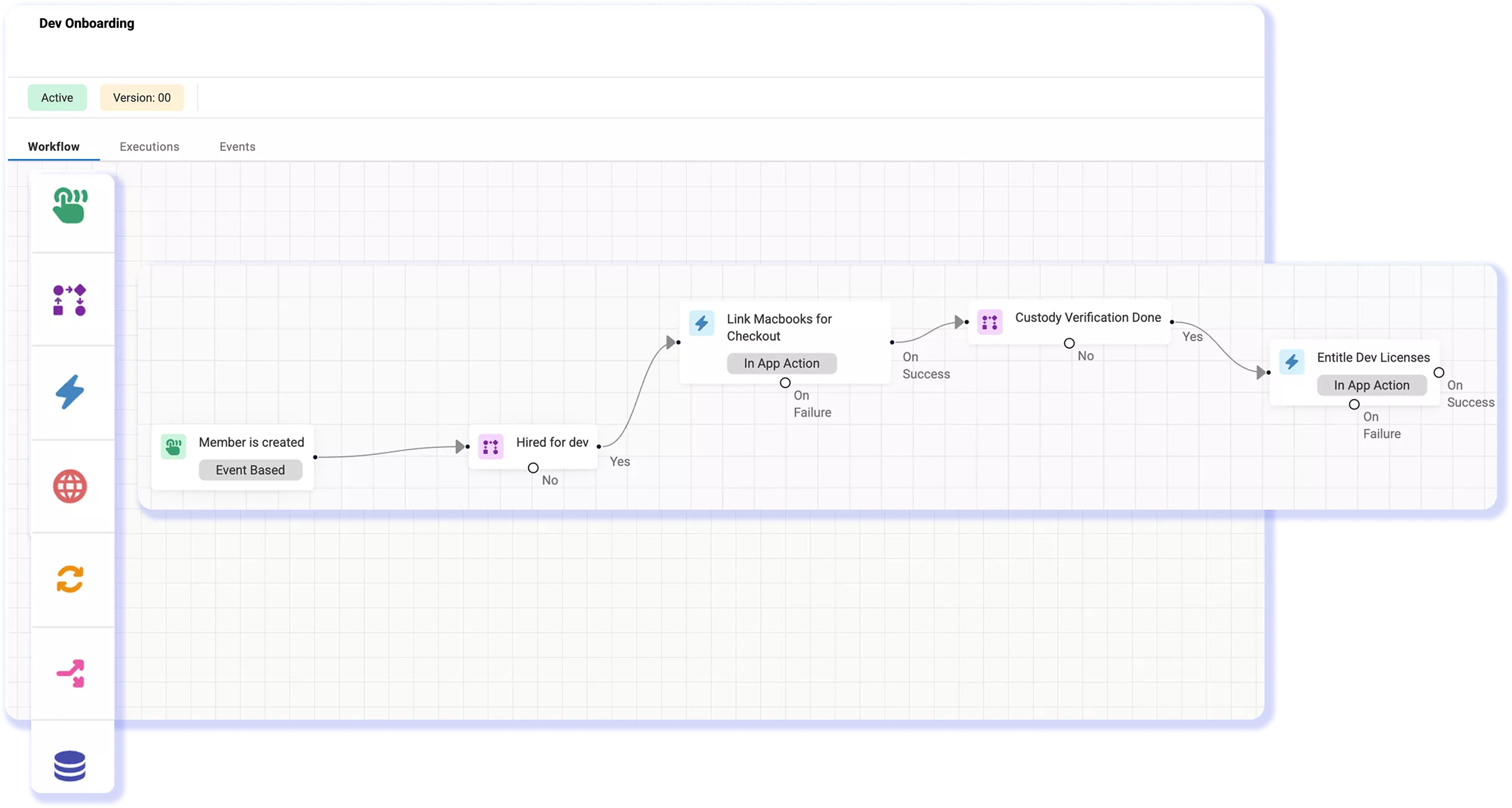
Onboarding & Offboarding
Automate Employee Lifecycle Without Gaps
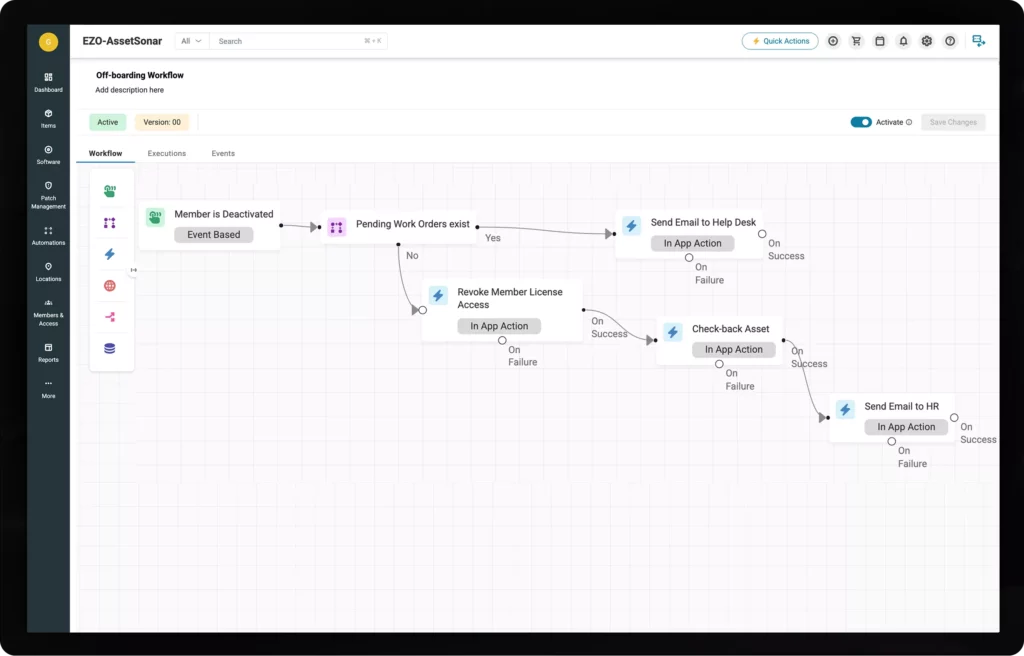
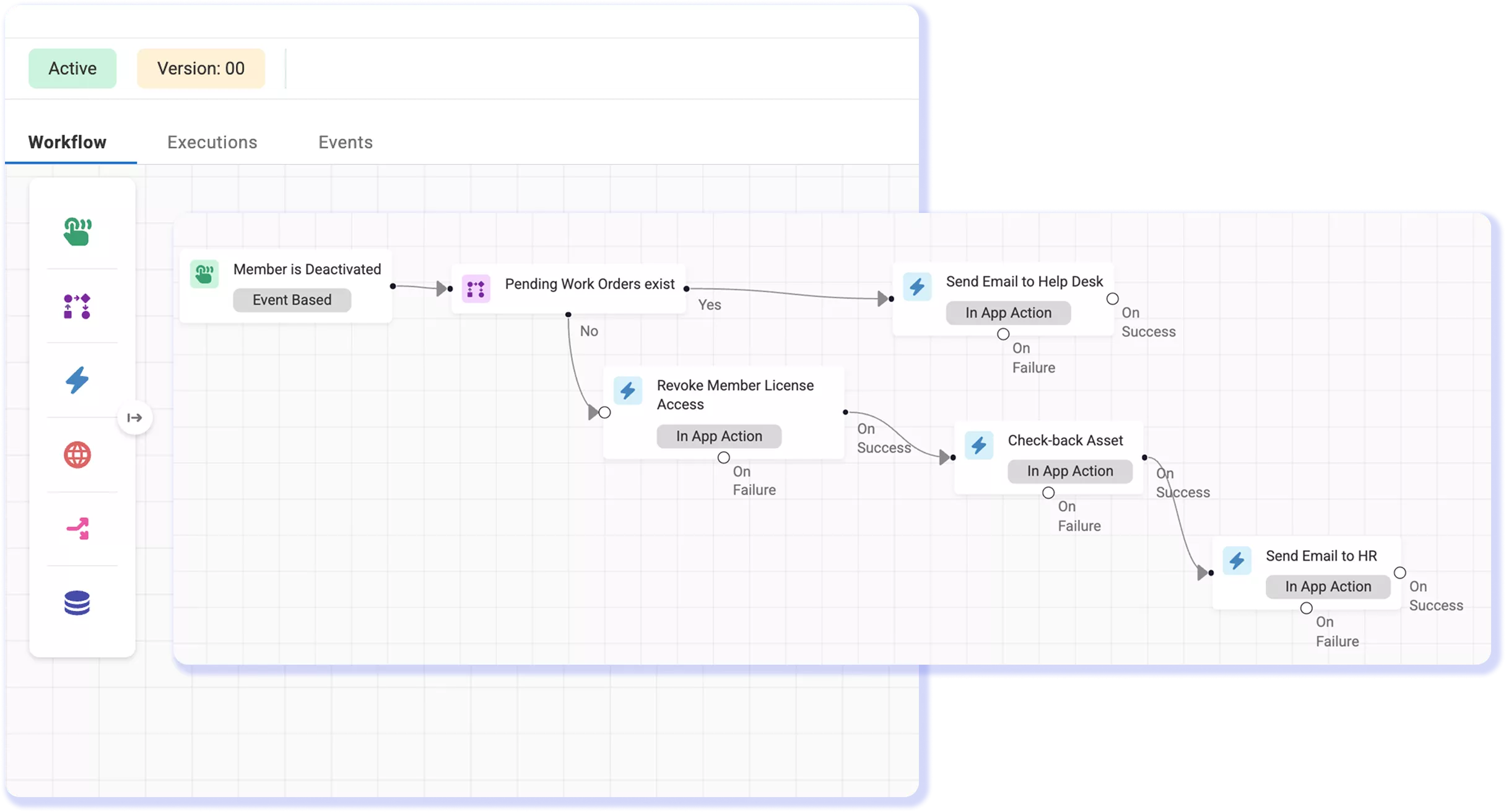
Trigger onboarding and offboarding from user lifecycle events so every task runs without manual coordination. Auto-generate tasks for provisioning, access setup, asset recovery, and account deactivation, assign to the right teams, and track centrally. Integrate with HR and identity systems to automate user creation, access control, and lifecycle transitions.
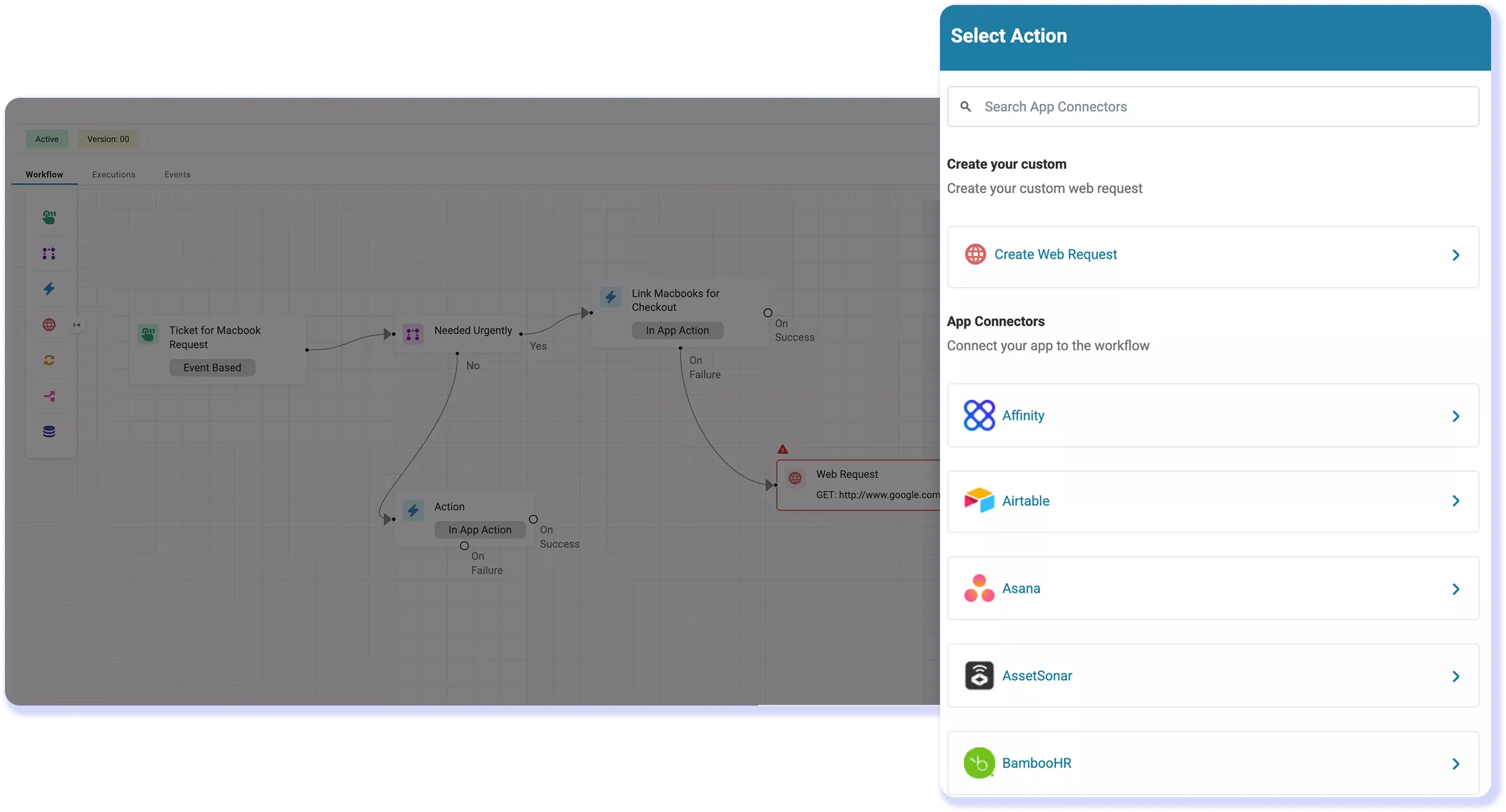
App Connectors
Bring External Systems Into Your Automation Layer
Use pre-built connectors and webhooks to integrate with HR, IAM, monitoring, and communication tools. Trigger workflows from events like new hires, alerts, or system changes, and sync data back to AssetSonar in real time. Orchestrate cross-system workflows without code, so automation reacts to your environment, not just your tickets.
Multi-Step Orchestration
Run End-to-End Processes, Not Isolated Tasks
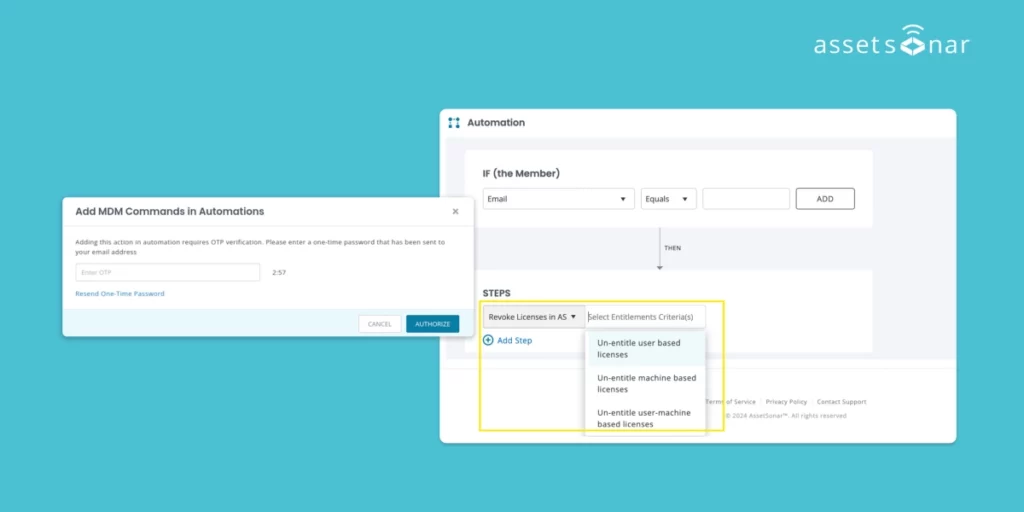
Design multi-step workflows across teams, systems, and processes by connecting triggers, conditions, and actions into a single execution flow. Automate operations like procurement approvals, license management, and service workflows with structured logic. Ensure every step runs in sequence, is centrally tracked, and completes without manual follow-ups so workflows operate as a system.
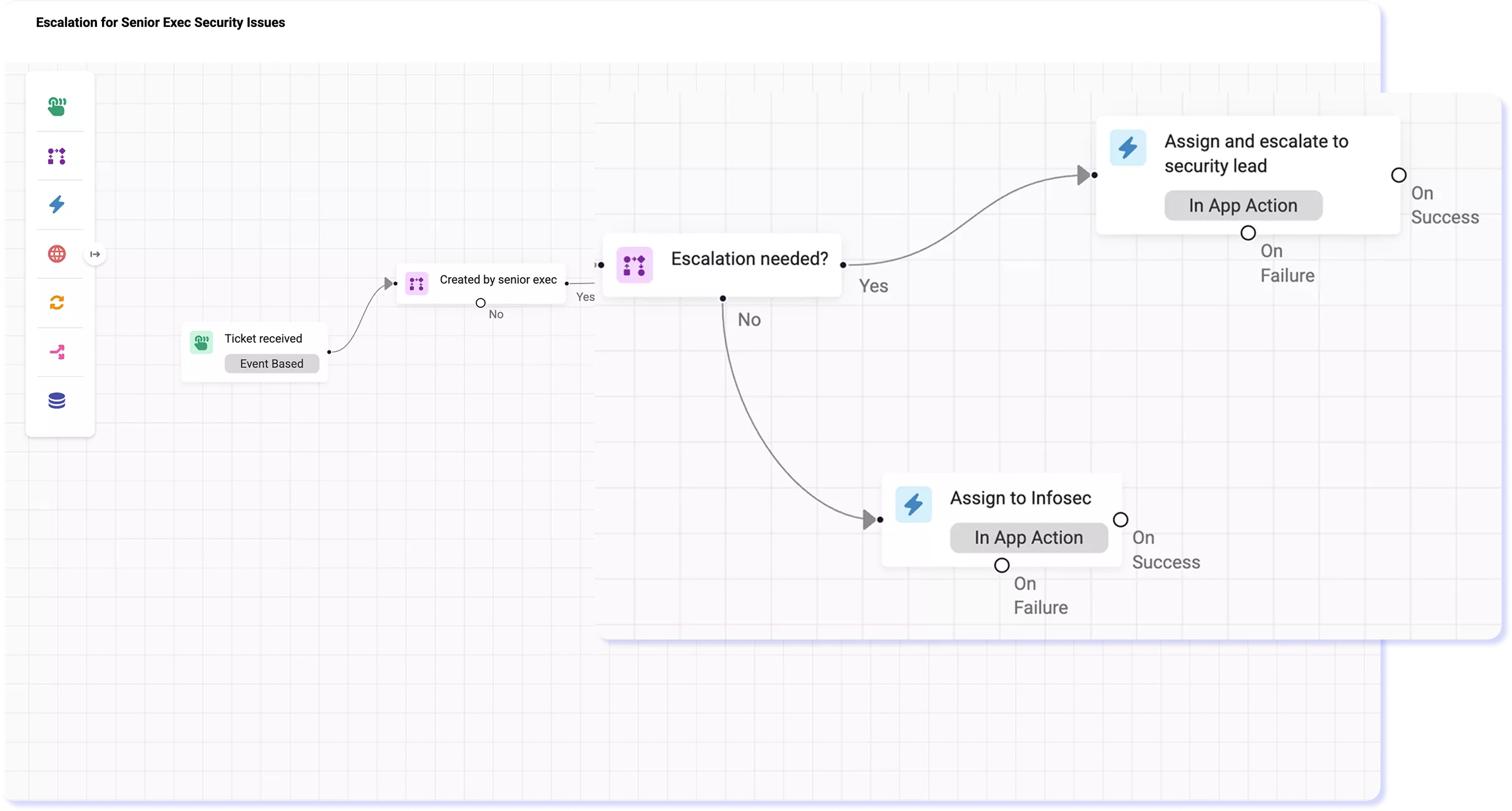
Auto-Responders & Auto-Close
Keep Workflows Moving Without Manual Follow-Up
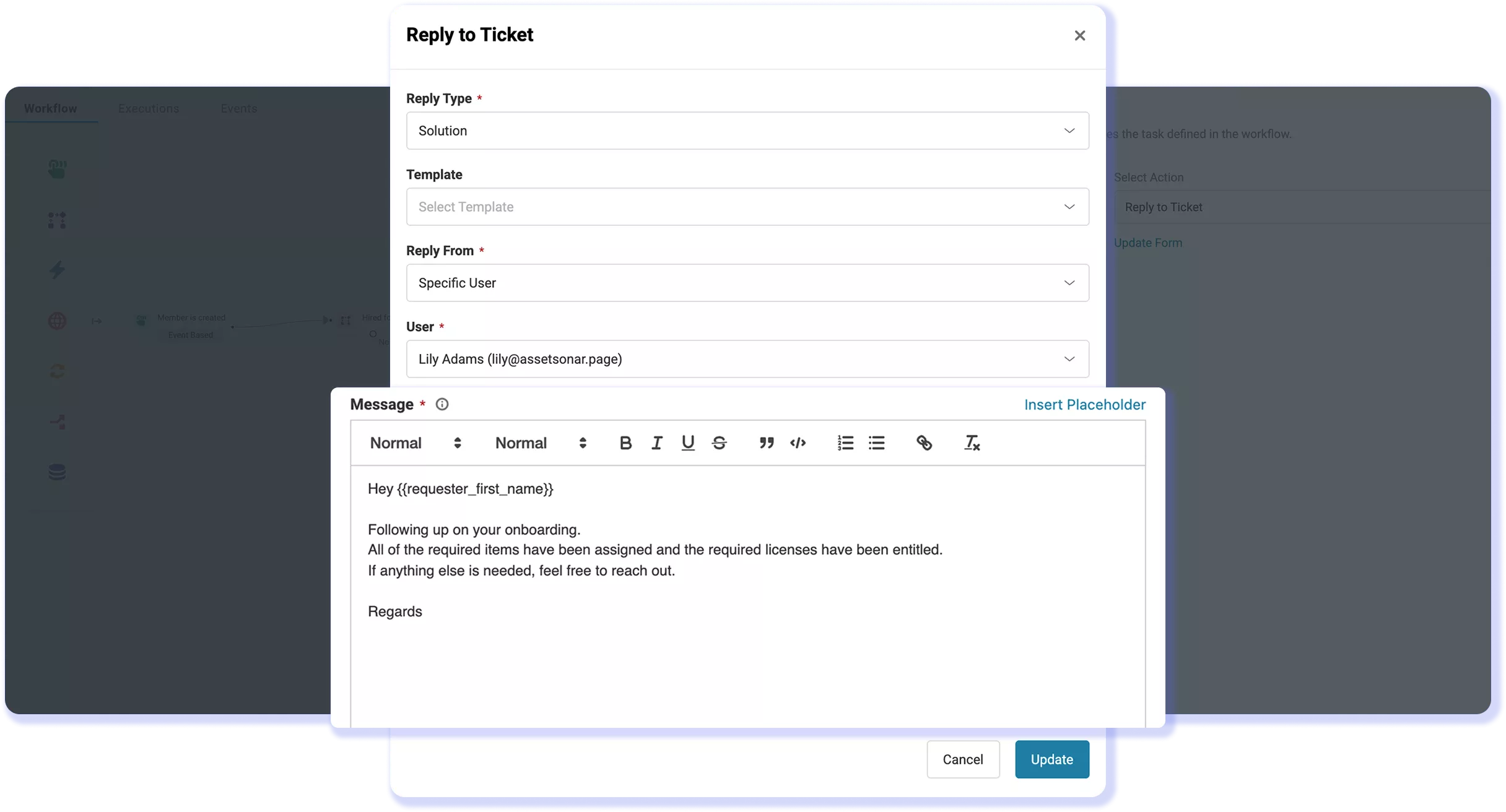
Automate communication and ticket lifecycle management to keep queues clean without constant oversight. Trigger responses on ticket creation or updates and apply auto-close rules to meet SLAs. Keep queues organized and manageable with lifecycle automation that prevents work from lingering and ensures follow-ups never fall through the cracks.
CSAT Surveys
Measure Service Quality Without Extra Effort
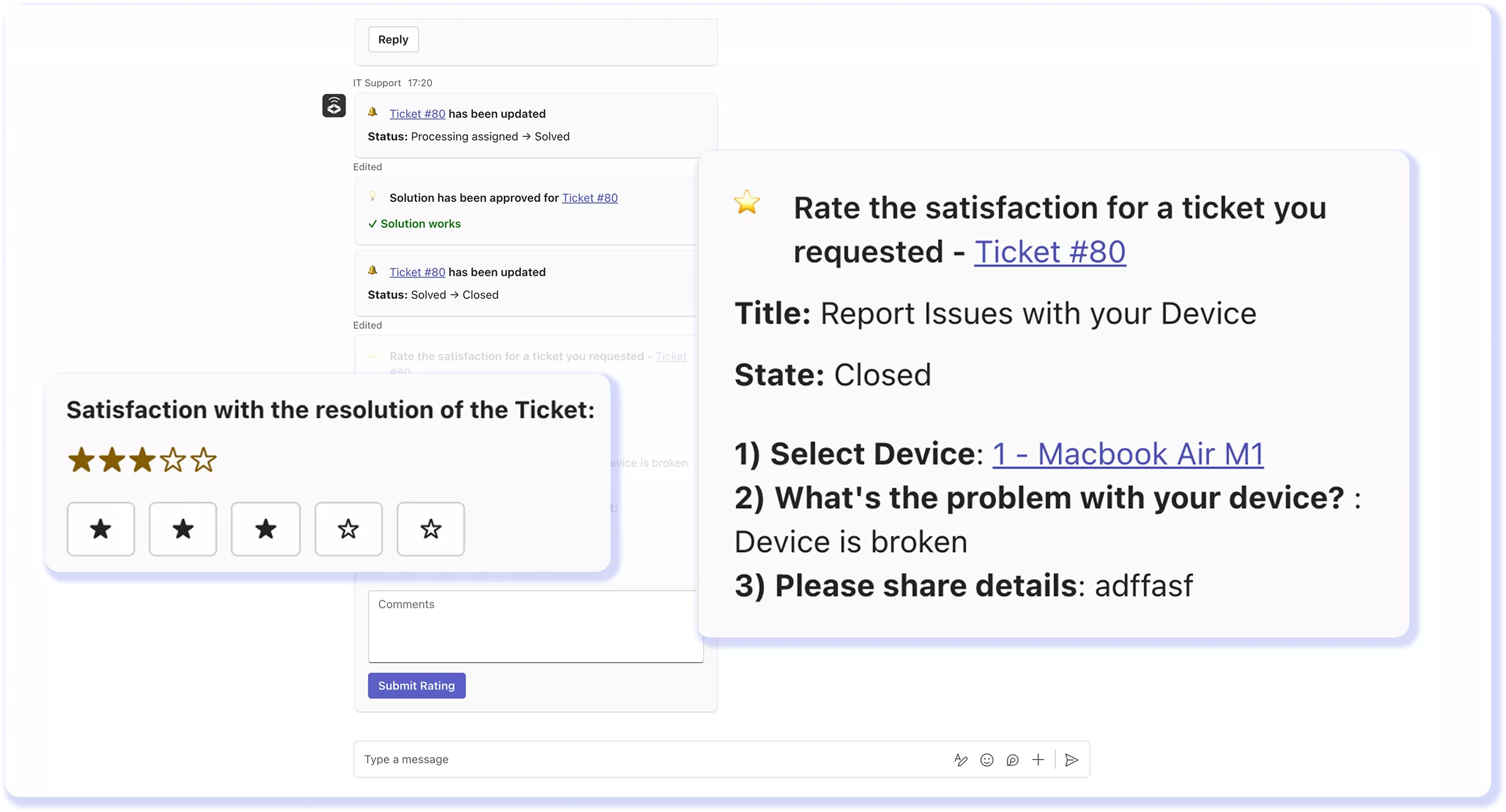
Automatically trigger customer satisfaction surveys when tickets close, embedding feedback directly into your service workflow. Track results at the technician and team levels without manual effort and capture actionable insights in real time, making quality measurement a built-in part of operations rather than a separate task.
Customer Testimonials
Run IT Operations Without Manual Coordination
Built on a Unified ITAM & ITSM Foundation
AssetSonar’s automation is not a standalone layer. It runs on top of your operational data model.
- ITAM → Asset lifecycle triggers
- ITSM → Ticket workflows and execution
- Users → Ownership and access context
- SaaS integrations → External event inputs
- Reporting → Full visibility into automation outcomes
Learn More About IT Automation & Operational Workflows
Frequently Asked Questions
Yes, AssetSonar provides real-time asset visibility and automated service workflows through a unified ITAM and ITSM platform. It continuously tracks assets, users, and software, connecting them to tickets and workflows and giving teams full operational context without manual updates.
Automation runs on real-time events such as asset changes, user lifecycle updates, or incoming requests. It automatically triggers workflows such as onboarding, ticket handling, and asset actions.
For mid-market teams, this eliminates the need for separate tools or complex integrations, enabling faster resolution, better control, and more efficient IT operations from a single system.
AssetSonar goes beyond ticket routing by executing real work across IT service workflows. Automations are triggered by real events such as asset changes, SaaS activity, and user lifecycle updates, enabling end-to-end service execution rather than static ticket handling.
Instead of relying solely on predefined ticket rules, automation adapts to real-time conditions across your IT environment, ensuring that requests, incidents, and service tasks progress without manual follow-ups.
This turns automation into an execution layer for ITSM, where tickets don’t just get assigned, they trigger actual outcomes like provisioning, access changes, or lifecycle actions driven by live asset and user context.
Several ITSM platforms, such as AssetSonar, offer ticket routing automation, typically via rule-based triggers, SLAs, and AI-assisted assignment.
But where most of these tools stop at routing, AssetSonar takes it further by turning routing into execution.
AssetSonar doesn’t just assign tickets based on fields like priority or category. It uses real-time asset context, user data, and lifecycle signals to route tickets to the right technician and automatically trigger the next set of actions. That means onboarding workflows kick off the moment a new user is created, asset-related tickets can trigger device actions instantly, and SLA-driven processes proceed without manual follow-up.
AssetSonar automates member management by connecting user lifecycle events directly to IT workflows, reducing manual coordination across teams. When a new member is added or updated via integrations such as Microsoft Entra ID (SCIM) or HR systems, AssetSonar can automatically trigger onboarding workflows to create tasks for device provisioning, access setup, and account configuration.
Similarly, when a member is deactivated or offboarded, automation workflows can initiate asset recovery, revoke access, and notify relevant teams, ensuring nothing is missed.
Because member data is tied to assets, software, and service workflows within a unified IT Graph, every change in a user’s status becomes actionable, enabling IT teams to manage access, ownership, and lifecycle transitions in a structured, automated way.
Yes, external systems can trigger automation in AssetSonar through integrations and webhook-based workflows. Any system that can send data, such as HR platforms, monitoring tools, CI/CD pipelines, or custom scripts, can create or update tickets and initiate automation flows in real time.
Using secure webhook endpoints, incoming events can be mapped directly to ticket fields and conditions, allowing workflows to execute automatically in response to external triggers such as new hires, system alerts, or device changes.
This ensures that automation is not limited to actions inside ITSM but is driven by real events happening across your entire IT environment, keeping workflows responsive and up to date without manual input.
AssetSonar delivers workflow automation across both asset and service management by running a unified automation engine on top of a shared ITAM and ITSM data model. Instead of treating assets and tickets as separate systems, workflows are triggered by real events across both, such as asset lifecycle changes, user updates, or ticket activity.
For example, an asset check-in can automatically create a service ticket, a license threshold can trigger a renewal workflow, or a new hire event can initiate onboarding tasks, all without manual intervention.
Because assets, users, software, and tickets are connected within a single operational layer, automation executes based on real context rather than isolated rules, enabling IT teams to manage end-to-end workflows seamlessly across their environment.
IT workflow automation combined with a self-service portal improves help desk efficiency by reducing manual ticket intake and resolving common requests before they reach IT. Employees can search for answers, submit requests, and track progress in one place while automation routes, prioritizes, and updates tickets based on predefined rules.
With AssetSonar, the portal is connected to real asset and user context, so requests are automatically enriched with device details, ownership, and history. This allows workflows to trigger instantly, whether it’s fulfilling a request, assigning the right technician, or initiating follow-up actions without additional back-and-forth.
The result is fewer repetitive tickets, higher-quality requests, and faster resolution times, enabling IT teams to focus on more complex issues instead of routine support tasks.
Yes, IT workflow automation can resolve certain requests without human intervention, especially when they follow predictable patterns and predefined rules. Tasks like password resets, software access requests, license provisioning, and routine approvals can be fully automated using triggers, conditions, and actions.
With AssetSonar, automation goes a step further by using real asset and user context to execute actions, not just route tickets. For example, a request for software can automatically trigger license assignment, update records, and notify the user without technician involvement. Similarly, asset lifecycle events or user changes can initiate and complete workflows end-to-end.
However, more complex or exception-based requests still require human input. In practice, automation handles repetitive, high-volume tasks, while IT teams focus on issues that require judgment, troubleshooting, or decision-making.
Not every IT workflow should be automated, especially those involving complex decision-making, exceptions, or security-sensitive actions. Processes that require human judgment, context-specific approvals, or troubleshooting should retain manual oversight.
That said, repetitive and predictable workflows like onboarding, ticket routing, access provisioning, and asset lifecycle updates are ideal candidates for automation.
With AssetSonar, automation is driven by real asset and user context, allowing teams to safely automate high-volume tasks while maintaining control over critical actions. This ensures automation enhances operations without introducing unnecessary risk.
Automation becomes unmanageable when workflows are scattered, undocumented, and disconnected from real operations. The key is to centralize automation within a single system and structure workflows around real events instead of isolated rules.
AssetSonar addresses this by running automation across a unified ITAM and ITSM layer, where workflows are tied to assets, users, and tickets. This provides clear visibility into what triggered an action and why.
By reducing rule sprawl and grounding automation in an operational context, teams can scale workflows without losing control or creating black-box systems.