Almost half of all installed software and licensed SaaS apps go completely unused inside most organizations. For mid-market and enterprise IT teams, that translates into millions of dollars lost each year. This is not because the tools are inefficient, but because no one has a reliable way to see what’s actually being used.
When software, SaaS, and cloud services now consume 10 to 15% of the average IT budget, this level of waste isn’t just inefficient; it becomes a serious financial and operational risk. And it accelerates as your environment grows.
The root cause is almost always the same: Limited visibility.
If you’re tracking assets across spreadsheets, emails, and disconnected systems, it becomes almost impossible to know what you own, who’s using it, or whether you’re compliant. The result? License over-purchasing, usage blind spots, compliance surprises, and missed opportunities to optimize SaaS spend.
This is exactly where modern IT Asset Management (ITAM) platforms make a measurable impact. The right solution gives IT leaders end-to-end visibility into hardware, software, and SaaS, helping them reduce waste, enforce compliance, and make smarter technology investment decisions.
In short: Better visibility = better control.
With the right ITAM tool, you can reclaim budgets, reduce risk, and finally eliminate the guesswork that drains IT resources.
However, not all ITAM tools are built to overcome the unique challenges of mid-market and enterprise companies. In this blog, we will discuss three widely considered ITAM platforms:
- EZO AssetSonar: Unified hardware, software, and SaaS visibility with powerful automation
- NinjaOne ITAM: Strong endpoint management with lightweight asset tracking
- InvGate ITAM: Solid ITSM-centric asset management with customizable workflows
By the end of the blog, you’ll know which tool is best aligned to your operational model, compliance posture, and long-term IT roadmap.
Why mid-market IT teams need a purpose-built ITAM platform
Mid-market IT teams have to face a unique challenge: they have to bear the same accountability as enterprise IT teams. Whether it’s IT security, compliance, and cost control, they have to handle it with leaner teams, tighter budgets, and faster growth cycles.
Since mid-market teams lack dedicated asset owners or compliance specialists, they need tools that work efficiently and scale without complexity.
That means, they are essentially looking for an ITAM platform that offers:
- Fast implementation (days, not months) so teams see value quickly instead of getting stuck in long onboarding cycles.
- A unified system that replaces spreadsheets, shared drives, one-off tools, and email-based processes.
- Automated discovery to eliminate shadow IT and uncover software, SaaS, and hardware that slip through manual tracking.
- Auditable change history without relying on manual updates or tribal knowledge.
- Clear cost reporting that supports renewal decisions, budgeting conversations, and optimization initiatives.
- Straightforward integrations that plug into existing IT systems like MDM, SSO, and helpdesk, without hiring consultants or building custom scripts.
This is where ITAM platforms diverge quickly.
Some tools, like NinjaOne, emphasize endpoint discovery and management with ITAM features embedded, but they do not provide deep SaaS discovery, identity‑driven shadow IT insights, or comprehensive governance workflows out of the box.
Other tools like InvGate Asset Management prioritize structured lifecycle and ITSM integration. While they provide broad asset discovery and license tracking, automated SaaS discovery and advanced compliance dashboards may require configuration or additional tooling beyond the core platform.
And then there are purpose-built IT asset management tools, like EZO AssetSonar, that are designed specifically for mid-market environments looking for complete visibility across hardware, software, and SaaS in a single system, without bearing the overhead of enterprise suites.
Such differences ultimately help you decide how quickly a mid-market IT team can cut waste, tighten compliance, and achieve complete control of their IT infrastructure.
Quick comparison summary
Below is the high-level positioning before we dive deep:
| Platform | Best For | Key Strength | Limitation |
| EZO AssetSonar | Mid‑market IT teams needing unified hardware, software, and SaaS management | Full visibility + automation + compliance reporting | Not a replacement for full ITSM suites |
| NinjaOne ITAM | IT teams prioritizing endpoint management and device health | Excellent remote management & patching within an RMM platform | Limited in deeper SaaS discovery and advanced governance |
| InvGate ITAM | Organizations centered around ITSM + helpdesk workflows | Strong process control, lifecycle automation, and workflow customization | SaaS and compliance features may require more configuration |
EZO AssetSonar: The leading mid-market ITAM solution
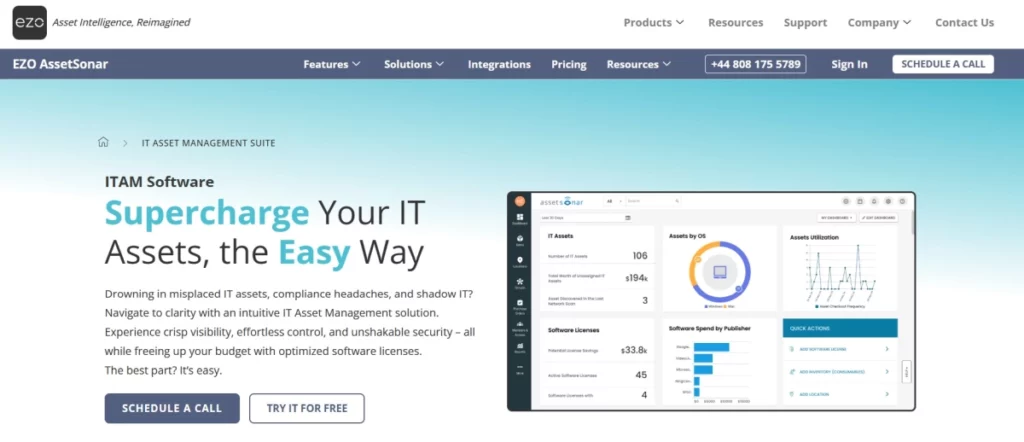
Best for: IT teams needing full-stack visibility across hardware, software, SaaS, contracts, licenses, audits, and lifecycle management.
EZO AssetSonar consistently ranks at the top for mid-market IT teams because it focuses on the business outcomes that matter most: visibility, compliance, automation, and cost control, without adding operational complexity.
Let’s break down EZO AssetSonar across the criteria mid-market IT teams care about most:
Asset discovery & visibility
EZO AssetSonar provides agent-based, agentless, and network-level discovery, giving IT teams visibility across:
- Laptops, desktops, servers
- VMs and cloud infrastructure
- SaaS applications (browser + SSO discovery)
- Installed software + usage metering
- Network devices, peripherals, accessories
Consider this example: A mid-market company using both on-premises servers and cloud workloads often finds that spreadsheets and disconnected tools leave gaps, especially for SaaS apps purchased directly by teams. EZO AssetSonar automatically discovers hardware, software, and SaaS usage in one place, so IT can quickly answer questions like, “Which laptops haven’t checked in this month?” or “Which SaaS tools are being used most?”
Check out what users say about EZO AssetSonar on Reddit:
How NinjaOne and InvGate differ from EZO AssetSonar
Unlike other ITAM tools like NinjaOne (which is endpoint-centric) and InvGate (which focuses on ITSM workflows), EZO AssetSonar offers a comprehensive technology inventory model.
Why this matters
When asset data is scattered across tools, teams waste hours reconciling lists and still miss shadow assets. EZO AssetSonar collapses these data silos into a single system of record, reducing blind spots and support overhead.
Software & SaaS license management
Most mid-market IT teams struggle with:
- Over-provisioned SaaS licenses
Here’s an example: A collaboration suite has 200 paid seats but only 90 active users. - Shelfware
Here’s an example: Legacy licenses sitting unused but still billed. - Unauthorized tools sign-ups
Here’s an example: Departments adopt niche tools without centralized approval. - Inaccurate reconciliation across systems
Here’s an example: License counts in procurement don’t match asset inventory.
EZO AssetSonar solves these with:
- Automated license reconciliation that aligns entitlement with usage
- Usage metering across SaaS + installed software
- Shadow IT detection to spot tools used without IT approval
- Contract & renewal tracking so renewals aren’t overlooked
- Alerts for EOL/EOS hardware that could breach policy
Consider this example: During fiscal planning, IT leaders use EZO AssetSonar to generate a report showing precise SaaS usage and unused seats. They reclaim hundreds of licenses before renewal, saving tens of thousands of dollars.
How NinjaOne and InvGate differ from EZO AssetSonar
NinjaOne’s ITAM module focuses primarily on endpoint devices and installed software but lacks deep SaaS intelligence. It doesn’t offer full entitlement matching or automated license reconciliation for cloud-based applications.
InvGate offers strong inventory management and license tracking, but it leans heavily on ITSM workflows. It lacks automated SaaS license reconciliation and deeper SaaS compliance insights that EZO AssetSonar provides.
Audit trail & compliance reporting
Mid-market companies today face growing regulatory requirements like SOC 2, GDPR, ISO standards, internal audits, and vendor audits. EZO AssetSonar helps teams stay prepared with:
- Immutable audit logs for every asset event
- Full asset history (assignments, users, changes, installs, removals)
- Exportable, audit-ready reports
- License-to-usage compliance dashboards
- Hardware governance reporting (warranty, EOL, unsupported assets)
Consider this example: During a vendor audit, an IT director is asked to present license usage and installation history for a critical software suite. EZO AssetSonar lets them export a clean, timestamped report covering licenses vs. deployment history. This is much faster than pulling records from disparate spreadsheets.
How NinjaOne and InvGate differ from EZO AssetSonar
While NinjaOne tracks device changes and offers basic logging, it does not provide complete asset history or audit‑ready compliance dashboards. Its audit functionality is more oriented toward device management and real-time alerts rather than a full lifecycle audit trail.
InvGate Asset Management provides asset change logs and history, but requires manual configuration for enterprise‑ready compliance reports. In comparison, EZO AssetSonar delivers pre-built exportable reports and automated license-to-usage dashboards, minimizing manual effort during audit cycles.
EZO AssetSonar delivers purpose-built compliance reporting with fewer manual steps, helping mid-market teams be audit-ready without enterprise overhead.
Automation & integrations
EZO AssetSonar integrates deeply with major IT management tools:
- MDM/EMM: Intune, Jamf, Kandji
- IDP/SSO: Okta, Azure AD, Google Workspace
- Helpdesk/ITSM: Jira, Zendesk
- Procurement: CDW integration for automated purchase imports
- Endpoint & security: Cisco Meraki
Automation features include:
- Auto-audits of inventory changes
- Auto-ticket creation on policy exceptions
- License reclamation workflows
- Scheduled discovery jobs
- Lifecycle reminders (EOL, renewals, warranties)
Consider this example: A new hire onboarding process automatically triggers asset provisioning, license assignments, and policy enforcement, reducing human error and speeding new employee setup.
How NinjaOne and InvGate differ from EZO AssetSonar
NinjaOne’s automation focuses on endpoint health, patch management, and scripted workflows for device monitoring, rather than ITAM-specific workflows like license reclamation and asset lifecycle automation. It lacks dedicated ITAM workflow automation.
InvGate’s automation is more tied to ITSM workflows (e.g., incident or change management) than asset-specific governance. While it can automate asset lifecycle updates, its functionality does not fully extend to comprehensive ITAM workflow automation like EZO AssetSonar.
EZO AssetSonar automates ITAM-specific workflows that cut manual effort and tighten compliance posture across hardware, SaaS, licensing, and procurement.
Ease of deployment & time to value
EZO AssetSonar is built for mid-market teams with limited implementation bandwidth:
- Deployment in days
- Intuitive UI with minimal training needed
- Admin-friendly configuration
- Strong onboarding documentation
- Quick wins for visibility and compliance
Consider this example: An IT team with limited staff gets EZO AssetSonar running in under a week and starts seeing accurate asset inventory and license insights immediately, without needing consultants or months of setup.
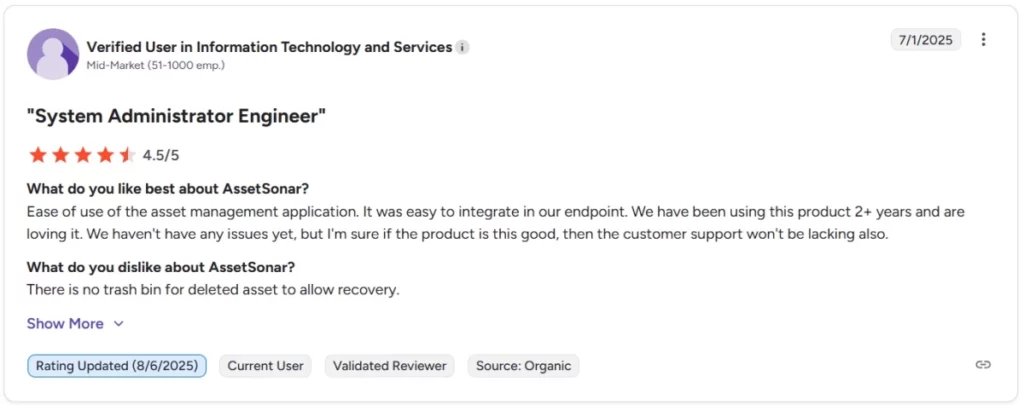
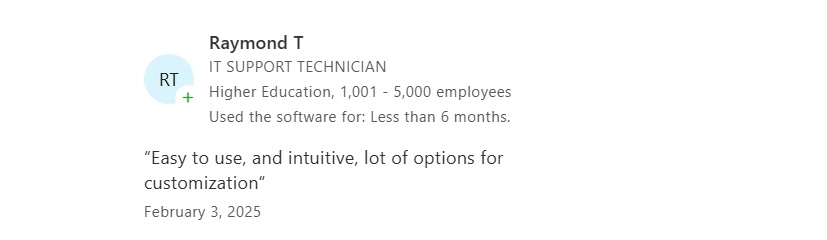
Users frequently praise its low learning curve and faster adoption compared to heavier ITSM suites and tools that require deep configuration.
How NinjaOne and InvGate differ from EZO AssetSonar
Known for a fast and easy setup, particularly for endpoint management, NinjaOne is optimized for device-centric environments. It deploys quickly, but lacks the full breadth of ITAM-specific functionalities compared to EZO AssetSonar.
InvGate has a moderate setup time since it involves customizing workflows and reports to fully align with ITAM needs. It may take more time to tailor to specific ITAM needs compared to EZO AssetSonar, which is built for rapid deployment in mid-market teams.
Pricing & ROI
EZO AssetSonar delivers ROI by helping organizations:
- Eliminate SaaS overspend
- Prevent audit penalties
- Reduce manual inventory labor
- Avoid lost assets
- Improve procurement accuracy
It achieves this while maintaining cost efficiency far superior to large enterprise tools and offering greater functional depth than endpoint-first solutions like NinjaOne for ITAM use cases.
Consider this example: A mid-market company with a fragmented IT footprint used EZO AssetSonar to uncover unused SaaS licenses and outdated hardware, leading to a 12 to 15% reduction in annual IT spend. The company then reallocated these funds to strategic initiatives.
NinjaOne ITAM: Strong endpoint management, light asset governance
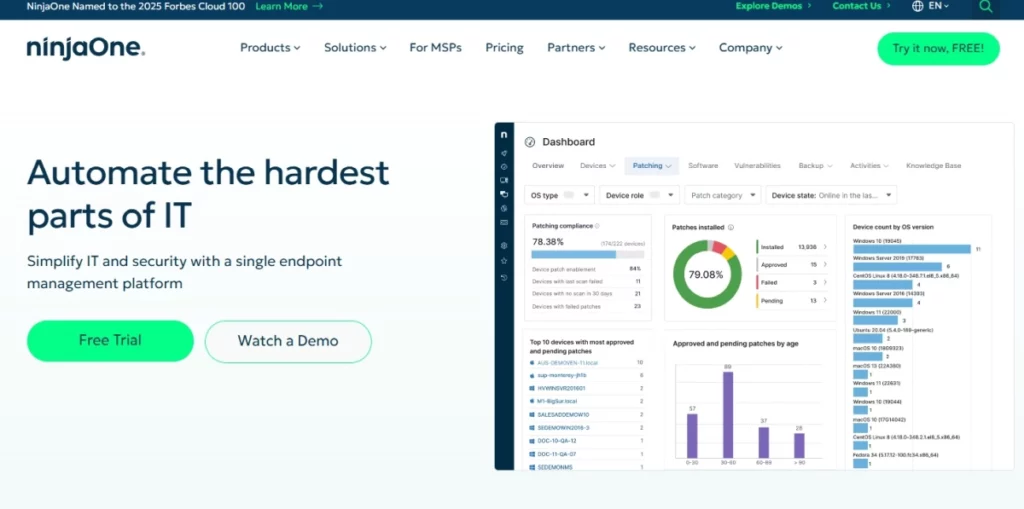
Best for: IT teams and MSPs focusing on endpoint monitoring, RMM (Remote Monitoring & Management), patching, and operational automation, rather than full software/SaaS governance or audit‑centric ITAM.
NinjaOne combines RMM, endpoint management, and IT asset tracking into one platform, giving teams a unified view of devices and installed software across the environment.
Where NinjaOne performs well
Endpoint‑focused asset discovery & real-time inventory
NinjaOne provides automated asset discovery and real‑time tracking of managed devices using its agent and network probes. It automatically collects inventory data, giving IT teams accurate insight into installed hardware and software across endpoints.
- Endpoint and device health data are updated continuously with real‑time visibility.
- Automated discovery helps ensure IT teams know what devices and installed software exist within their managed estate.
- The platform integrates asset data into centralized workflows for support and automation.
Strong RMM and monitoring foundation
NinjaOne is primarily an RMM tool that excels in:
- Real‑time endpoint monitoring and alerts
- Automated patch management and scripting
- Remote access and diagnostics
- Policy‑based automation and notifications
- Built‑in reporting and analytics tied to device performance and compliance
This makes it an excellent choice for teams needing robust endpoint telemetry and automation, especially in environments where keeping endpoints patched, healthy, and supported remotely is a top priority.
Simple UI and rapid onboarding
NinjaOne is designed to be easy to adopt:
- Unified dashboard for endpoint management and asset tracking
- Lightweight management agent
- Flexible grouping and search features for IT assets
- Custom fields to capture specific lifecycle data when necessary
Where NinjaOne falls short for ITAM
These gaps come not from weakness, but from the fact that NinjaOne is fundamentally an RMM-first platform, not a full-spectrum ITAM system.
Limited SaaS discovery and license compliance
There is no native browser-based SaaS discovery or comprehensive SaaS usage reporting. NinjaOne focuses on installed software, not cloud software governance.
Consider this example: A company using 70–100 SaaS apps (common in mid-market teams) would still rely on spreadsheets or another SaaS management tool to understand:
- Who is using which SaaS apps
- Which licenses are inactive
- Which apps were purchased outside of IT
EZO AssetSonar does this automatically; NinjaOne does not.
According to Reddit users, NinjaOne’s reporting capabilities have significant gaps:
No deep contract or renewal management
NinjaOne offers software inventory reporting and tracking, which can help with basic license visibility. It also provides analytics and alerts related to software installations.
However:
- It does not provide a deep contract repository,
- Does not include renewal alerting workflows,
- Does not offer purchase order linkage,
- Does not automate license entitlement reconciliation at the contract level.
This means teams may still rely on manual spreadsheets or third‑party tools to manage license renewals and contract compliance.
Consider this example: If IT needs to track a Microsoft 365 contract expiring in 90 days and automatically notify finance, NinjaOne cannot natively handle this workflow.
No complete audit history across the asset lifecycle
While NinjaOne collects inventory data and provides reporting, its reporting is generally endpoint‑centric analytics rather than audit‑specific, compliance‑ready documentation tied to broader ITAM governance frameworks (e.g., SOC 2, ISO).
Coverage includes:
- Installed software lists
- Endpoint hardware details
- Event alerts
- Policy compliance checks
But it does not natively provide:
- Immutable audit logs across the full asset lifecycle
- Historical assignment tracking and ownership chains
- Unified reports across SaaS + hardware + licenses
Consider this example: During an ISO or SOC 2 audit, IT may struggle to produce a complete historical chain of custody for devices and software. On the other hand, EZO AssetSonar can produce this instantly.
Not ideal for hybrid or multi-cloud environments
NinjaOne’s strength is in managing devices that it can see via its agents, meaning endpoints actively enrolled in its RMM system. It does not natively provide unified visibility across:
- SaaS applications used through the web or identity providers
- Cloud workloads and infrastructure unmanaged by agents
- Peripheral devices with no agent installed
- Assets outside of its RMM scope
In hybrid IT environments where assets span cloud services, SaaS, BYOD, and unmanaged endpoints, this can create visibility gaps without additional tooling.
Consider this example: If IT wants visibility into AWS EC2 instances, Azure VMs, Cisco switches, and 100 SaaS apps, NinjaOne cannot consolidate these into a single ITAM dashboard. On the other hand, EZO AssetSonar can do this.
No built‑in procurement or contract management
NinjaOne does not include built‑in procurement workflows, meaning it does not cover:
- Purchase order creation or tracking
- Linking procurement records to asset inventory
- Storing vendor contracts and terms
- Linking devices/licenses to financial procurement data
This contrasts with full ITAM platforms that integrate procurement into the asset lifecycle.
Consider this example: When IT purchases 50 laptops for new hires, NinjaOne cannot:
- Create POs
- Auto-generate asset records
- Track vendor contracts
- Link devices to purchase history
On the other hand, EZO AssetSonar automates all of this out of the box.
InvGate ITAM: Strong for ITSM-centric environments, less built for full ITAM breadth
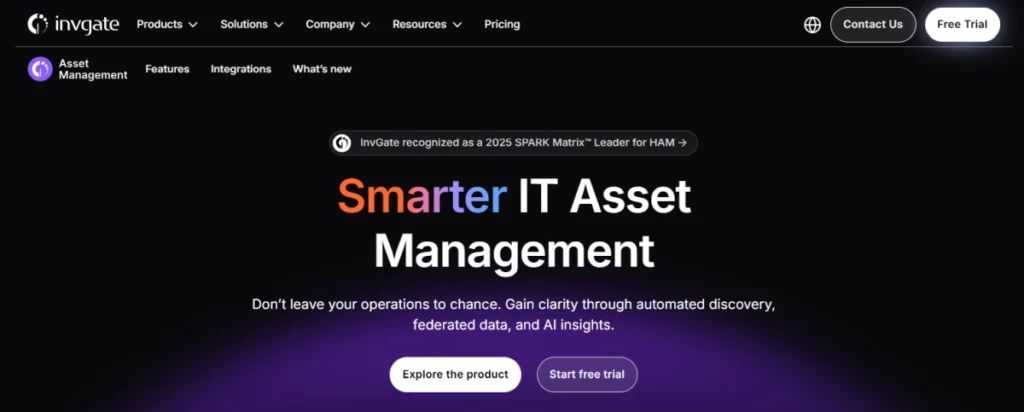
Best for: IT teams that want a unified asset inventory closely integrated with service workflows, lifecycle tracking, and customizable configuration models, especially those already using or planning to use InvGate Service Management.
InvGate Asset Management (formerly InvGate Insight) is a comprehensive ITAM solution designed to help organizations discover, track, and manage IT assets across their lifecycle. It provides automated discovery, centralized inventory, license tracking, lifecycle automation, and tight integration with ITSM processes.
InvGate Asset Management (formerly InvGate Insight) is designed to help organizations discover, track, and manage IT assets across their lifecycle with automated discovery, inventory centralization, license tracking, and lifecycle automation. It combines these with workflow integration possibilities and a user-friendly interface.
Where InvGate performs well
Comprehensive discovery and unified inventory
InvGate’s asset discovery engine scans networks to find hardware, software, cloud services, and nodes (devices) for a centralized asset inventory. You can use a mix of agent-based data, network scanning, and imports to build a full view of what exists across your estate.
Lifecycle tracking from acquisition to disposal
InvGate supports lifecycle data — from purchase and deployment through maintenance and ultimately retirement, giving teams context for planning, refresh cycles, and cost management.
Linked audit trails and historical tracking
InvGate links asset records with change history, support tickets, and usage data, helping teams trace asset modifications and usage patterns over time.
Software license management
InvGate includes software license management, letting teams plan and optimize software usage, maintain license value records, and manage support costs.
Automation and integration with ITSM workflows
InvGate lets you automate tasks (like warranty alerts, asset updates, or renewal reminders) and link them to support tickets so that changes trigger notifications or actions within the service desk.
Configurable data structures and dashboards
InvGate lets you apply custom fields, smart tags, and flexible configuration tools to adapt the inventory model to your environment, improving accuracy and governance.
Where InvGate falls short for ITAM
While InvGate Asset Management excels in areas like asset discovery, lifecycle tracking, and ITSM integration, there are a few limitations to consider when compared to more comprehensive ITAM platforms.
Limited SaaS discovery and automatic SaaS usage tracking
InvGate provides software discovery and license tracking, including usage monitoring, but it does not highlight native browser‑or identity‑based SaaS application discovery (e.g., OAuth/SSO-based insights) as a core automation feature in its ITAM documentation.
This means browser‑level shadow SaaS may require additional tooling or manual correlation, unlike solutions that integrate deeply with identity providers to generate SaaS app maps.
In community discussions, IT professionals have reported challenges like difficulty identifying mobile devices after bulk installations with InvGate, indicating discovery limitations when compared to full-stack solutions.
EZO AssetSonar includes browser-based and SSO-integrated SaaS discovery, helping IT uncover shadow SaaS adoption, a major mid-market cost and compliance risk that inventory scanning alone may miss.
License compliance automation is more basic
InvGate provides software license tracking and usage insights that support compliance and optimization, but it does not position itself as a deep entitlement reconciliation engine with built‑in compliance dashboards tailored to every regulatory framework, the way some specialized ITAM solutions market those capabilities out of the box.
Software license compliance features in InvGate can be used to help with audits and optimization, but may require more configuration to align with specific compliance reporting requirements.
EZO AssetSonar provides automated software license reconciliation, usage vs entitlements, and compliance dashboards that simplify audit preparation for teams with mixed license types and SaaS contracts.
Deeper audit compliance features require setup
InvGate provides linked audit trails, real‑time inventory, and CMDB‑driven change history, which helps teams track asset modifications and historical usage.
However, generating enterprise‑ready compliance reports (e.g., specific SOC 2 or ISO audit reports) often involves creating and customizing dashboards using the platform’s reporting tools rather than using pre‑built audit templates covering every compliance framework.
EZO AssetSonar’s compliance reporting includes pre-built exportable reports and license-to-usage compliance dashboards, reducing manual effort during audit cycles.
Hybrid cloud & multi-environment visibility is not emphasized equally
InvGate Asset Management supports inventory across on‑prem, cloud infrastructure (AWS, Azure), and connected devices. Yet it centers on centralizing hardware, software, and cloud resources into a unified inventory rather than specialized cross‑domain correlation across SaaS usage, identity systems, and hybrid ecosystem mapping.
This means that while InvGate can track a broad set of assets, it does not emphasize certain specialized discovery capabilities (e.g., identity/SAML‑plane SaaS discovery) that dedicated SaaS governance tools provide.
EZO AssetSonar’s discovery spans endpoints, network devices, VMs, SaaS, cloud services, and identity systems, giving broader coverage that is increasingly important in hybrid mid-market environments.
Procurement & renewal automation beyond inventory isn’t native
InvGate allows teams to manage contracts and associated financial data, including expiration alerts and centralized contract tracking. It also enables teams to monitor warranties and maintenance and automate alerts on key lifecycle events. However, It does not include built‑in procurement modules like dedicated purchase order generation or vendor procurement flows as part of its core ITAM offering.
On the other hand, EZO AssetSonar includes PO management, vendor/contract linkage, and automated procurement data ingestion, all integrated with the asset lifecycle.
Side-by-side feature comparison
Side-by-side feature comparison
| Capability | EZO AssetSonar | NinjaOne ITAM | InvGate ITAM |
| Hardware Inventory | ✔ Comprehensive — endpoints, servers, network gear, VMs, accessories | ✔ Strong — excellent for endpoints; deep health + RMM focus | ✔ Good — full inventory across endpoints + discoverable devices |
| Software Inventory | ✔ Deep + usage metering — installed software + usage + shadow installs | ✔ Basic — detects installed software but limited usage intelligence | ✔ Moderate — software installs tracked; optimization possible but more manual |
| SaaS Discovery | ✔✔ Advanced — browser-based discovery + SSO integrations + shadow IT detection | ✖ Limited — no native SaaS discovery layer; relies on manual tracking | ✔ Basic — detects installed software but has limited usage intelligence |
| License Management | ✔ Automated reconciliation + compliance dashboards | ✖ Manual — no entitlement matching or automated reconciliation | ✔ Partial — license records + costs, but lacks automated compliance checks |
| Compliance Reporting | ✔ Audit-ready, automated exports (SOC2, ISO, internal audits) | ✖ Basic — device logs only; no audit workflows | ✔ Customizable but manual — requires custom reporting setup |
| Audit Trail Depth | ✔ Immutable, full lifecycle (assignments, installs, removals, users) | ✔ Device-focused — strong for endpoint changes only | ✔ Lifecycle-focused — good history but not as granular or automated |
| Procurement | ✔ Built-in PO + vendor + contract workflows (CDW sync) | ✖ None — procurement not included | ✔ Custom workflows — tied to lifecycle but not a native procurement module |
| Integrations | ✔ Extensive — Intune, Jamf, Okta, Azure AD, GWS, Jira, Zendesk, Freshservice, Meraki, CrowdStrike, CDW | ✔ Moderate — strong RMM integrations; fewer identity/security/SaaS governance connections | ✔ Good — strong ITSM tie-ins; fewer SaaS/MDM-focused integrations |
| Time to Value | Fast — deploy in days, easy onboarding, quick visibility | Fast — simple for small teams | Medium — more configuration + setup needed for ITAM maturity |
| Best For | Mid-market IT teams needing full-stack visibility + compliance + cost control | ✔ Lifecycle-focused — good history, but not as granular or automated | Device-heavy environments focused on endpoints, patching, and RMM |
Which ITAM platform should you choose?
| Use Case | EZO AssetSonar | NinjaOne ITAM | InvGate ITAM |
| Unified hardware, software, and SaaS visibility | ✔️ Built-in discovery across endpoints, network, SaaS (browser + SSO), servers, cloud | ✔️ Strong endpoint + installed software discovery (agent-based only) | ✔️ Broad asset discovery (physical, virtual, cloud, mobile) with unified inventory |
| Audit-ready compliance reporting | ✔️ Exportable, audit-ready dashboards and compliance reporting | ❌ Limited to asset change logs and alert workflows (not full compliance reporting) | ⚠️ Limited — basic endpoint software tracking; some license views available, but not full entitlement reconciliation |
| Automated license management | ✔️ Usage + entitlement reconciliation with automated alerts | ⚠️ Limited — basic endpoint software tracking; some license views available, but not full entitlement reconciliation | ✔️ Customizable reports and flexible dashboards, but more manual configuration is required |
| Shadow IT discovery | ✔️ Advanced SaaS + browser-level detection to uncover unauthorized tools | ❌ Not designed for SaaS/Shadow IT tracking (focuses on managed endpoints) | ⚠️ Some capability via discovery and usage logs, but not focused on SaaS shadow usage |
| Procurement + lifecycle workflows | ✔️ Built-in procurement, vendor & contract tracking, PO history tied to assets | ❌ Not included (tool focuses on inventory + RMM); no procurement module | ✔️ Lifecycle tracking with financial data, asset history, and customizable workflows, but not a dedicated procurement system |
| Integrations (IT ecosystem breadth) | ✔️ Deep integrations with MDM/SSO/ITSM/endpoint/security/procurement | ✔️ Moderate — strong RMM integrations + ticketing workflows | ✔️ Good — integrates with ITSM, cloud providers, directory services, CMDBs |
| Ease of Deployment & Time to Value | Fast — days to deploy, intuitive UI, rapid visibility gains | Fast — simple setup, especially for endpoints | Medium — flexible setup but requires more configuration to tailor workflows and reporting |
| Best For | Mid-market IT teams needing full-stack visibility, governance, compliance, and cost control | IT teams prioritizing endpoint monitoring, patching, and real-time device management | ITSM-centric orgs that want inventory + lifecycle governance tied to service workflows |
- EZO AssetSonar is the most comprehensive option for mid-market teams needing full-stack ITAM with strong SaaS and hardware visibility, compliance automation, and audit-ready reports.
- NinjaOne ITAM is best suited for teams focused primarily on endpoint management and RMM. It excels in remote monitoring but lacks deep functionality for SaaS discovery, license management, and compliance tracking.
- InvGate ITAM is ideal for teams that prioritize ITSM and asset lifecycle management with a unified inventory. However, its SaaS discovery and procurement capabilities are more limited compared to more specialized ITAM platforms.
Final recommendation: EZO AssetSonar delivers the most complete ITAM value for mid-market teams
Mid-market IT teams need one system that delivers visibility, control, automation, and compliance without enterprise-level cost or complexity.
EZO AssetSonar stands out because it:
- Covers the full IT asset lifecycle
- Combines hardware, software, and SaaS governance
- Automates compliance and audit reporting
- Detects shadow IT and reduces license overspend
- Integrates cleanly into existing IT ecosystems
- Deploys quickly and scales effortlessly
Where NinjaOne emphasizes endpoint operations, and InvGate emphasizes ITSM workflows, EZO AssetSonar delivers purpose-built, end-to-end ITAM at a depth and usability level designed uniquely for mid-market organizations.