








AssetSonar Features Software License Management
Software License Management Software
License Management Tied to Every Asset and User
Turn License Data Into Spend Control
90%
Data Accuracy
100%
License Reconciliation
30%
SaaS Savings
From License Records to Actionable Software Control
Link Licenses to Assets and Users
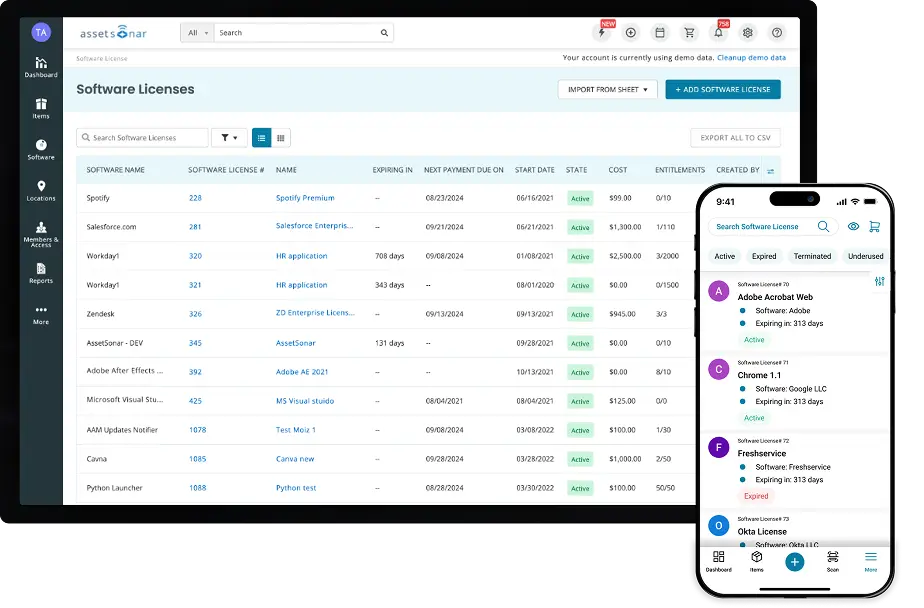
See each license by user, device, installation, and usage context, so IT can confirm what is assigned, where it is installed, who uses it, and what can be reclaimed.
Manage SaaS and On-Prem Together
Track user, device, and user-device entitlements for cloud subscriptions and installed software in one connected record, so IT can manage SaaS and on-prem licenses.
Reclaim Idle License Spend
Use metering and inactivity thresholds to spot licensed-but-unused apps, orphaned seats, and reclaimable spend early, so IT can reassign or cancel seats before renewal.
Never Miss Key License Renewals
Track payment, renewal, expiration, and contract-end dates with automated alerts, so IT, finance, and procurement know what needs action before deadlines arrive.
Prepare for Vendor Audits
Compare entitlements against actual installs and use compliance reports to spot unlicensed, overused, or improperly acquired software before vendor audits.
Trigger POs From Seat Availability
Set seat-availability thresholds to trigger purchase workflows when license counts fall below your limit, so procurement can act before teams run out.
Trusted by High-Performing Teams


See License Risk Before Renewal Season
Manage Every License From Entitlement to Renewal
Software Entitlements
License Usage & Reclamation
Renewals & Payments
Compliance & Reporting
License Inventory & Cataloging
Thresholds & Procurement
Software Entitlements
Assign and Track Every Seat
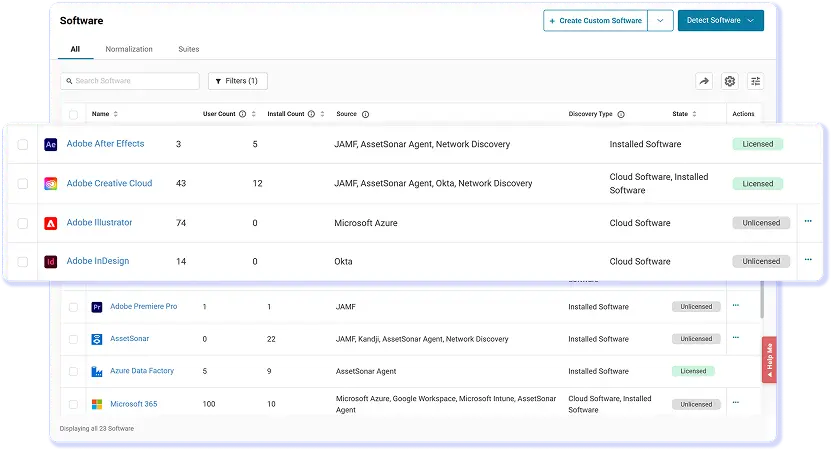
Define user, device, and user-device entitlements for every software license in AssetSonar. IT can manage named-user SaaS seats and device-installed software in a single workflow, view assigned and unassigned licenses, add or remove users, bulk-assign entitlements, and reconcile installs to identify what is entitled and what needs review before audit or renewal.
License Usage & Reclamation
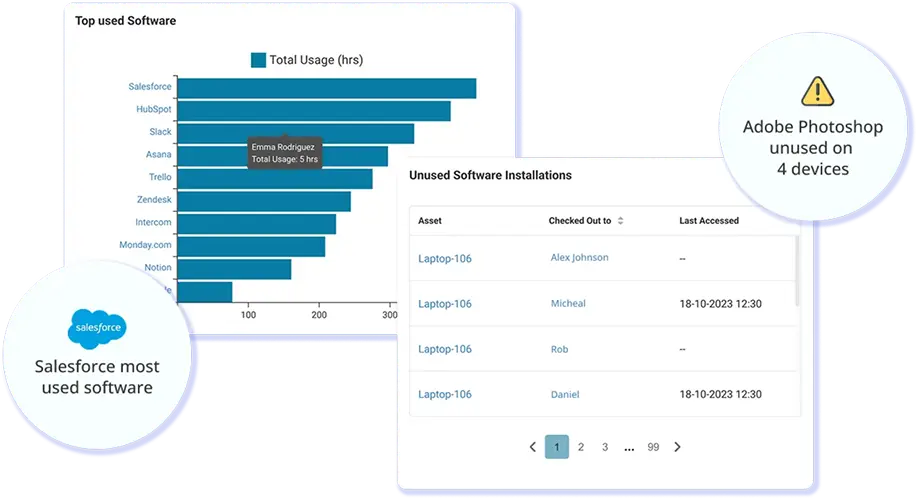
Find and Reclaim Idle Licenses
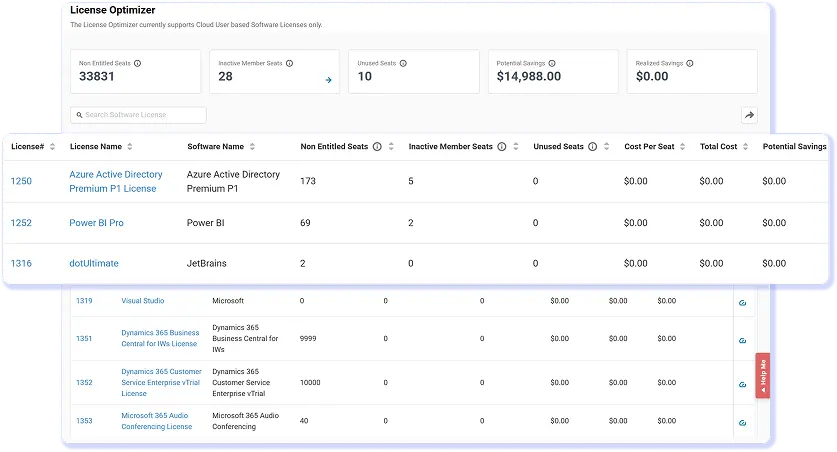
Spot licensed software that sits unused before renewal dates, and lock in another contract. AssetSonar uses metering to identify licensed-but-unused apps and flags ghost licenses based on 30-, 60-, or 90-day inactivity thresholds. IT can review reclaim lists and savings reports, then reassign, cancel, or right-size seats as part of renewals or employee offboarding.
Renewals & Payments
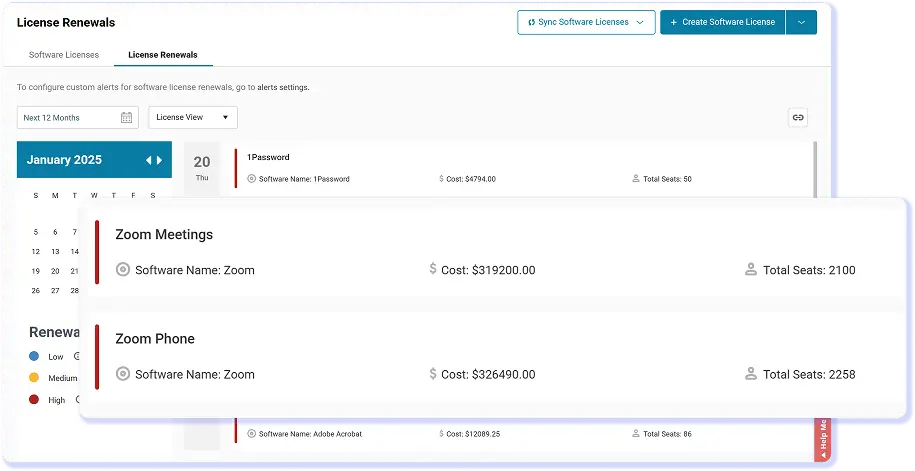
Never Miss a Renewal or Payment
Keep renewal details in one place: license type, version, payment amount, renewal date, expiration date, and contract end date. Automated alerts show IT, finance, and procurement what is coming up, so teams can review usage, reclaim idle seats, adjust counts, and prepare payments before deadlines turn into last-minute renewal decisions or missed charges.
Compliance & Reporting
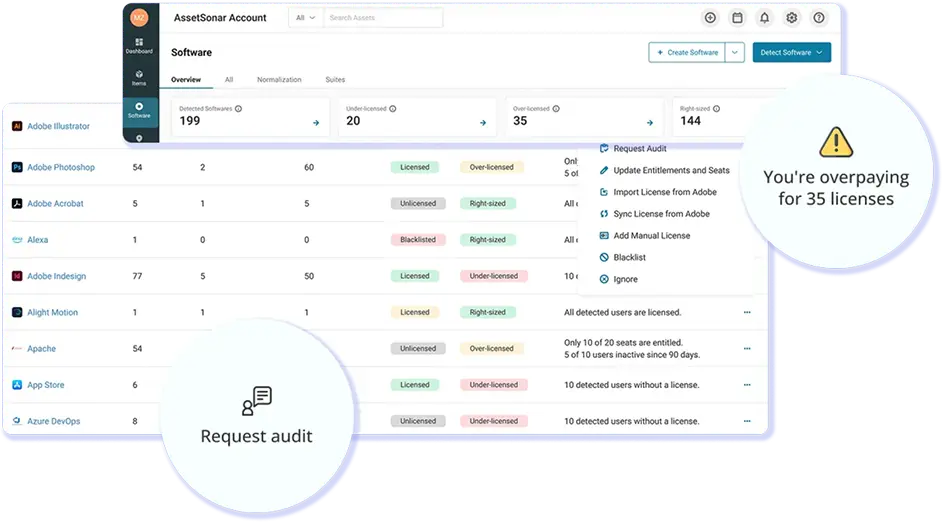
Prepare for Audits With Evidence
Compare license entitlements with actual software installs to see where your estate is under-licensed, over-licensed, unlicensed, or improperly acquired. AssetSonar’s built-in and custom reports support audit prep, spend forecasting, and compliance reviews, so IT can show what is installed, who is entitled, and where each application is being used.
License Inventory & Cataloging
One Catalog for Every Application
Catalog every software application in a single repository and filter by license state, usage, version, expiration date, vendor, or seat status. AssetSonar helps IT manage SaaS subscriptions and installed software across users and devices in one place, while reconciliation and normalization reduce duplicate records and keep the software estate easier to review.
Thresholds & Procurement
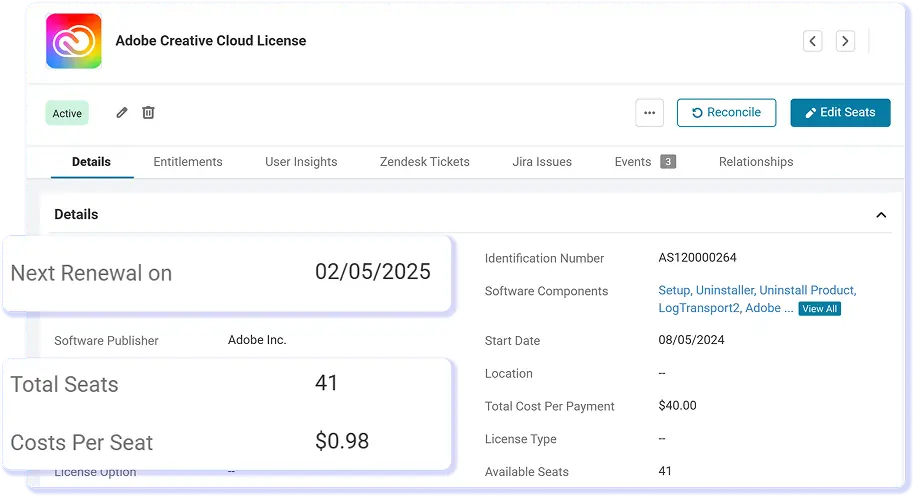
Buy Seats Before Teams Run Out
Set a License Availability Threshold for licenses with a defined Total Seats value. When available seats drop below that limit, AssetSonar can trigger a purchase order workflow for new or additional seats. IT sees capacity risk early, procurement buys based on real demand, and finance gets purchase context before teams run out of capacity or last-minute requests pile up.
Customer Testimonials
Turn License Sprawl Into Compliance and Savings
Read More on Software License Management
Frequently Asked Questions
Look for software that tracks more than a list of apps. A strong license management tool should show purchased entitlements, assigned users or devices, installation data, usage signals, renewal dates, contract owners, license types, and compliance gaps. It should also integrate with the systems IT already uses, so license records do not become another spreadsheet that has to be rebuilt before every renewal or audit.
Excel can work when a team has few apps, users, and renewals. It starts breaking down when licenses are assigned across departments, devices, SaaS accounts, and contracts. The risk is not just messy data. It is missed renewals, unused seats, unclear ownership, and no defensible record when Finance, Procurement, or an auditor asks what the business owns, uses, or still pays for.
Some tools are built mainly for SaaS subscriptions, while others support broader software asset management across SaaS, installed applications, device-based licenses, user-based licenses, and legacy software. Buyers should confirm whether the tool can track the software estate they actually have, not just API-connected SaaS apps. This matters for teams managing Microsoft, Adobe, AutoCAD, endpoint tools, and on-prem software together.
A license management tool should compare what the company owns against what people actually use. That means looking at assigned seats, installed applications, login or usage signals where available, and renewal dates. The goal is to identify seats that can be reclaimed, downgraded, reassigned, or removed before the business renews another contract based on old assumptions.
Yes. Renewal management should show which contracts are coming up, who owns them, how many seats are assigned, how much usage there is, and whether the business is over- or under-licensed. This gives IT, Finance, and Procurement a better context before renewal conversations, rather than negotiating from vendor quotes, stale spreadsheets, or last-minute usage exports.
Software discovery helps identify what is installed, detected, or connected across devices and systems. License management goes further by tying that discovery data to entitlements, assignments, usage, contracts, renewal dates, and compliance risk. Discovery tells IT what exists. License management helps the business decide what to keep, reclaim, renew, purchase, or retire.
Yes, if it keeps clean records of entitlements, installations, assignments, usage, purchases, and renewals. During a vendor audit or internal review, teams need to show what they own, what is deployed, who is using it, and where gaps exist. A strong license management tool reduces the need to reconstruct evidence from invoices, spreadsheets, endpoint tools, and emails.
The most useful integrations are the ones that connect software records to users, devices, identity, and deployment systems. Buyers commonly look for integrations with endpoint management, MDM, identity providers, HR systems, SaaS apps, and service desk tools. This helps keep license data tied to real users and devices rather than becoming a disconnected purchase record.
The business case usually comes from avoided waste, renewal leverage, reduced manual tracking, stronger audit readiness, and better Finance visibility. If IT can identify unused seats, prevent duplicate purchases, prove license ownership, and prepare renewals with real usage data, the tool becomes easier to justify as a cost-control and risk-reduction system rather than another IT database.
An internal tracker may work for a small, stable software estate, but it becomes harder to maintain as apps, users, integrations, renewals, and license types grow. Buying a tool makes more sense when the team needs automated discovery, entitlement tracking, renewal alerts, usage reporting, audit evidence, and integrations with systems like MDM, identity, HR, and service desk platforms.