AssetSonar vs Snipe-IT
IT Asset Management That Fills Its Own Register
Trusted by Teams Running Modern Operations






AssetSonar vs Snipe-IT: Head-to-head Comparison
Product Comparison

Snipe-IT
|
Table Header
|
||
|---|---|---|
|
Asset Records, Models & Categories |
✔ |
✔ |
|
Check-in / Check-out with Acceptance |
✔ |
✔ |
|
Barcode / QR-Based Scanning |
✔ |
✔ |
|
Custody Trail & Audit History |
✔ |
✔ |
|
Warranty & License Expiry Alerts |
✔ |
✔ |
|
Native Mobile App |
✔ |
❌ |
|
Open-source & free self-hosted option |
❌ Commercial SaaS |
✔ Free, open-source (AGPL v3);
unlimited assets & users |
|
Agent-Based Hardware Discovery |
✔ |
❌ |
|
Agentless Network Discovery |
✔ |
❌ |
|
Installed Software Inventory |
✔ |
❌ |
|
Continuous Reconciliation of Records |
✔ |
⚠️ Custom scripts required |
|
MDM Sync (Jamf, Kandji, Intune) |
✔ |
⚠️ Separate connectors required |
|
Directory / Identity Sync (Entra, Okta, Google) |
✔ |
✔ |
|
Software Normalization |
✔ |
❌ |
|
Endpoint Software Usage Metering |
✔ |
❌ |
|
License Usage Optimization & Reclamation |
✔ |
❌ |
|
SaaS Discovery |
✔ |
❌ |
|
Browser URL Tracking for SaaS Usage |
✔ |
❌ |
|
Native Patch Management |
✔ |
❌ |
|
Incident Ticketing |
✔ |
❌ |
|
Service Catalog & Request Fulfillment |
✔ |
⚠️ Requestable assets only |
|
Knowledge Base & Self-Service |
✔ |
❌ |
|
SLA Dashboard & Escalations |
✔ |
❌ |
|
Change & Problem Management |
✔ |
❌ |
|
CMDB / CI Relationships & Dependency Mapping |
✔ |
❌ |
|
AI Assistant Grounded in Asset Data |
✔ |
⚠️ Third-party MCP required |
|
Configurable Workflow Automation Engine |
✔ |
⚠️ API scripting required |
|
Automated Employee Offboarding Sequence |
✔ |
❌ |
|
Vendor-Managed Hosting |
✔ |
⚠️ Paid hosting only |
|
Automated Upgrades, Backups & TLS |
✔ |
⚠️ Paid hosting only |
|
Named CSM & Guided Implementation |
✔ |
❌ |
|
Unlimited Users |
✔ |
✔ |
|
Table Header
|
|
|---|---|
|
Asset Records, Models & Categories |
|
|
✔ |
✔ |
|
Check-in / Check-out with Acceptance |
|
|
✔ |
✔ |
|
Barcode / QR-Based Scanning |
|
|
✔ |
✔ |
|
Custody Trail & Audit History |
|
|
✔ |
✔ |
|
Warranty & License Expiry Alerts |
|
|
✔ |
✔ |
|
Native Mobile App |
|
|
✔ |
❌ |
|
Open-source & free self-hosted option |
|
|
❌ Commercial SaaS |
✔ Free, open-source (AGPL v3);
unlimited assets & users |
|
Agent-Based Hardware Discovery |
|
|
✔ |
❌ |
|
Agentless Network Discovery |
|
|
✔ |
❌ |
|
Installed Software Inventory |
|
|
✔ |
❌ |
|
Continuous Reconciliation of Records |
|
|
✔ |
⚠️ Custom scripts required |
|
MDM Sync (Jamf, Kandji, Intune) |
|
|
✔ |
⚠️ Separate connectors required |
|
Directory / Identity Sync (Entra, Okta, Google) |
|
|
✔ |
✔ |
|
Software Normalization |
|
|
✔ |
❌ |
|
Endpoint Software Usage Metering |
|
|
✔ |
❌ |
|
License Usage Optimization & Reclamation |
|
|
✔ |
❌ |
|
SaaS Discovery |
|
|
✔ |
❌ |
|
Browser URL Tracking for SaaS Usage |
|
|
✔ |
❌ |
|
Native Patch Management |
|
|
✔ |
❌ |
|
Incident Ticketing |
|
|
✔ |
❌ |
|
Service Catalog & Request Fulfillment |
|
|
✔ |
⚠️ Requestable assets only |
|
Knowledge Base & Self-Service |
|
|
✔ |
❌ |
|
SLA Dashboard & Escalations |
|
|
✔ |
❌ |
|
Change & Problem Management |
|
|
✔ |
❌ |
|
CMDB / CI Relationships & Dependency Mapping |
|
|
✔ |
❌ |
|
AI Assistant Grounded in Asset Data |
|
|
✔ |
⚠️ Third-party MCP required |
|
Configurable Workflow Automation Engine |
|
|
✔ |
⚠️ API scripting required |
|
Automated Employee Offboarding Sequence |
|
|
✔ |
❌ |
|
Vendor-Managed Hosting |
|
|
✔ |
⚠️ Paid hosting only |
|
Automated Upgrades, Backups & TLS |
|
|
✔ |
⚠️ Paid hosting only |
|
Named CSM & Guided Implementation |
|
|
✔ |
❌ |
|
Unlimited Users |
|
|
✔ |
✔ |
Legend:
✔ = Explicitly offered
❌ = Not offered or documented
⚠️ = Supported, but narrower in scope or subject to tier/add-on gating

Why AssetSonar?
A manually maintained asset register is only as accurate as its most recent update. AssetSonar takes a different approach. Its ITAM Agent discovers hardware and installed software, directory integrations synchronize user and ownership data, and software metering compares license assignments with actual usage. Keep asset records updated for audits, support requests, and employee offboarding.
Incidents and requests use the same asset records rather than being stored in a separate tool. Zoe, AssetSonar’s AI agent, uses this shared context to connect assets to users and tickets, suggest fixes, and trigger actions. The register stays up to date, while the service desk operates on real-asset context.
What We Bring to the Table
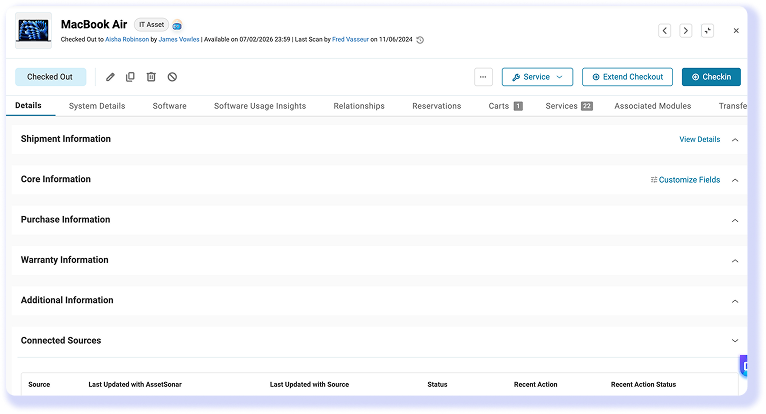
Asset Records That Stay Current
AssetSonar’s ITAM Agent discovers hardware and installed software, while agentless discovery identifies devices across the network, populating the asset register. As the ITAM Agent and connected discovery tools sync, updated hardware and software details flow into the corresponding asset records, helping IT teams maintain more accurate asset data as their IT environment changes.
Snipe-IT records are created and updated through manual entry, CSV imports, API calls, or separate integrations. This can suit stable IT inventories, but dynamic environments require more effort to keep the register aligned with deployed assets.

IT Offboarding That Runs Itself
AssetSonar’s automation engine triggers a configured offboarding workflow from the employee record when an employee leaves. Supported actions include reclaiming licenses, triggering access removal from connected systems, and recording each completed step in an activity trail for review.
Snipe-IT shows assets and license seats assigned to a user and supports checking them back in. It does not provide a native offboarding workflow, so IT teams coordinate access removal, license recovery, device returns, and follow-up through separate processes or tools.
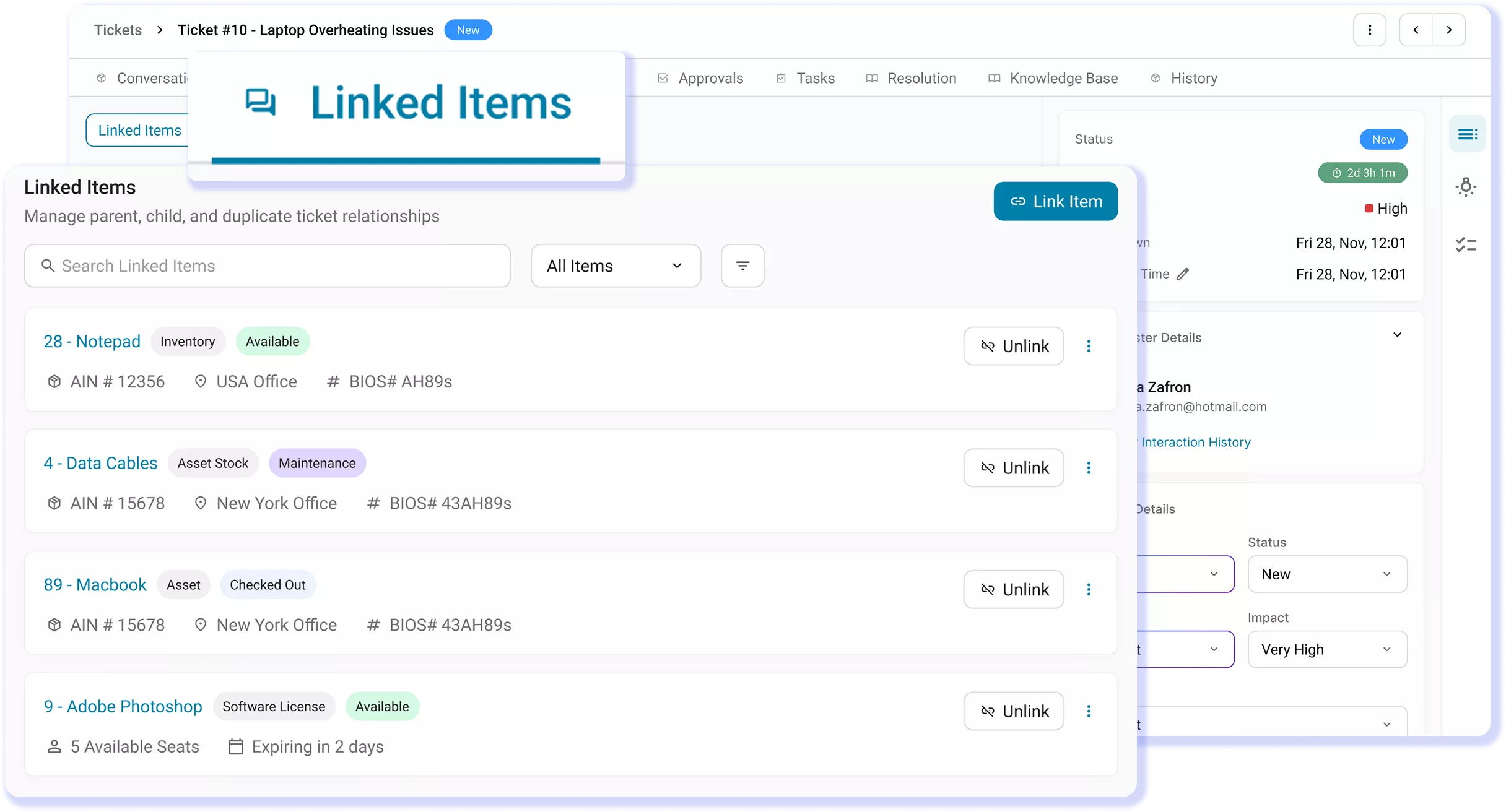
Tickets Built on Live Asset Data
AssetSonar provides an ITAM-first foundation for ITSM workflows, managing incidents, service requests, SLAs, and approvals using connected asset context. Each ticket includes the device, owner, software, location, and service history, so support starts with useful context. IT teams can investigate, route work, and record the outcome without having to record asset details in another system. Updates stay connected to the asset, making that context available for future requests, recurring issues, and audits.
Snipe-IT does not include a native service desk. It can connect with platforms such as Jira or HaloITSM, but assets and tickets remain in separate systems. IT teams must configure and maintain an external integration to keep both records connected.
Customer Testimonials


Proven by Users, Recognized by G2



Reliable IT Starts With Automated Records
Frequently Asked Questions
AssetSonar is often a stronger fit for mid-market and enterprise IT teams that need continuous discovery, software visibility, native ITSM, and workflow automation in one system. Snipe-IT supports unlimited users and assets and is well suited to teams that want configurable asset records, check-in/check-out, license tracking, API access, and self-hosting. The better choice depends on your operating model: connected IT operations with AssetSonar, or greater control over hosting and code with Snipe-IT.
Snipe-IT may be a better fit for technical IT teams that want free self-hosting, access to the source code, and the flexibility to build integrations through a REST API. It also covers asset assignments, check-in/check-out, acceptance, barcodes, audits, custom fields, and license records. AssetSonar is a better fit when IT teams need vendor-managed SaaS, continuous discovery, native ITSM, software usage insights, and no-code workflows. The choice comes down to control versus broader automation.
No. Snipe-IT states that its hosted and self-hosted editions use the same software and features. Paid hosting adds vendor-managed setup, maintenance, upgrades, security, backups, and support, but it does not add a native network or endpoint discovery agent. AssetSonar discovers endpoints through its ITAM Agent, network scans, and MDM integrations, then reconciles those sources into current records. Hosting therefore reduces Snipe-IT maintenance work but does not close the discovery gap.
AssetSonar offers deeper software and license management through its Advanced SAM add-on. It can discover installed and SaaS applications, normalize software titles, map licenses to users or devices, identify unused seats, and support renewal and reclamation reviews. Snipe-IT can record licenses, assign seats, retain checkout history, and send expiry alerts. However, it does not natively discover installed software, normalize software titles, offer software metering, or optimize SaaS licenses.
Compare total cost, not subscription price alone. Self-hosted Snipe-IT has no software license fee, but IT teams manage the infrastructure, installation, TLS, backups, upgrades, security, and administration. Paid hosting shifts some of this work to the vendor. AssetSonar uses per-asset subscription pricing, with ITSM including ITAM and Advanced SAM sold separately. A fair estimate should include hosting, support, add-ons, migration, admin time, integrations, and ongoing data maintenance.
Yes. IT teams can export Snipe-IT records and import data into AssetSonar through CSV, mapping columns to standard or custom fields. Before migrating, define which users, locations, license records, custody history, and custom fields must be retained. AssetSonar can then match imported records with devices found through its Agent, MDM connectors, or network discovery. Not every relationship or historical event transfers automatically, so requirements should be confirmed during implementation.
AssetSonar provides integrations for device, identity, service desk, SaaS, procurement, and warranty systems. These connections can update asset, user, license, and ticket data, while its workflow automation engine can act on that information to automate workflows. Snipe-IT provides LDAP, SCIM, a REST API, and a mix of vendor, community, and third-party connectors. IT teams should compare each required connector by owner, sync direction, frequency, field coverage, setup effort, and responsibility for maintenance.
