









AssetSonar Features Software Normalization Feature
Software Normalization
Normalize Software Data For Accurate Licensing
Proven Impact Across IT Teams
90%
Asset Data Accuracy
95%
Automated Software Discovery
30%
SaaS Savings From Consolidation
Unified Catalog For Software Visibility and Control
Reconcile Data for Reliable Records
AssetSonar groups related software under one title while retaining component details, giving IT teams reliable data for license reconciliation. Create consistent software records.
Prepare Consistent Audit Evidence
AssetSonar standardizes installed-software titles before teams compare them with entitlements, helping them prepare clearer evidence for internal and vendor audits.
Build Reports From Reviewed Titles
AssetSonar maps related software detections to standardized catalog titles, helping IT teams create cleaner, more accurate inventory, usage, and license reports.
Expose Shadow IT and Duplicates
Consolidated and normalized software records help uncover shadow IT, duplicate tools, redundant subscriptions, and hidden installs, reducing cost and risk.
Use Consistent Catalog Metadata
AssetSonar adds standardized publisher, product, and version details to merged software titles, creating cleaner records than raw discovery data.
Connect Software to Real IT Context
AssetSonar normalizes software within your ITAM and updates the same connected IT Graph without requiring a separate data platform to buy or maintain.
Trusted by High-Performing IT Teams


Consolidate Software Records With Normalization
Built-In Workflows For a Standardized Software Catalog
Software Catalog Matching
Guided Normalization Workflow
Software Metadata Enrichment
Normalization Progress KPIs
Connected Software Records
Software Catalog Matching
Match Detections to Catalog Titles
Discovery sources may identify software under inconsistent product or publisher labels, with version and edition details split across entries. AssetSonar compares the detections with its built-in catalog and recommends a catalog title. Reviewers inspect the proposed mapping and components before confirming it, keeping control over the final normalized title.
Guided Normalization Workflow
Take Control of Recommended Matches
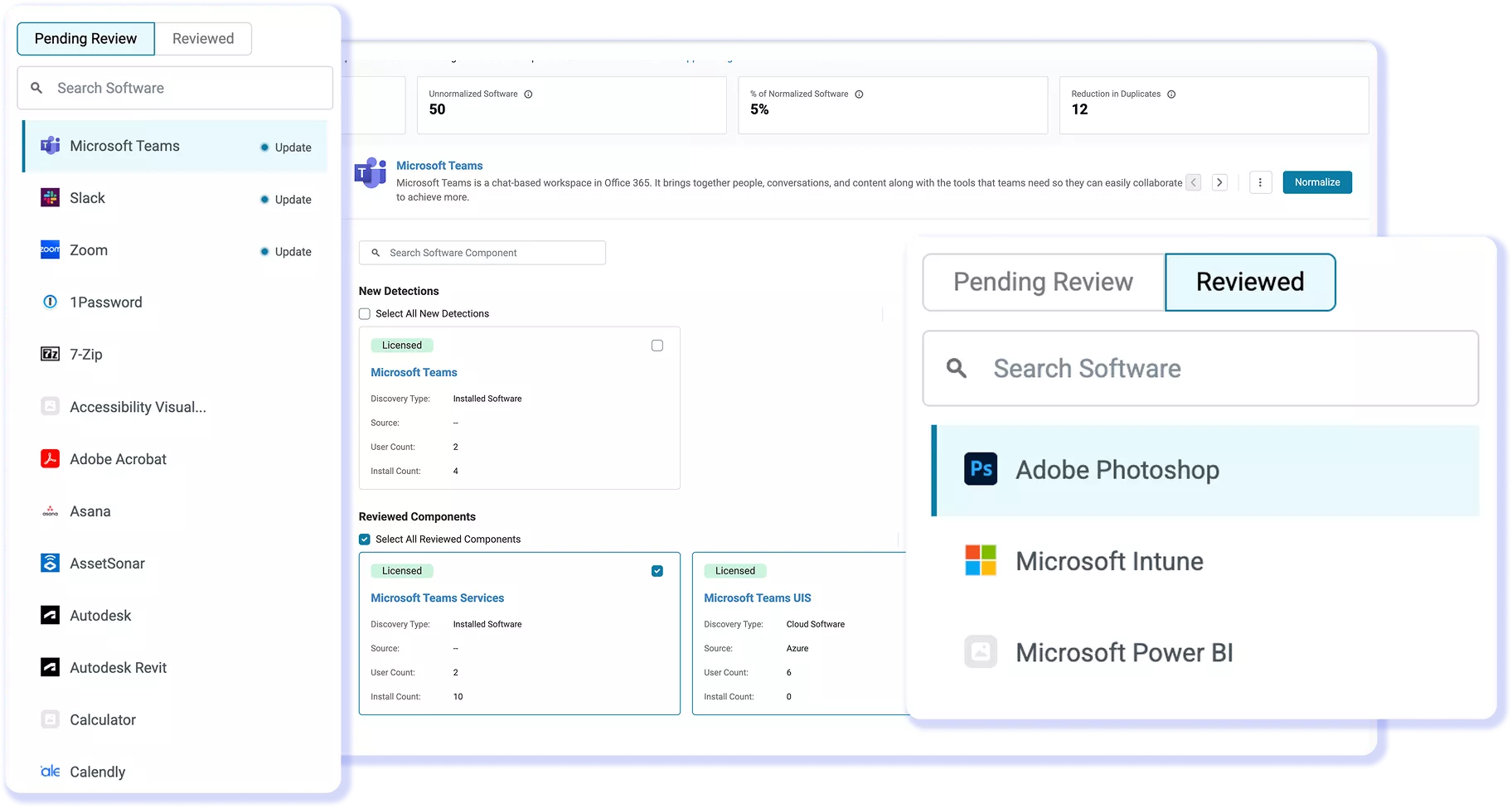
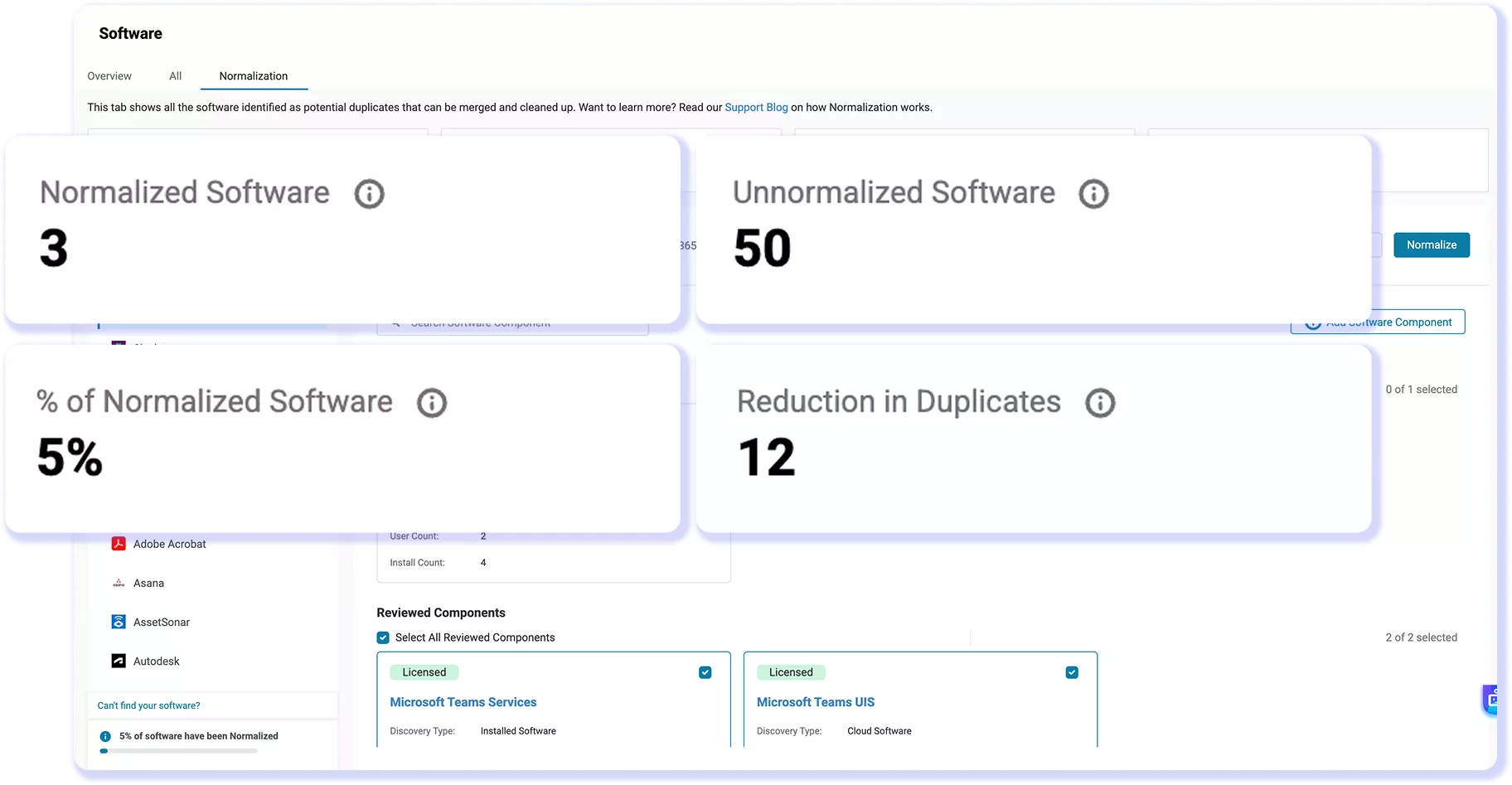
The Normalization tab places recommended catalog titles and related components in Pending Review. Authorized reviewers inspect the proposed group, choose the components that belong together, and select Normalize. Confirmed titles move to Reviewed, while a banner on an unnormalized record links directly to the relevant queue entry for faster follow-up.
Software Metadata Enrichment
Standardize Software Details for Better Visibility
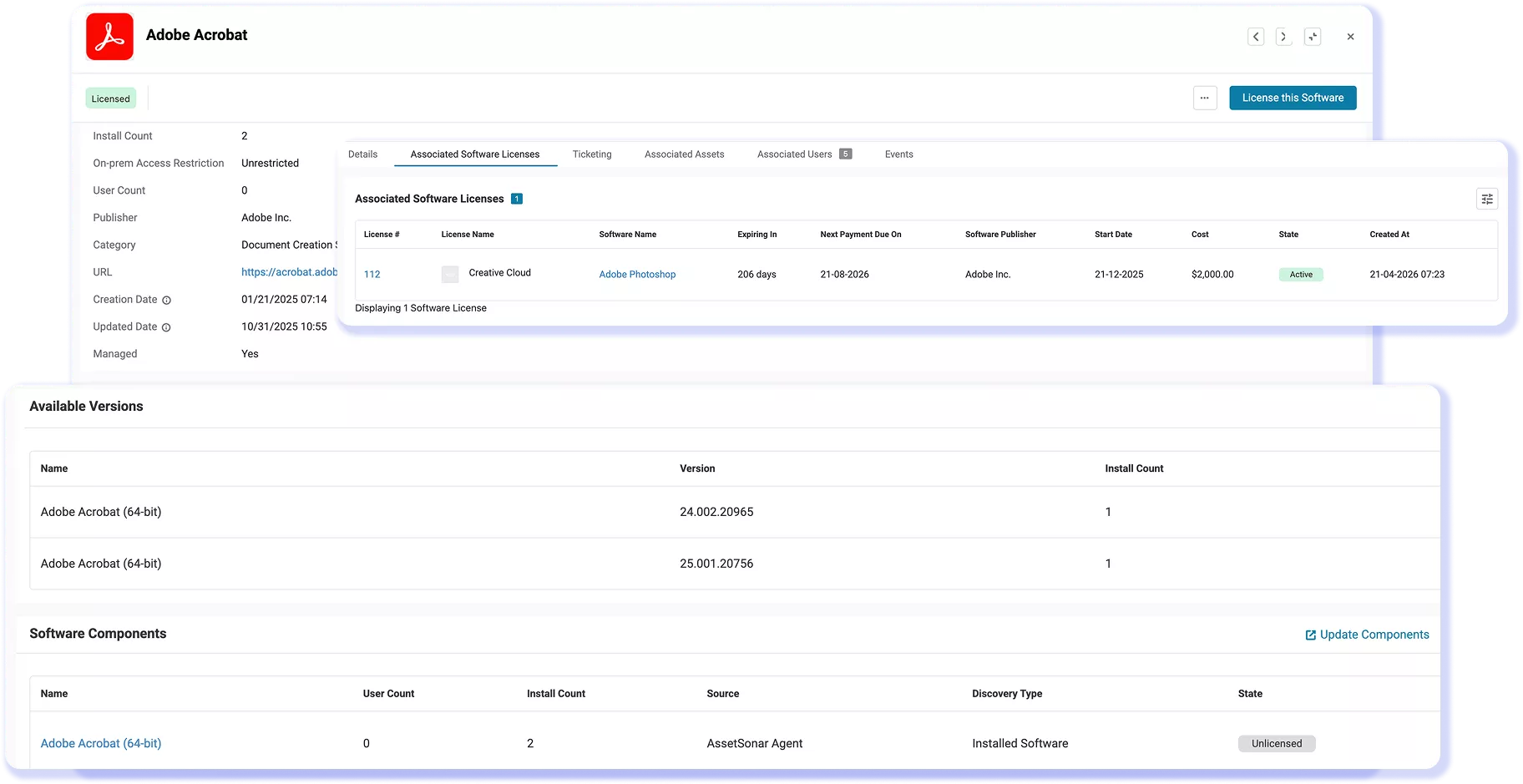
Raw detections can contain inconsistent product, publisher, version, and edition details. After a reviewer confirms the mapping, the normalized title displays available metadata from AssetSonar’s catalog while its components remain visible. IT teams gain a consistent record for search, filtering, reporting, and license review without losing source detail.
Normalization Progress KPIs
Turn Catalog Into Clear Metrics
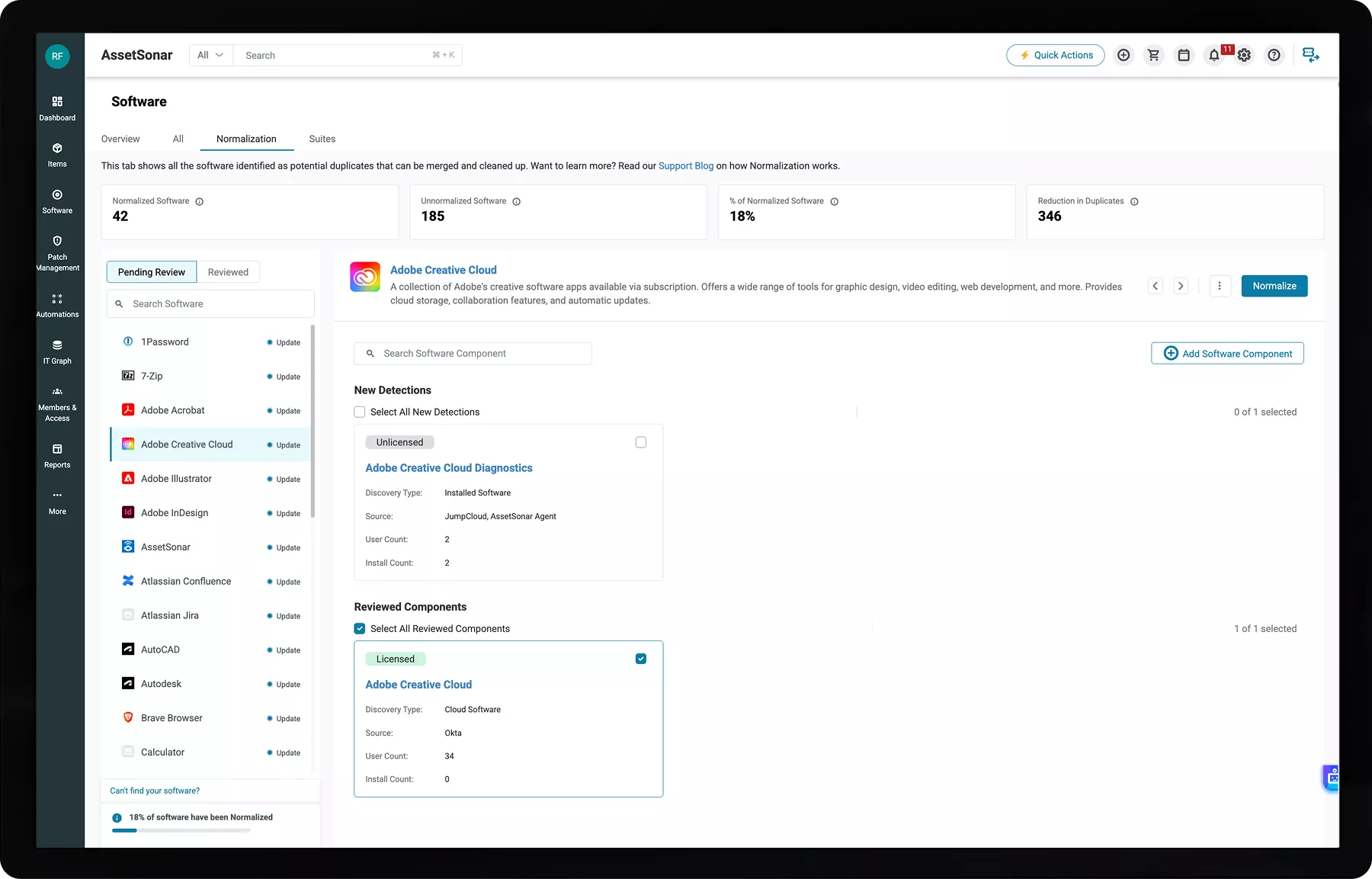
The Normalization view tracks Normalized Software, Unnormalized Software, % of Normalized Software, and Reduction in Duplicates. These KPIs show normalization coverage and duplicate reduction over time. IT teams can monitor progress, identify the remaining review workload, and report status without calculating or maintaining the totals in a separate tracker.
Connected Software Records
Connect Normalized Data for Smoother SAM
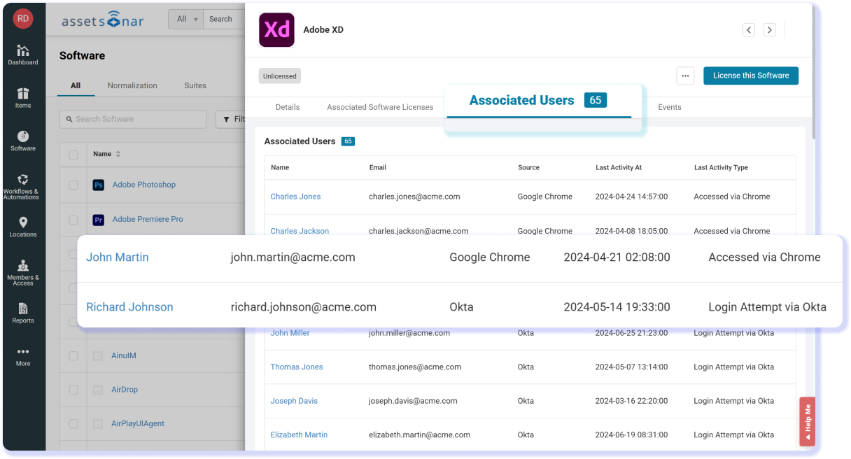
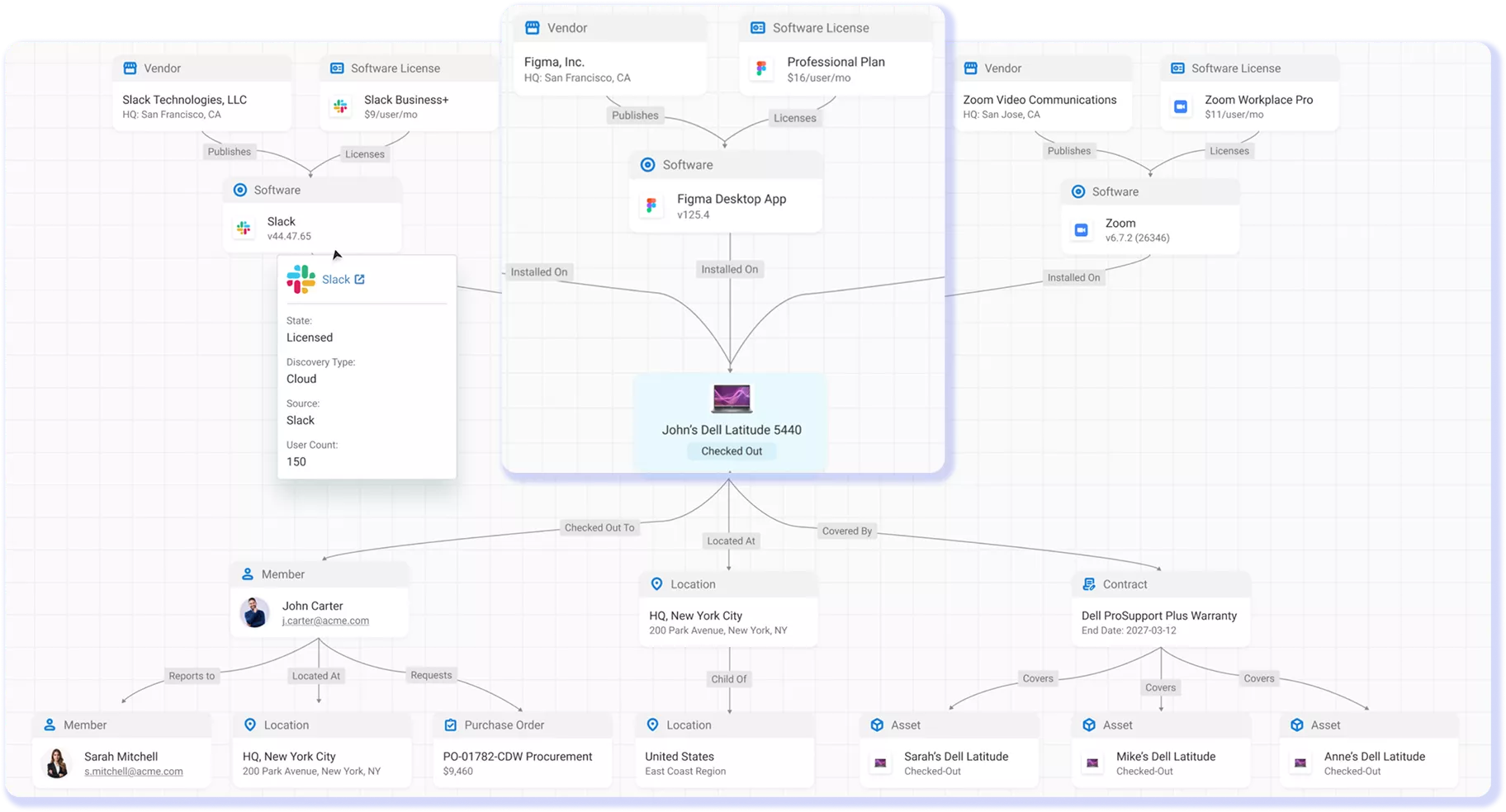
AssetSonar’s IT Graph links normalized software with users, devices, licenses, installations, usage, and renewal records. IT teams can use this connected context for license reconciliation, usage analysis, audit preparation, and reporting, reducing the need to recreate relationships in separate tools or reports.
Customer Testimonials
Prepare for Audits With Normalized Software Data
Explore More Software Normalization Resources
Frequently Asked Questions
Software discovery identifies applications and components across supported sources. Software normalization is the next step: AssetSonar compares related detections with its built-in catalog and recommends a catalog title. An authorized reviewer confirms which components belong together before AssetSonar creates the normalized title.
The related components remain available under the normalized title rather than being deleted. Reviewers can inspect the grouped records, use Update Components when new related detections appear, and add a custom component when needed. This preserves source detail while giving IT teams one reviewed catalog title. Normalized titles also appear in the managed software view by default, helping teams focus their software views and reports.
No. A software component can map to one normalized title at a time. This prevents the same software from being counted in more than one reviewed group. If the original mapping is no longer appropriate, an authorized reviewer should follow the unnormalization workflow before assigning the component elsewhere.
Normalization and licensing are separate steps. First, a reviewer confirms the component mapping and creates the normalized title. From that title’s details, an authorized user can select “License This Software” and associate the appropriate license within AssetSonar’s software license management workflow. Adding a license does not create the normalized state; the confirmed mapping does.
Software normalization is enabled by default in AssetSonar and can begin after teams complete their initial software discovery setup. Review effort depends on inventory size, source-data quality, proposed mappings, reviewer availability, and governance rules. IT teams can phase the rollout by starting with high-volume publishers or high-impact catalog groups.
Build a Standardized Software Foundation
Create software groupings, keep component details intact, and use normalized titles for license reconciliation, audit preparation, and reporting.