







AssetSonar Features Vulnerability Management
Vulnerability Management Software
Find and Fix Vulnerabilities With Full Asset Context
Proven by Rapidly Growing IT Teams
95%
Automated Discovery
20%
Faster Ticket Resolution
30%
Potential Savings On SaaS
Know What’s Vulnerable. Fix What Matters.
Discover Vulnerable Assets
See which devices, endpoints, and software records are affected so IT teams can identify exposure faster and understand risks across the entire environment.
Tie Vulnerabilities to Assets
Connect vulnerability data to affected devices, users, owners, software versions, locations, departments, lifecycle status, and remediation status for clearer decision-making.
Prioritize by Risk Level
Focus on the vulnerabilities that need action first; prioritize based on severity, CVE details, affected asset count, owner or team, device criticality, patch availability, and target dates.
Coordinate Remediation
Assign owners, create tickets or tasks, schedule patching or remediation work, and move vulnerabilities from awareness to action with clearer follow-through.
Track Closure and Evidence
Monitor remediation status, verify closure, and retain activity history, so teams can show what was fixed, when it was fixed, and who completed the work.
Improve Audit Readiness
Use dashboards and remediation logs to report on open vulnerabilities, high-risk assets, overdue remediation, patch status, and owner accountability.
Trusted by High-Performing Teams


Unpatched Vulnerabilities Don’t Wait. Neither Should You.
Detect, Prioritize, and Patch Vulnerabilities
Detect NIST CVEs
Context Behind Every CVE
Patch Deployment
Patch Scheduling
Track Compliance
Patch Alerts
Detect NIST CVEs
Real-Time CVE Detection Across Every Endpoint
AssetSonar uses the ITAM Agent to scan managed endpoints and identify software versions that match known CVEs in the NIST National Vulnerability Database. Each detected vulnerability is mapped to the specific device and software version affected, then scored by severity using CVSS.
Instead of working from a generic vulnerability feed, IT teams see the exact CVEs that apply to their actual environment. The result is a vulnerability list tied to real endpoints, not a detached catalog of possible risks.

Context Behind Every CVE
Every CVE Shows the Device, Owner, Version, and Ticket
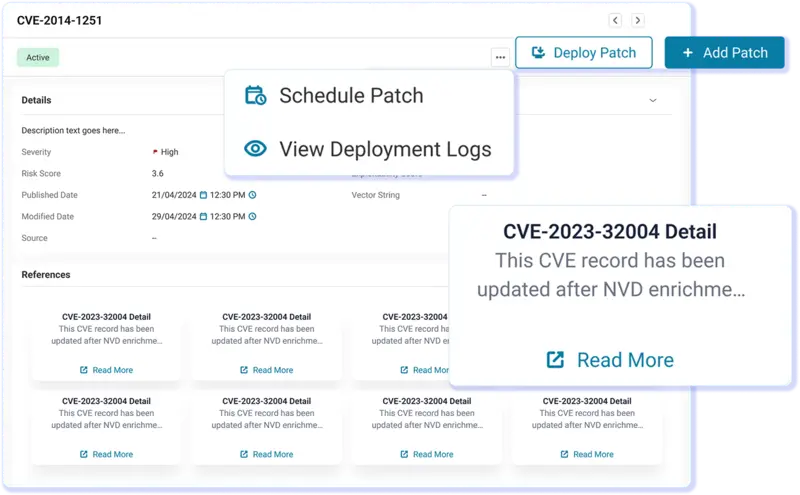
A CVE by itself does not tell IT what to do next. AssetSonar adds the operational context behind the risk: what device is affected, who uses it, what software version is installed, whether the asset is active, and whether a related ticket exists.
That context helps IT identify action items, assign ownership, plan remediation, and avoid duplicate work. The team can move from “we found a CVE” to “these are the assets we need to patch” without manually searching for context.

Patch Deployment
Move From CVE Detection to Targeted Patch Deployment
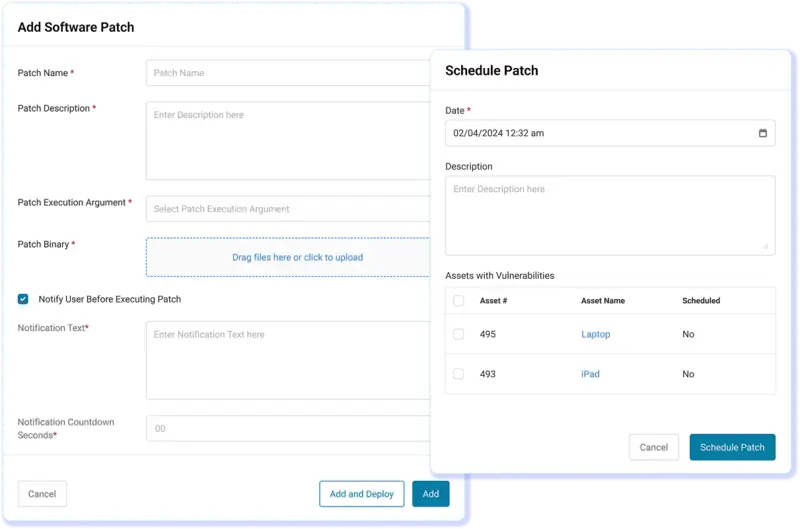
When a vulnerability requires remediation, AssetSonar provides IT with the reference links needed to locate the appropriate patch. Admins can upload the patch, select target devices, and choose immediate deployment or a scheduled rollout. This keeps patching controlled, logged, and auditable. IT decides what gets deployed, where it goes, and when it runs, while AssetSonar tracks the deployment through to completion or failure.
Patch Scheduling
Schedule Patches Around Business Hours
Patching should not interrupt users in the middle of the workday. AssetSonar lets IT define exactly when a patch should run, which devices it should target, and how the deployment should be tracked.
Patches execute silently during the scheduled window. Admins receive status updates, and failed deployments are surfaced so teams can follow up before issues become an unresolved backlog.
Track Compliance
Track Patch Compliance Without Rebuilding Reports
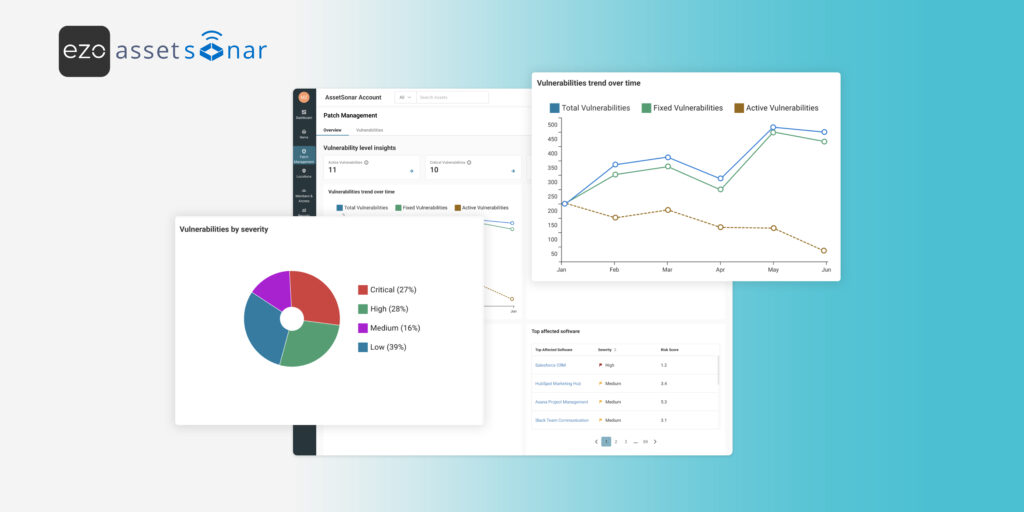
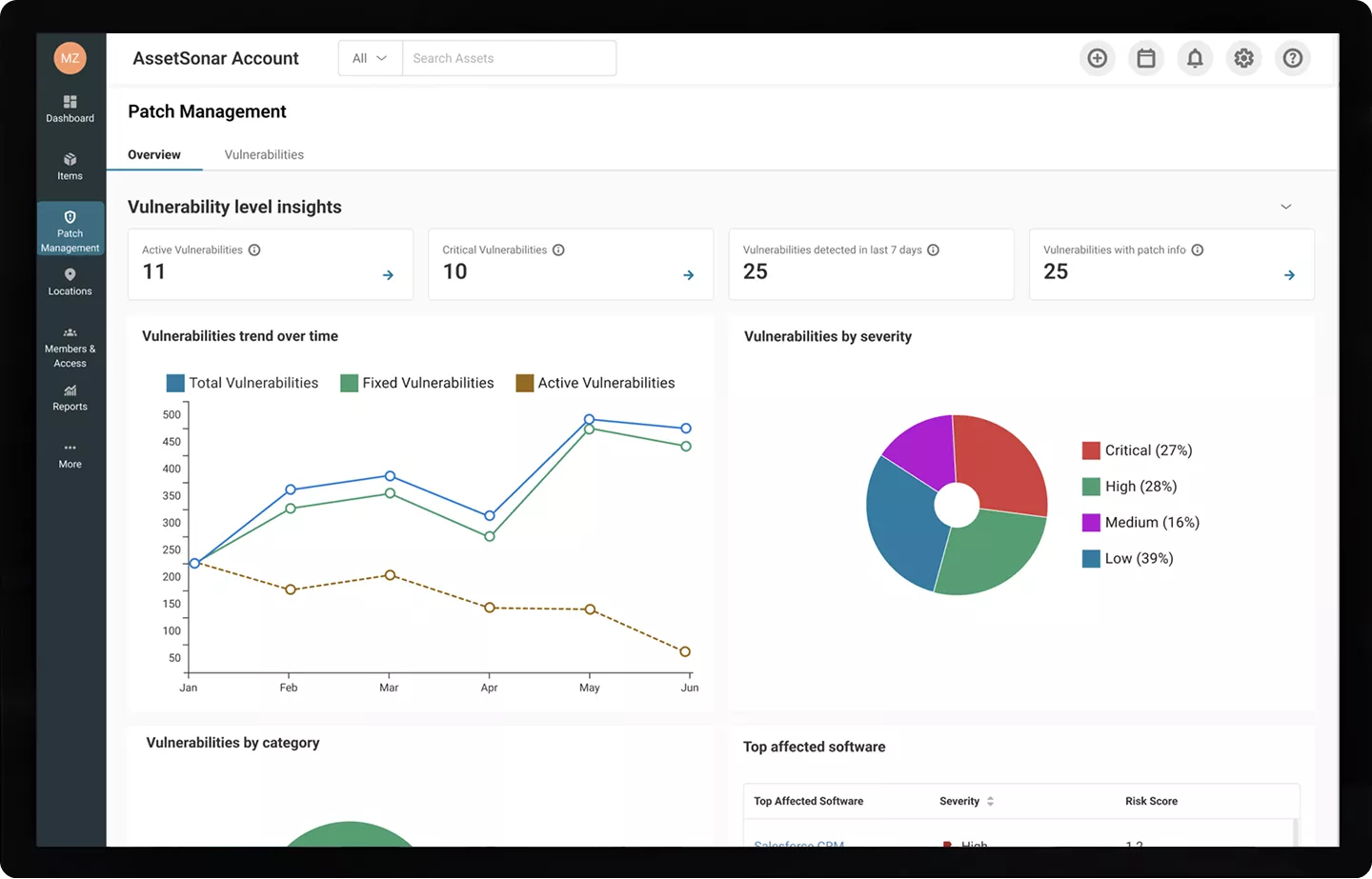
AssetSonar gives IT managers and directors a dashboard-level view of vulnerability and patching posture. Teams can see critical CVEs, overdue remediation, deployment success rates, failed patches, and aging vulnerabilities from one place.
When an audit or leadership review begins, IT can export time-stamped, user-attributed reports instead of pulling screenshots and spreadsheets from multiple tools. The record shows what was found, what was patched, who acted, and what still needs attention.

Patch Alerts
Stay Ahead of Vulnerabilities Without Constant Monitoring
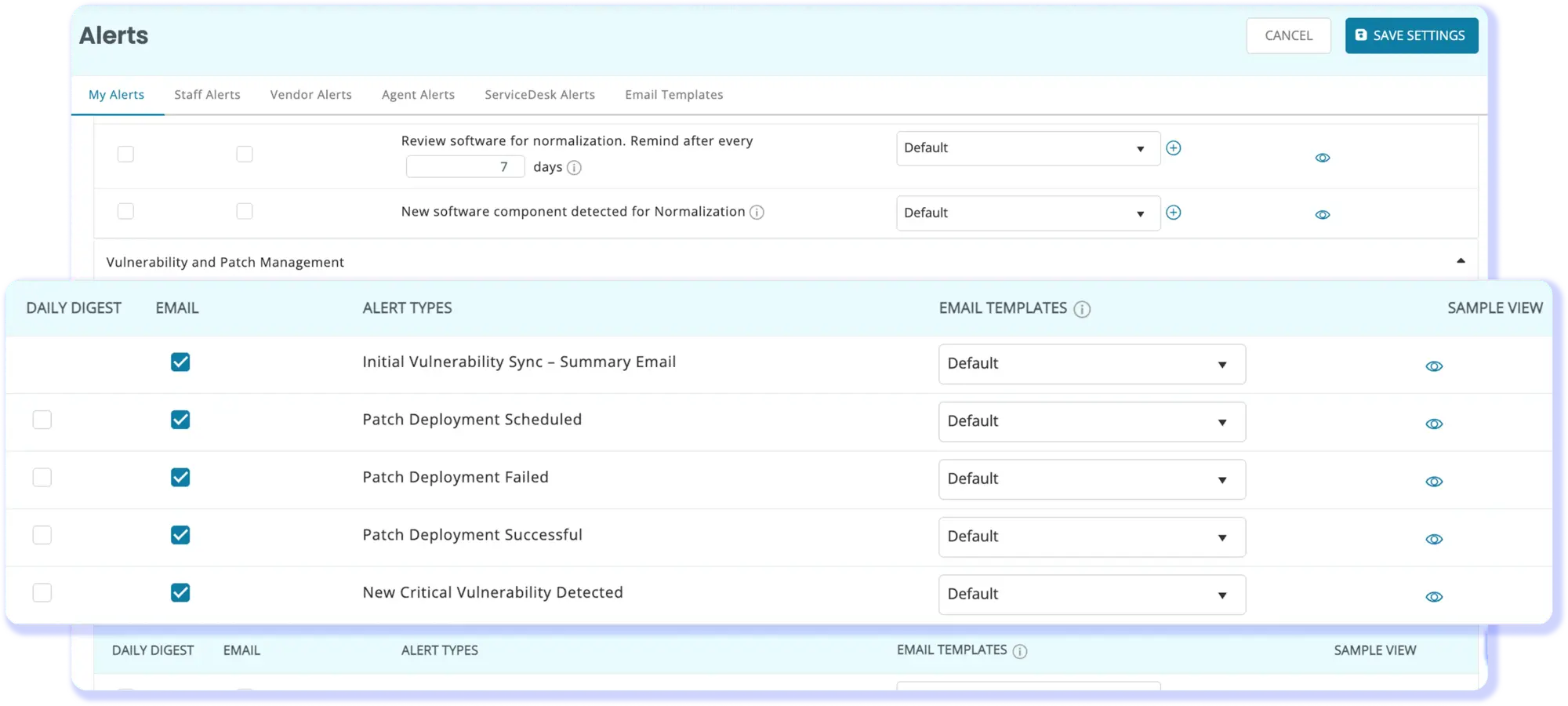
AssetSonar surfaces vulnerabilities and patch activity without requiring IT to manually check the dashboard throughout the day. Admins can receive alerts for new critical CVEs, patch status changes, and failed deployments.
For daily review, the Daily Vulnerability Digest summarizes the environment’s vulnerability state each morning. The team starts the day knowing what needs action, what succeeded, and what still needs follow-up.
Customer Testimonials
Ready to Address Your Vulnerability Gaps?
Read More on Vulnerability Management
Frequently Asked Questions
Yes. AssetSonar includes a Patch Management module that enables real-time vulnerability discovery, CVSS-scored CVE mapping via NIST NVD, and patch deployment for Windows, macOS, and Linux devices, all within the same unified ITAM, ITSM, and SAM platform.
The AssetSonar ITAM Agent scans all managed endpoints and cross-references installed software packages against the NIST National Vulnerability Database (NVD) in real time. Each detected CVE is scored by severity using CVSS and mapped to the specific devices and software versions in the environment.
AssetSonar supports manual patch upload (with NIST and vendor advisory reference links provided), immediate deployment, and scheduled deployment to targeted device groups. IT teams can define maintenance windows, track each deployment through to completion or failure, and receive automated alerts when a patch fails or succeeds.
AssetSonar connects vulnerability data to its IT Graph, including the live data model linking hardware assets, software licenses, service tickets, and assigned employees. Every CVE immediately surfaces the affected device, its owner, its software version, and related ticket history, eliminating the manual cross-referencing required when using standalone vulnerability tools.
AssetSonar generates time-stamped, user-attributed patch compliance reports supporting compliance frameworks like SOC 2 and ISO 27001. The Patch Dashboard provides real-time visibility into compliance status, deployment success rates, and aging vulnerability data.
AssetSonar’s Patch Management module supports Windows, macOS, and Linux devices, all managed and reported from a single console.
Patch Management is included in AssetSonar’s platform; it is not a separate product or add-on license. It is part of the same platform as hardware asset management, software asset management, and IT service management.
Dedicated vulnerability tools identify which software versions are vulnerable. AssetSonar maps every CVE to the specific device in your inventory, the employee assigned to it, and the related service ticket, using the live IT Graph that already exists in the system. This eliminates the manual data correlation work that standalone security tools require.
Yes. AssetSonar’s Patch Scheduling capability allows IT teams to select specific patches, define target device groups, and set a future deployment date and time. Patches execute silently during the scheduled window, minimizing business disruption.