







Meet the help desk that knows your IT from day one.

AssetSonar Features Change Management

Change Management

Approve and Track IT Changes With Asset Context

AssetSonar helps you raise, assess, approve, and document IT changes, route multi-step approvals, link affected assets through the IT Graph, and maintain an exportable audit trail for stronger change governance.
Best Meets Requirements
High Performer Mid market
best support-2026
Momentum Leader

No Credit Card Required

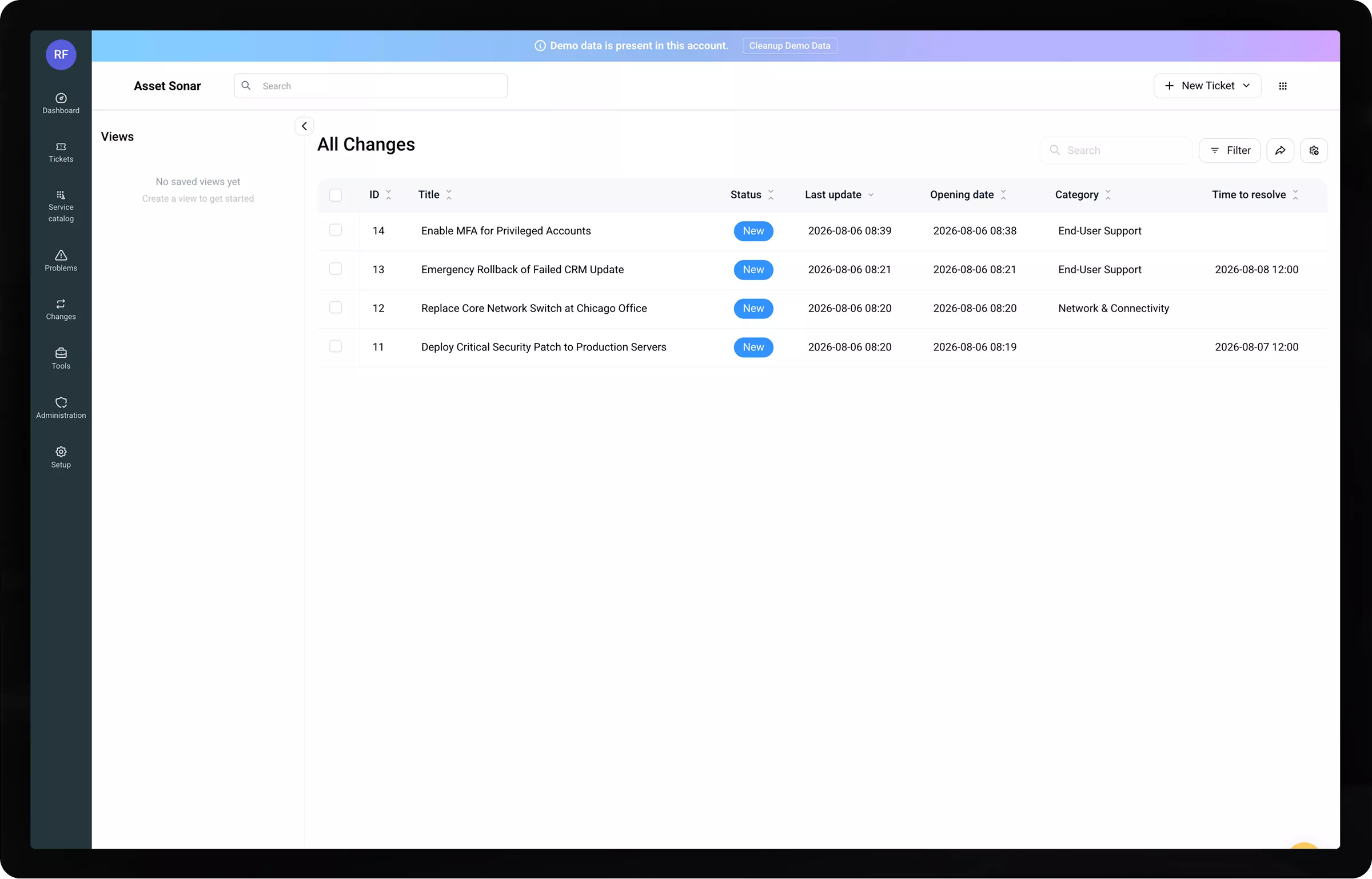
AssetSonar dashboard listing IT change requests, statuses, categories, and resolution times.

Proven Impact Across IT Teams

90%

Automated Asset Discovery

20%

Faster Ticket Resolution

100%

Automated CMDB Setup

From Change Request to Audit-Ready Record

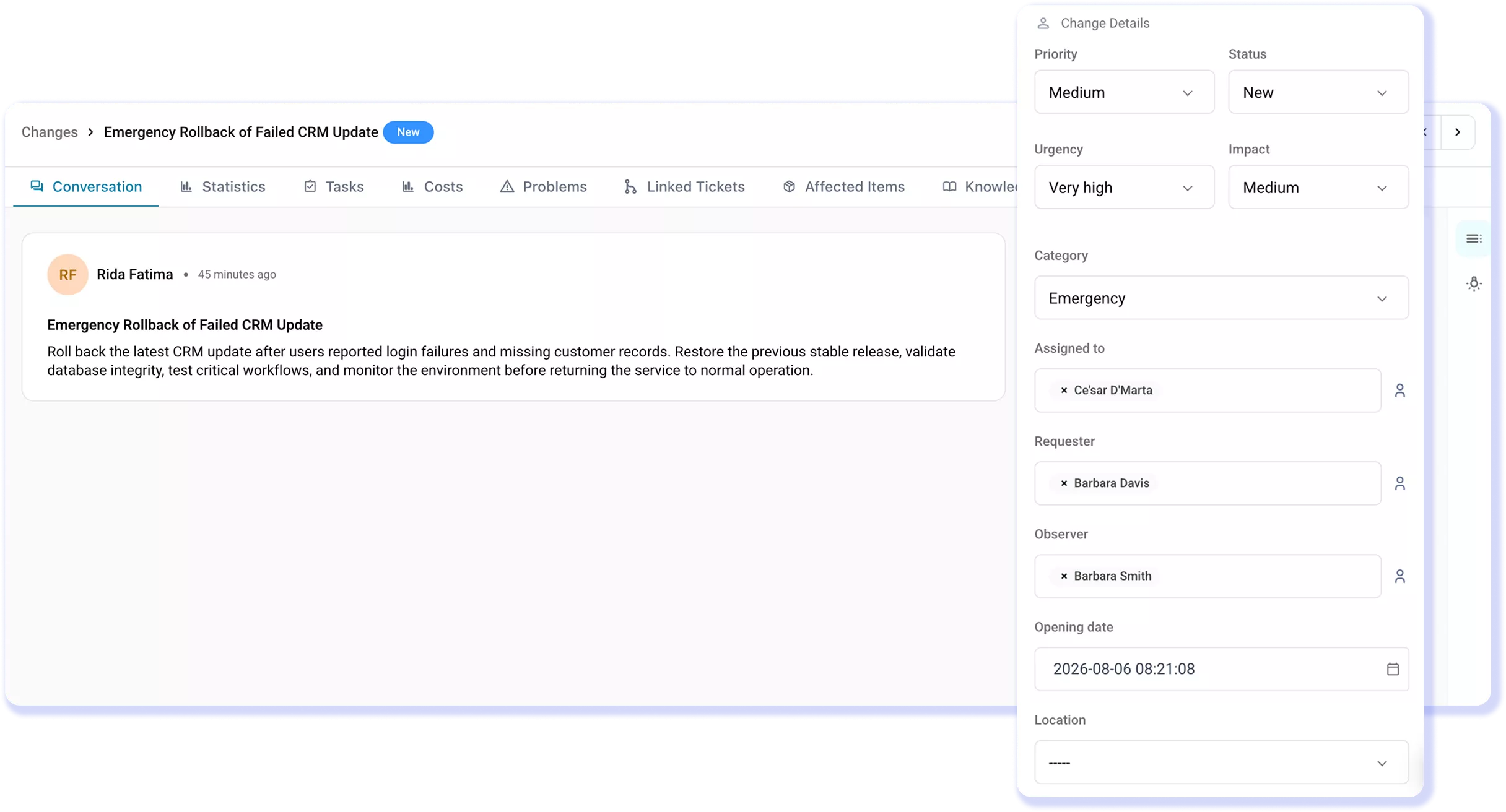
Assess Impact for Accurate Classification

Raise Standard, Normal, or Emergency change types, each with its own template and approval chain, so every change is recorded and is proportionate to the risk involved.

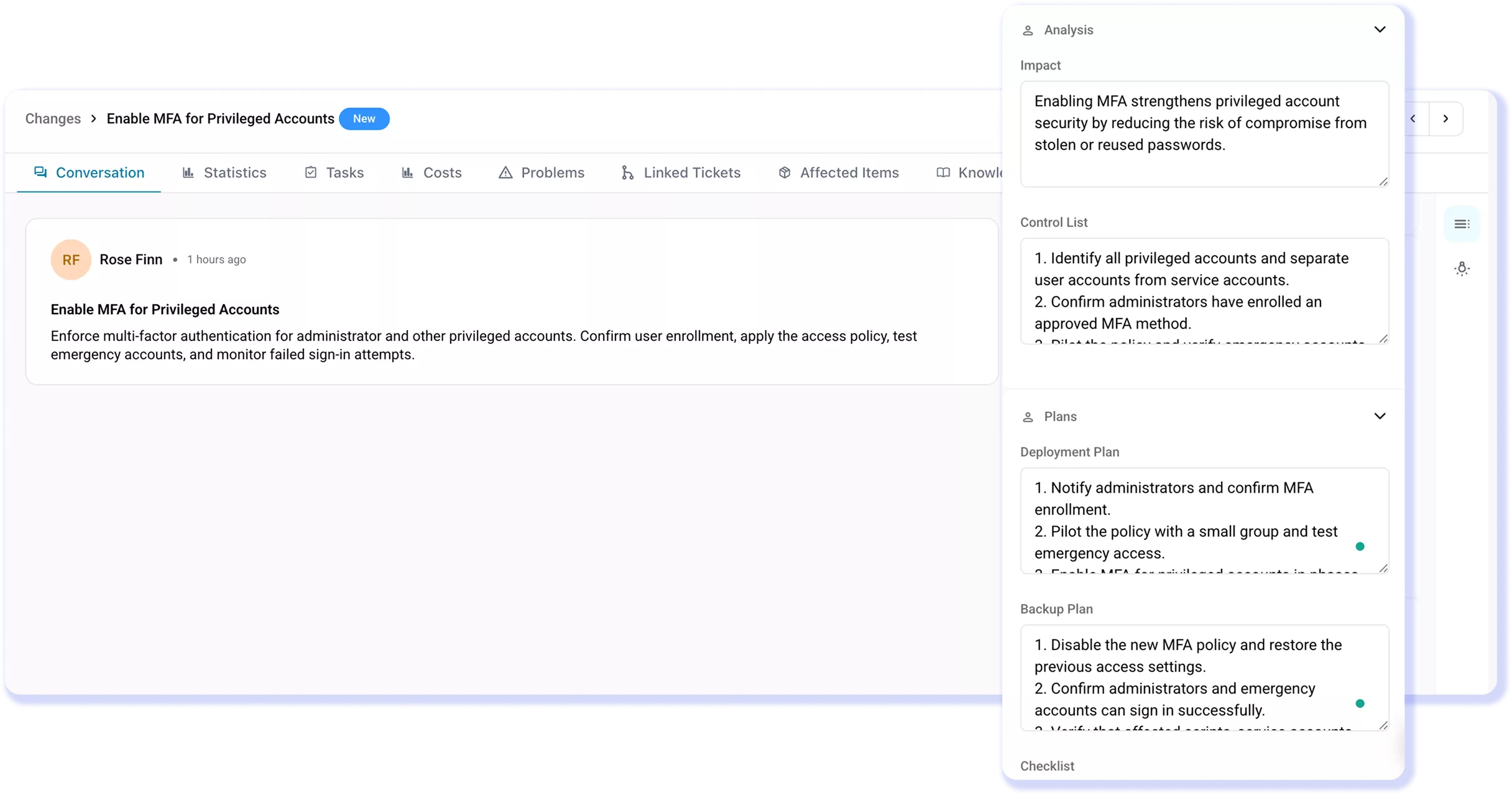
Document Impact and Backup Plans

Document the impact, deployment steps, and backup plan for every change, so IT teams understand the risks before work begins.

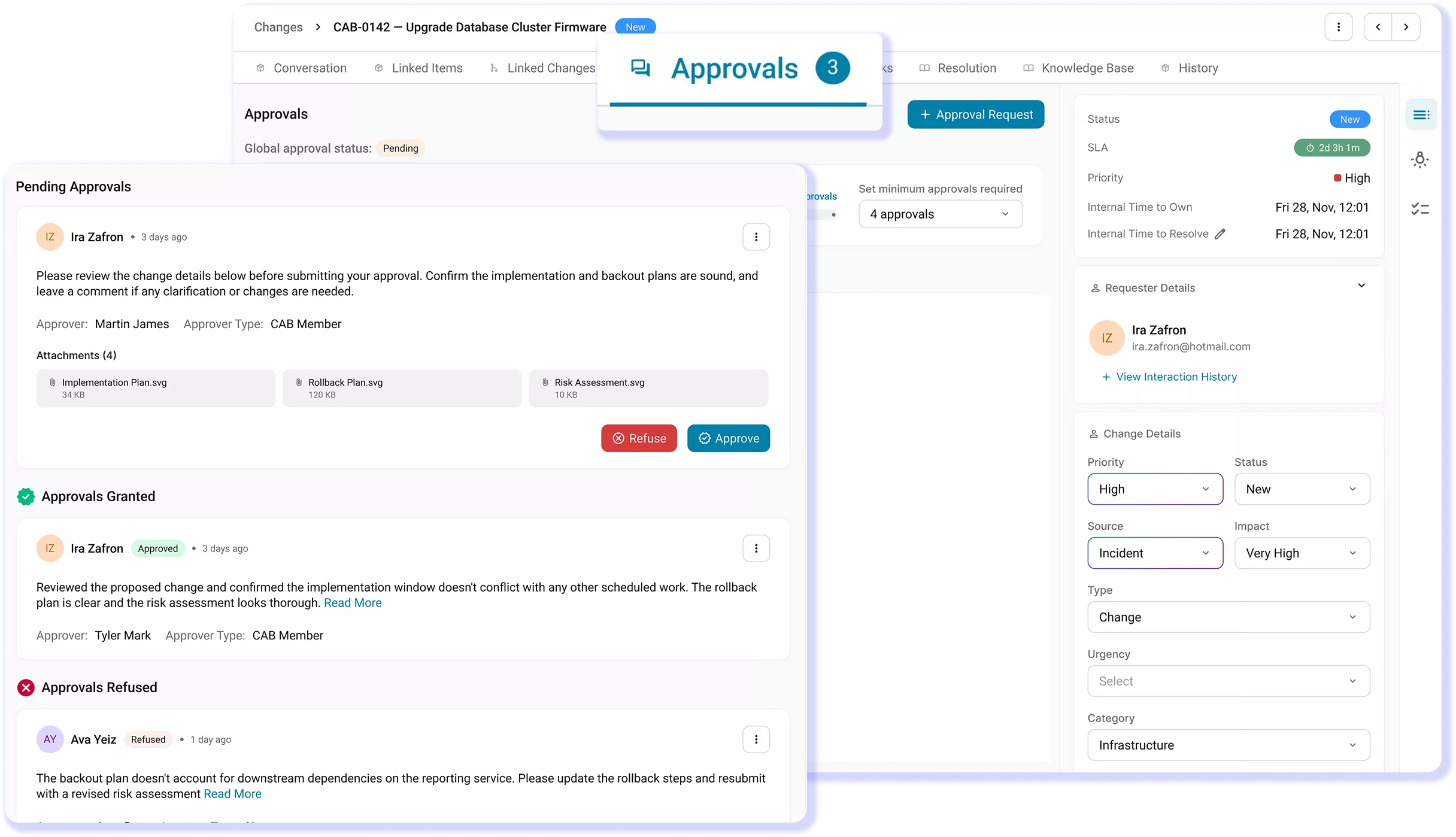
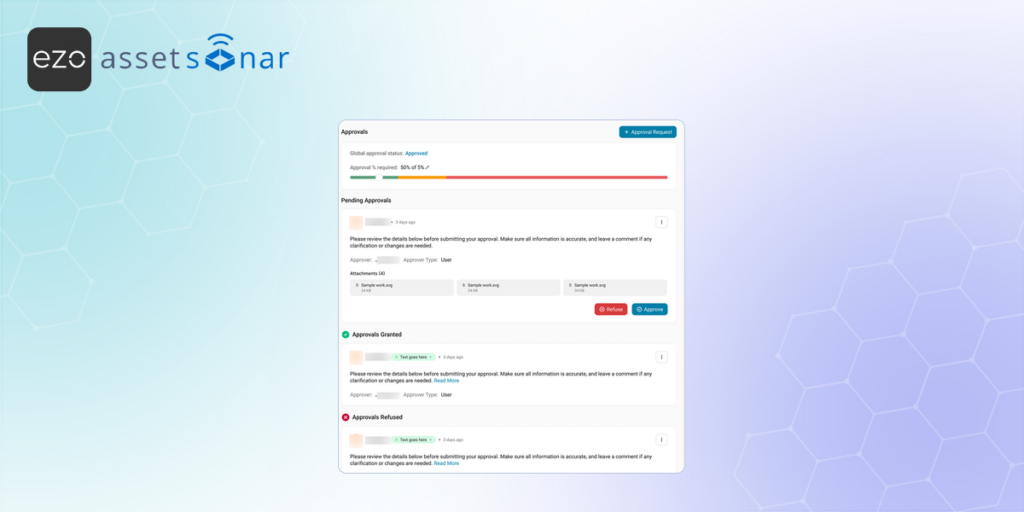
Route Changes for the Right Approvals

Route approvals to individuals or groups, set approval thresholds, and run them in sequence or in parallel. Log every decision for a complete audit trail.

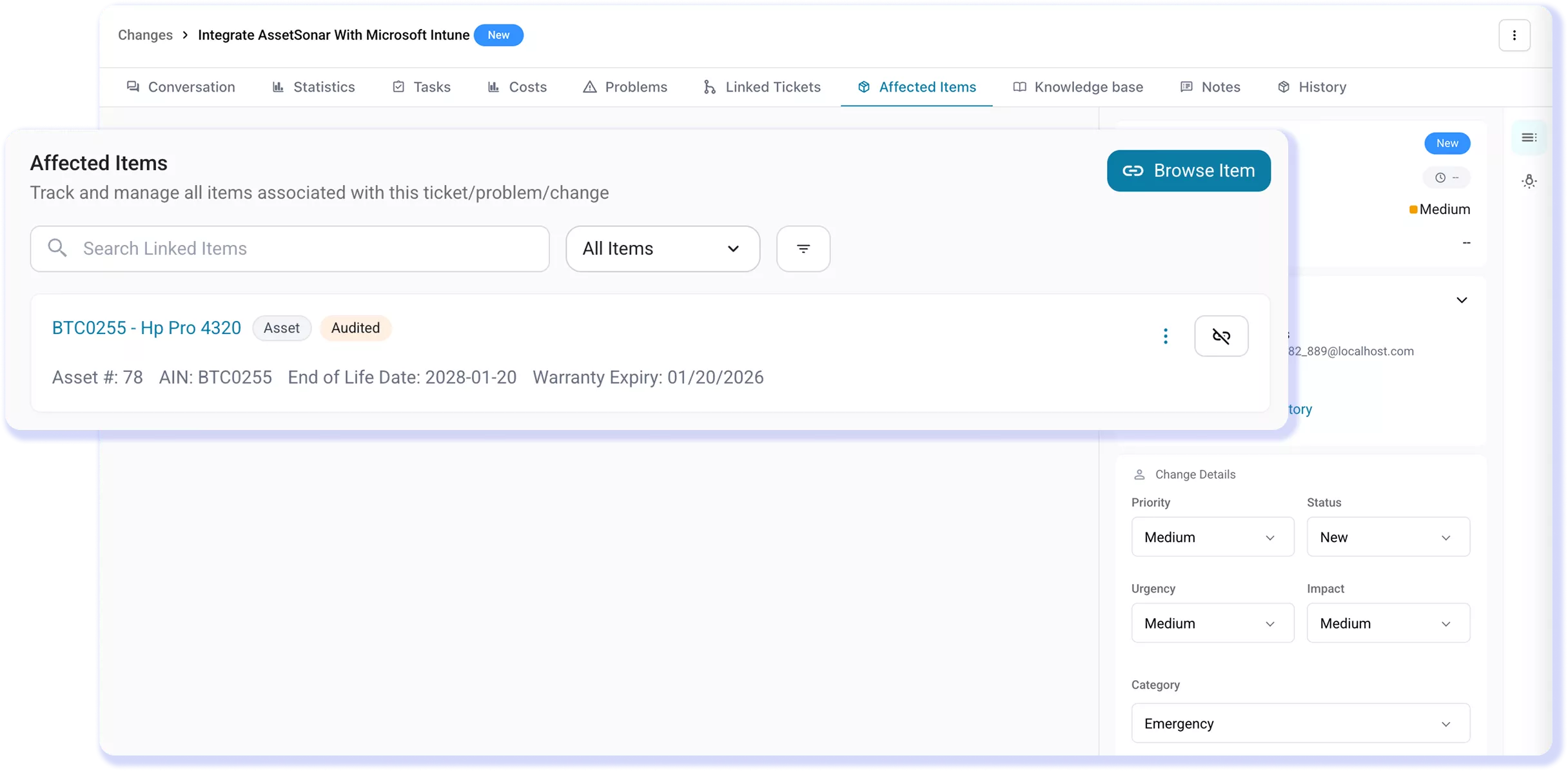
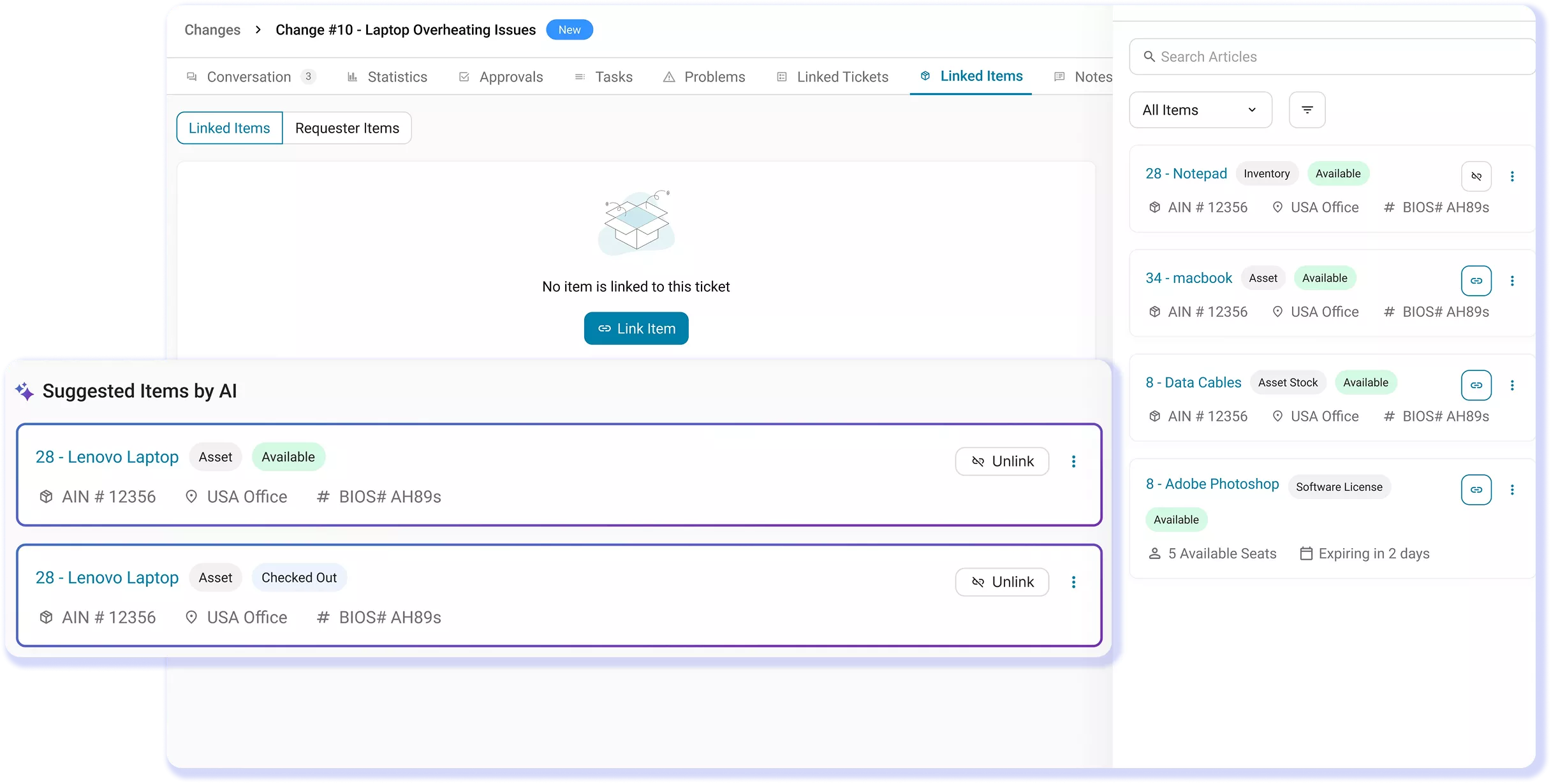
Connect Assets, Software, and Related Records

Each change connects approvers to the affected devices, owners, and asset history in the IT Graph, helping them assess its real impact.

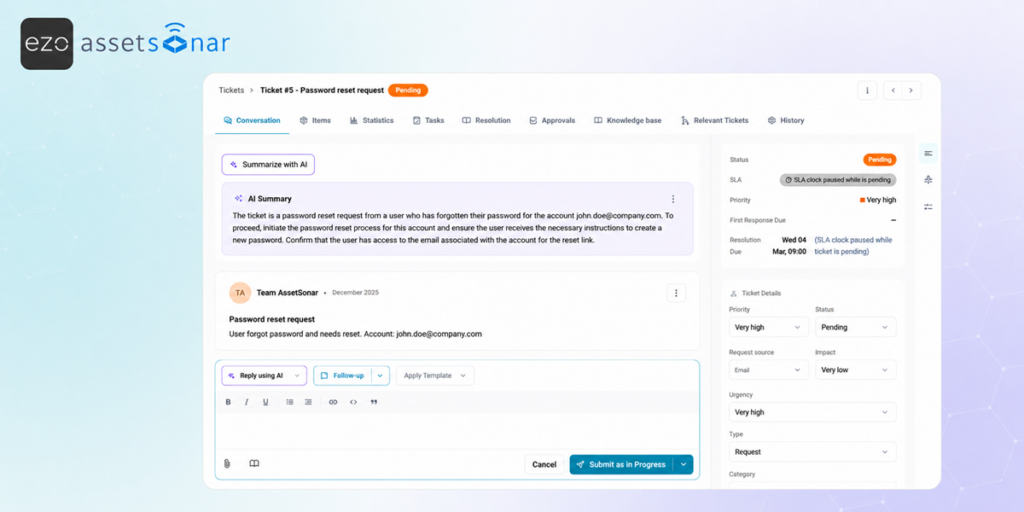
Review Changes Faster With Zoe

Understand the scope and risk of a change using Smart Summaries backed by Zoe, so approvers can make decisions without reading the full thread.

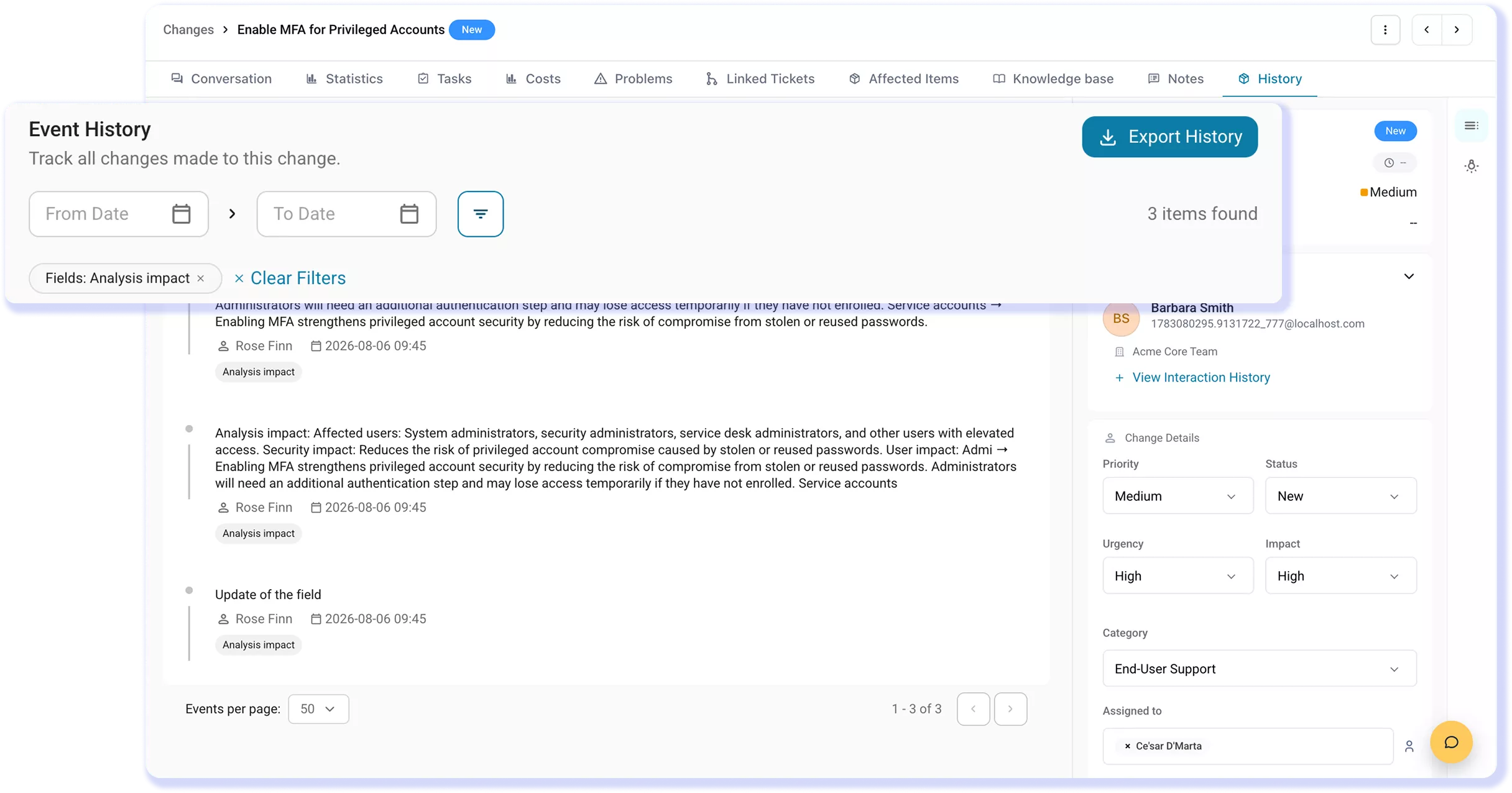
Efficiently Filter and Export Event History

Maintain every field change, approval, and status update in a timestamped Event History, so you can filter and export the data for audits.

Trusted by High-Performing IT Teams

Support the Full ITIL Change Lifecycle With AssetSonar

Plan, Approve, and Trace Every IT Change

Customer Testimonials

Strengthen Your Change Control Process

Read More on IT Change Management

Frequently Asked Questions

AssetSonar creates a structured change record within its broader ITSM capabilities. IT teams can raise change requests, select the change type, document impact and implementation plans, link affected assets and software, and configure approvals. Event History records decisions, comments, field updates, and status changes, while related incidents and problems remain connected through closure.

Yes. Among its core ITSM features, AssetSonar lets teams define change categories, such as Standard, Normal, and Emergency, with dedicated templates. Templates can prefill details such as category, urgency, and impact and follow the appropriate approval process, helping IT teams apply governance based on each change’s risk and urgency.

Yes. AssetSonar uses workflow automation to route change requests to individuals or CAB groups through sequential or parallel approval stages. IT teams can set approval thresholds, while each request, approval, and rejection is recorded in the change history. This reduces manual follow-ups while preserving a traceable decision record.

AssetSonar connects changes to affected assets, asset stock, and software through the IT Graph. Reviewers can examine assets, owners, asset history, and CMDB relationships before making a decision about the change. Approval groups and thresholds help route proposed changes to the appropriate reviewers based on defined criteria.

Most ITSM tools reach assets through an integration. AssetSonar keeps change records and asset records in one system, so approvers see the affected devices, owners, and history without leaving the change. Since AssetSonar’s ITSM is backed by ITAM, IT teams can link changes to assets, asset stock, and software and review device, owner, and asset-history details. Technicians can also check out or retire linked assets directly from the change. It places asset and configuration context inside each change record through the IT Graph.

Yes. AssetSonar connects incident management with change and problem records, preserving the path from the original issue to corrective action. Event History records comments, approvals, field updates, and status transitions, helping teams trace why a change was created, who authorized it, and how it progressed.

AssetSonar’s Zoe brings AI, ITSM, and asset context into the review process by summarizing a change’s scope, risks, next steps, open questions, and related incidents and problems. Approvers receive the essential context without reviewing every activity or linked record, while the designated approver retains responsibility for the final decision.

Yes. AssetSonar maintains a timestamped Event History (that cannot be deleted by users) covering field updates, comments, approvals, rejections, and status transitions. Users can filter and export this record for reviews and audits. The platform’s Item Trail also supports visibility into asset activity and historical actions.

Yes. AssetSonar can support an ITIL-aligned change enablement process when configured to your organization’s policies. IT teams can classify changes, document impact and implementation plans, configure approval groups and thresholds, connect affected assets, and maintain Event History as supported by AssetSonar’s ITSM. Your organization remains responsible for defining change policies, risk criteria, and governance procedures.

Change Management is available as part of AssetSonar ITSM. Check AssetSonar’s pricing to confirm the plan details, free-trial access, user permissions, and implementation requirements. AssetSonar is cloud-based, so no on-premises infrastructure is required. It also connects with tools across your IT environment, including identity providers, endpoint management platforms, and collaboration systems.

Create a Smarter Flow for Change Management

Connect affected assets, risk assessments, approval workflows, implementation plans, and audit trails to manage each change with complete IT context.