








AssetSonar Features Itsm Service Catalog
IT Service Catalog
Receive Requests With Complete Device Context
Proven Impact Across IT Teams
20%
Faster Ticket Resolution
90%
Automated Asset Discovery
100%
Automated CMDB Setup
A Service Catalog IT Can Control, And Employees Can Use
Build Forms That Fit Each Request
Give each service its own form and map responses to the resulting record, so IT has the details needed to start work rather than vague free-text requests.
Keep Every Form Short and Focused
Use conditional logic to show only the relevant follow-up fields, keeping hardware and software requests in a single catalog without burdening users.
Pull the Requester’s Own Devices
Use the asset selector to choose a device assigned to an employee and link it to the ticket, so IT can identify the affected device without follow-up.
Control Access to The Right Form
Limit each form to selected roles or groups, so employees see only relevant services and out-of-scope requests never reach the IT service desk queue.
Apply the Right SLA From the Start
Select a ticket template for each form to prefill the SLA when the ticket is created, so IT starts each request with the correct SLA rather than setting it after submission.
Map Form Answers to the Right Field
Map each question to a ticket field, such as the subject, description, or a custom field. AssetSonar places the submitted answers in the mapped fields when it creates the ticket.
Trusted by High-Performing IT Teams


See the Catalog Builder in Action
How IT Builds the Catalog and Routes Each Request
Catalog Structure
Dynamic Forms
Assigned-Device Context
Access Control
Form Properties
Routing And Classification
Catalog Structure
Build Catalog Around Familiar Services
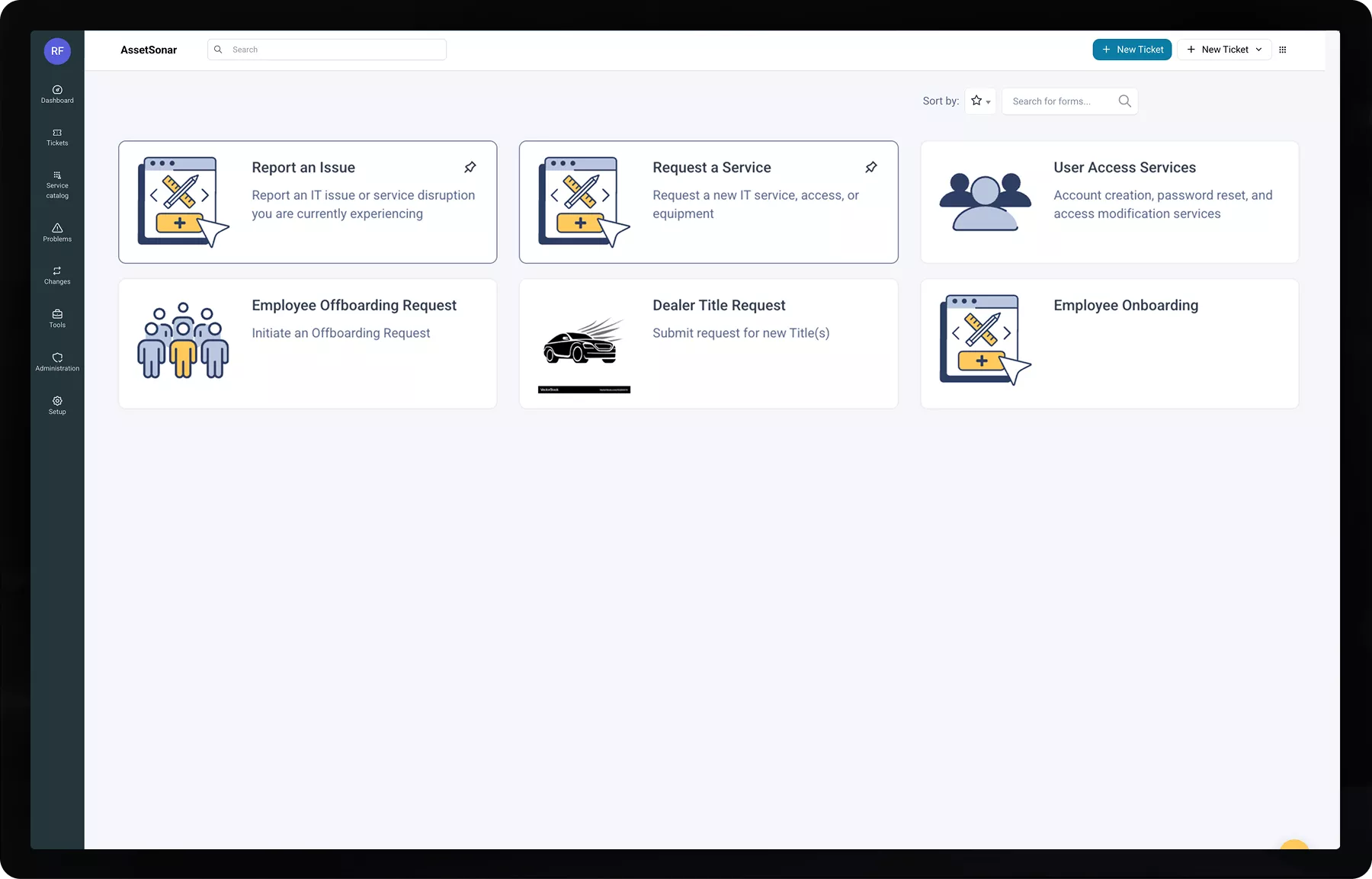
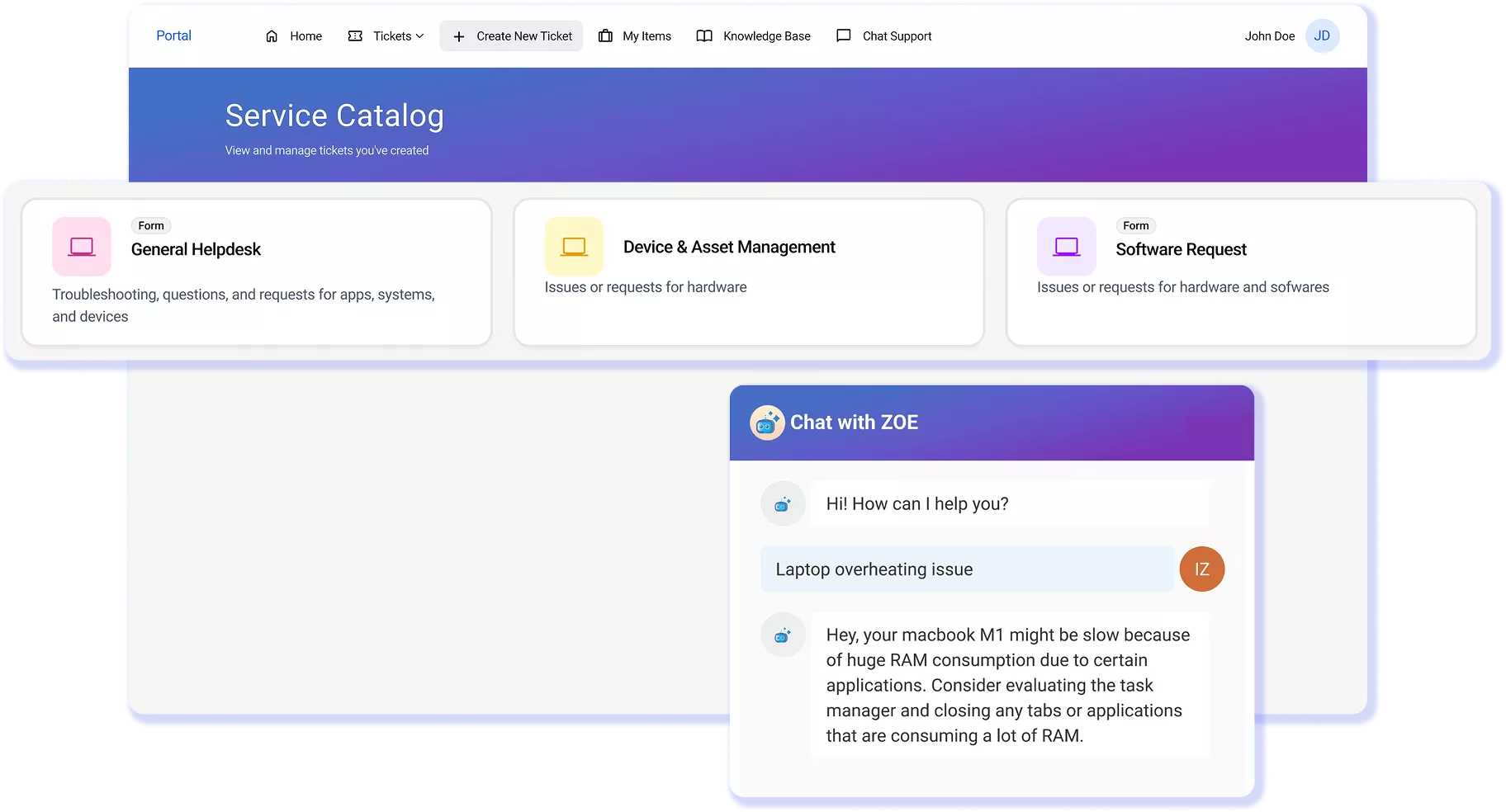
Organize the catalog around services employees recognize, rather than the internal teams responsible for fulfillment. Group request forms by category and subcategory, with labels for needs like device support, software access, and new-hire setup. Start with frequent requests, test the employee view, and add categories and forms as demand grows.
Dynamic Forms
Ask Only What Each Request Needs
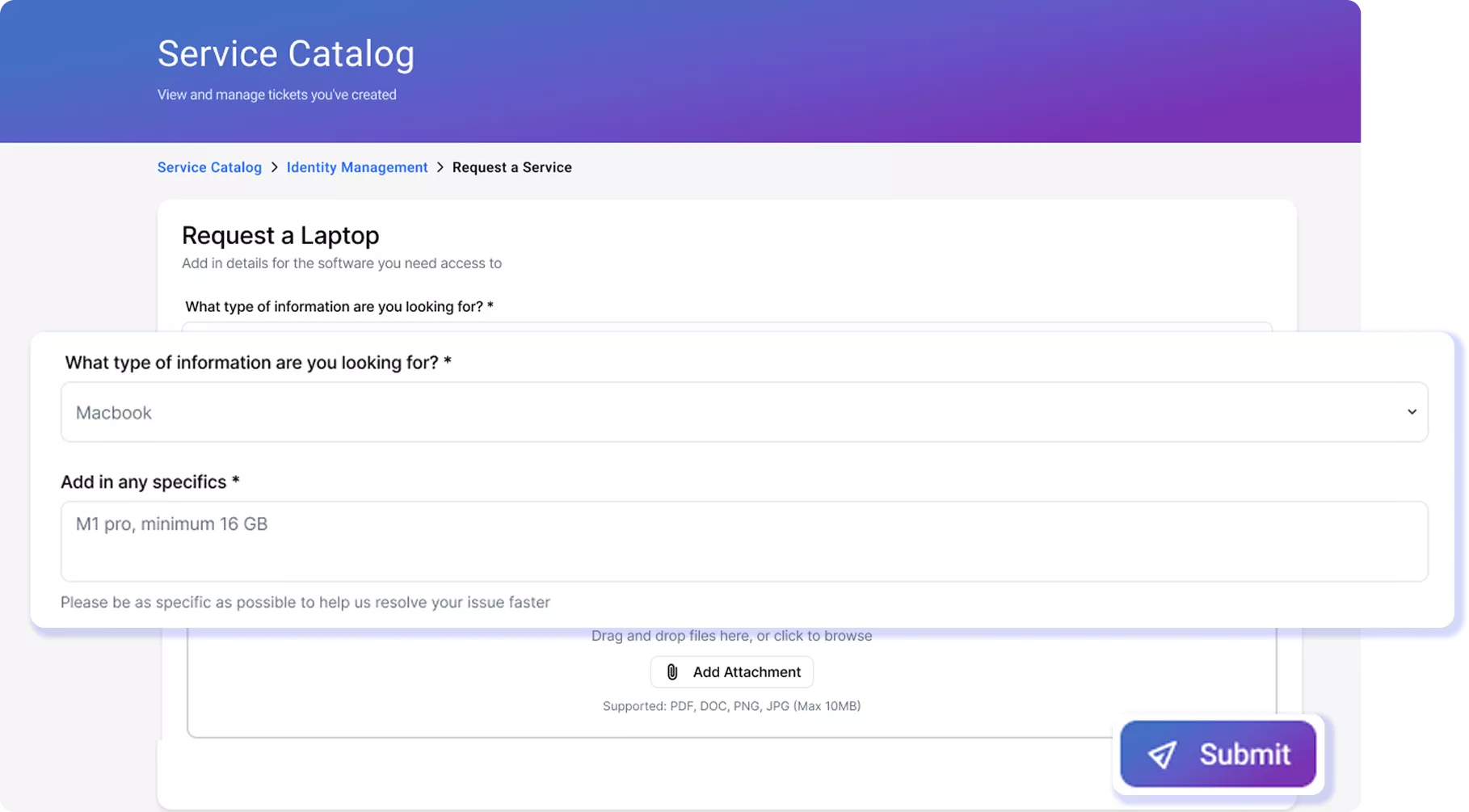
Create forms with text, dropdown, date, file attachment, and lookup fields. Conditions show or hide follow-up fields based on earlier responses, so employees see only relevant questions. For example, choosing a hardware request can reveal the asset selector. IT receives the necessary details to begin work without sending every requester through a single long form.
Assigned-Device Context
Link Devices to Service Requests
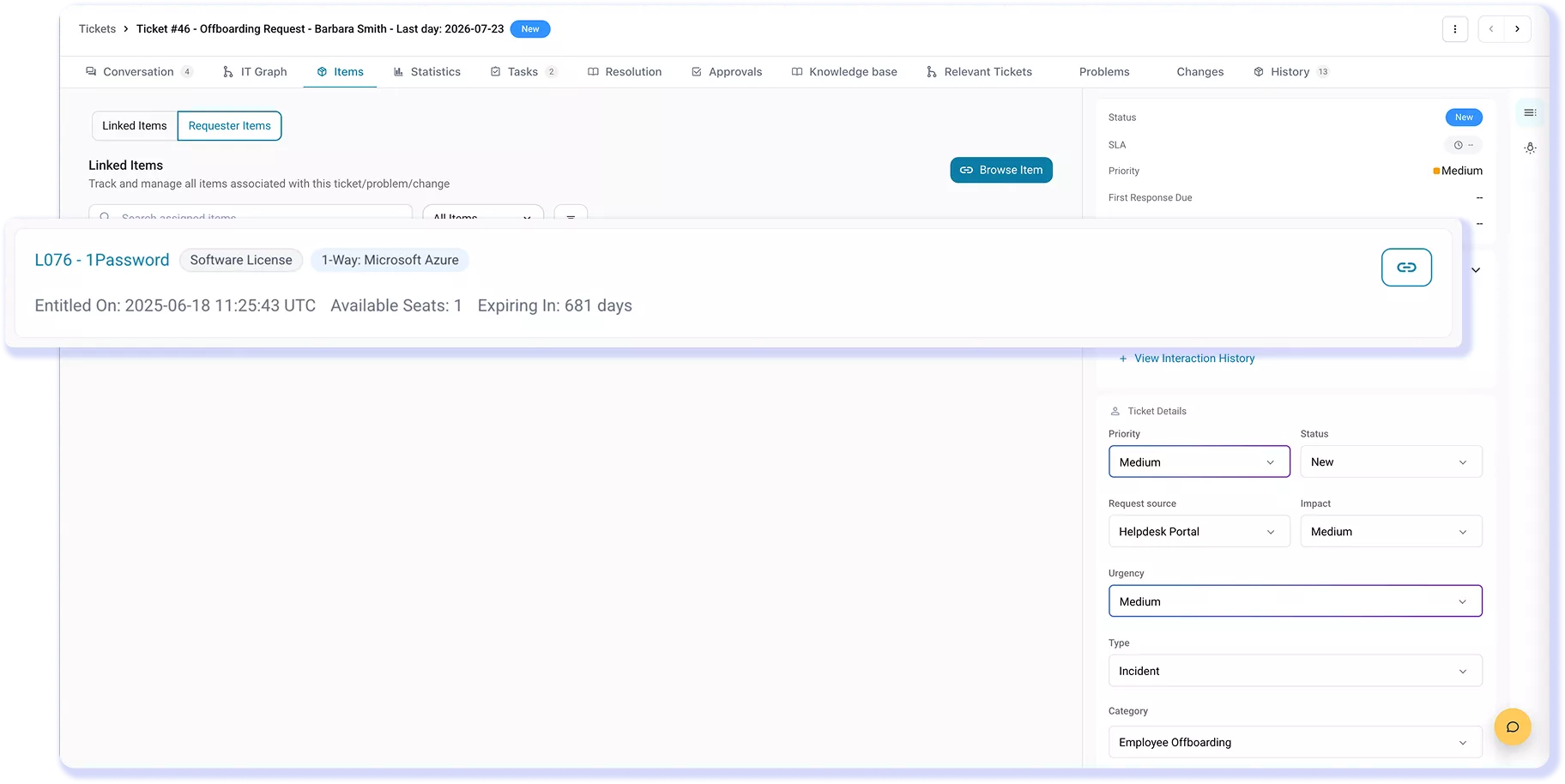
Pull the hardware and software actually assigned to an employee from the IT Graph with the asset selector field. AssetSonar matches the employee’s login to devices assigned to them and shows those devices in the form. After a device is linked to the ticket, technicians can open its AssetSonar record to view specifications and other details instead of asking for an asset tag.
Access Control
Show Each Group Only What It Can Request
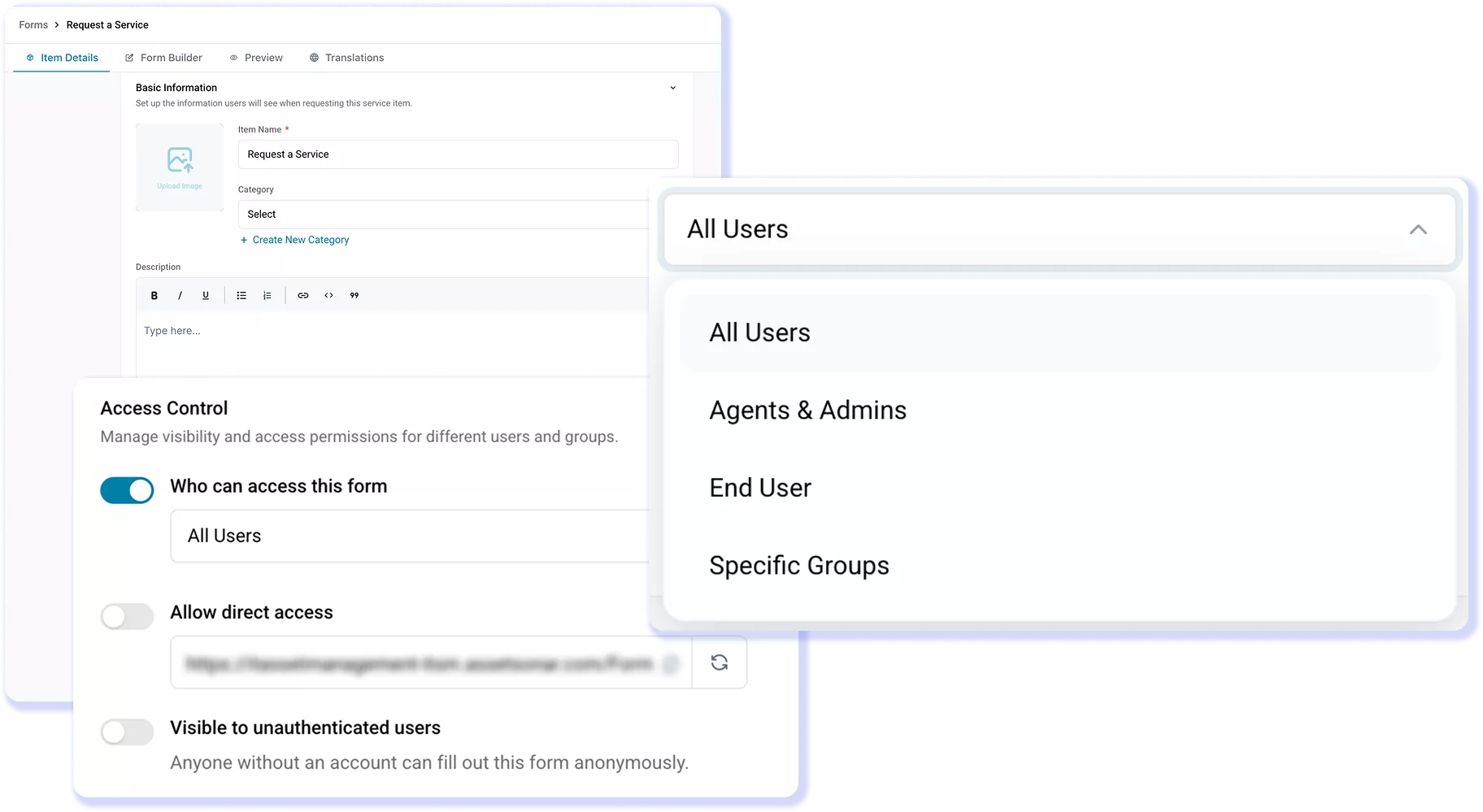
Use each form’s Access Control setting to limit visibility to selected users, groups, or profiles. Employees see only permitted forms, while specialized requests remain outside the general catalog. Optional direct links let admins share a form through the URL. Test the catalog with a user account to confirm each audience sees the right forms before rollout.
Form Properties
Create Tickets With the Right Request Details
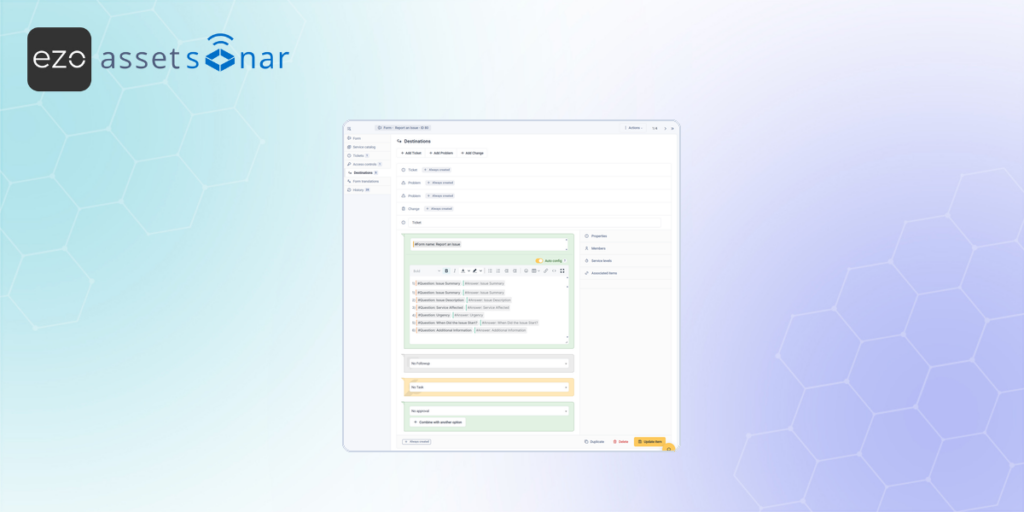
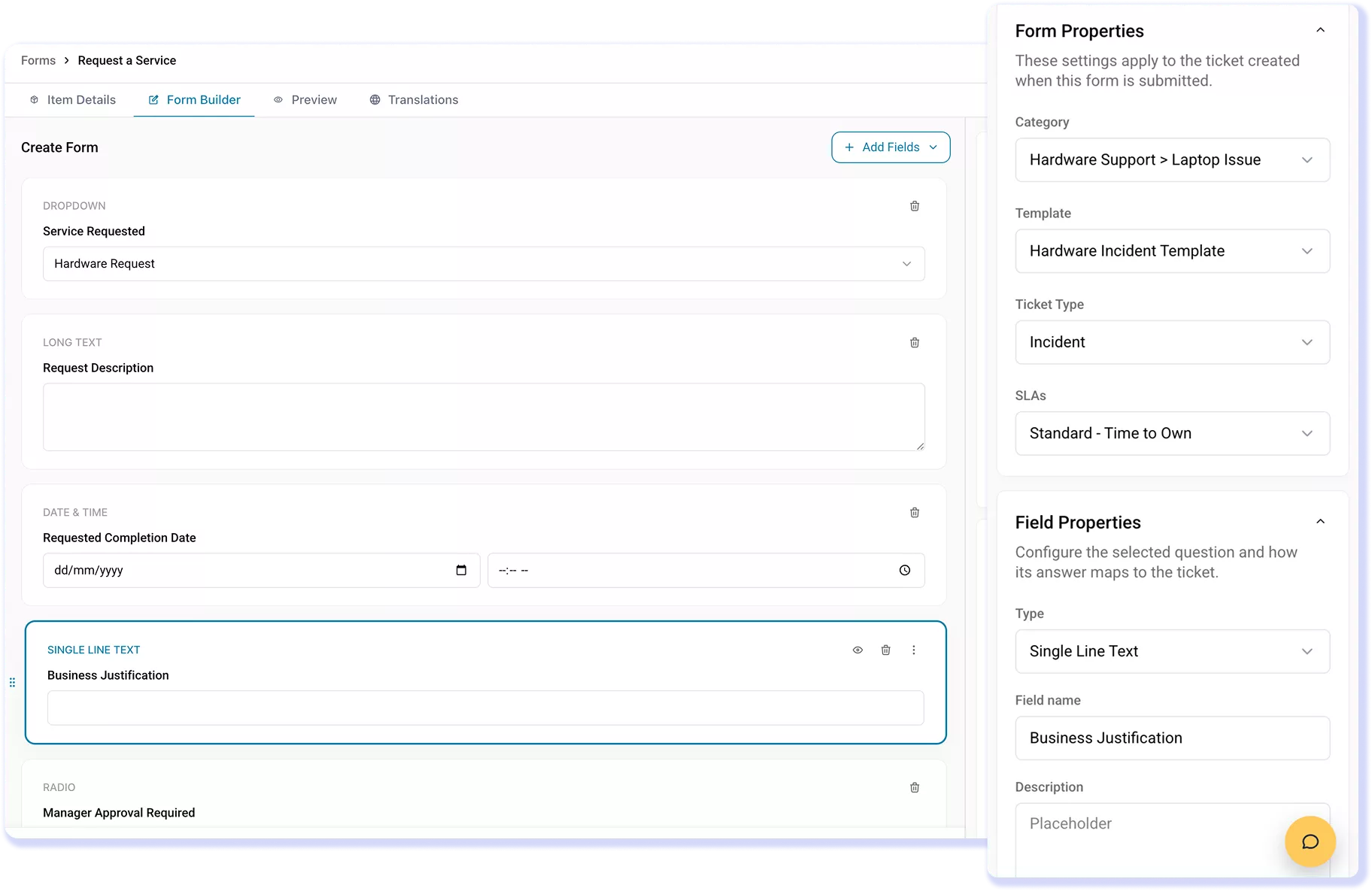
Choose whether a form creates an Incident or Request, then set its ticket category and template in Form Properties. The category filters available templates, while the template prefills priority, status, urgency, SLA, group, and other details. Map each question to a compatible ticket field; the mapping overrides the template value for that field.
Routing And Classification
Use Consistent Data to Route Requests Faster
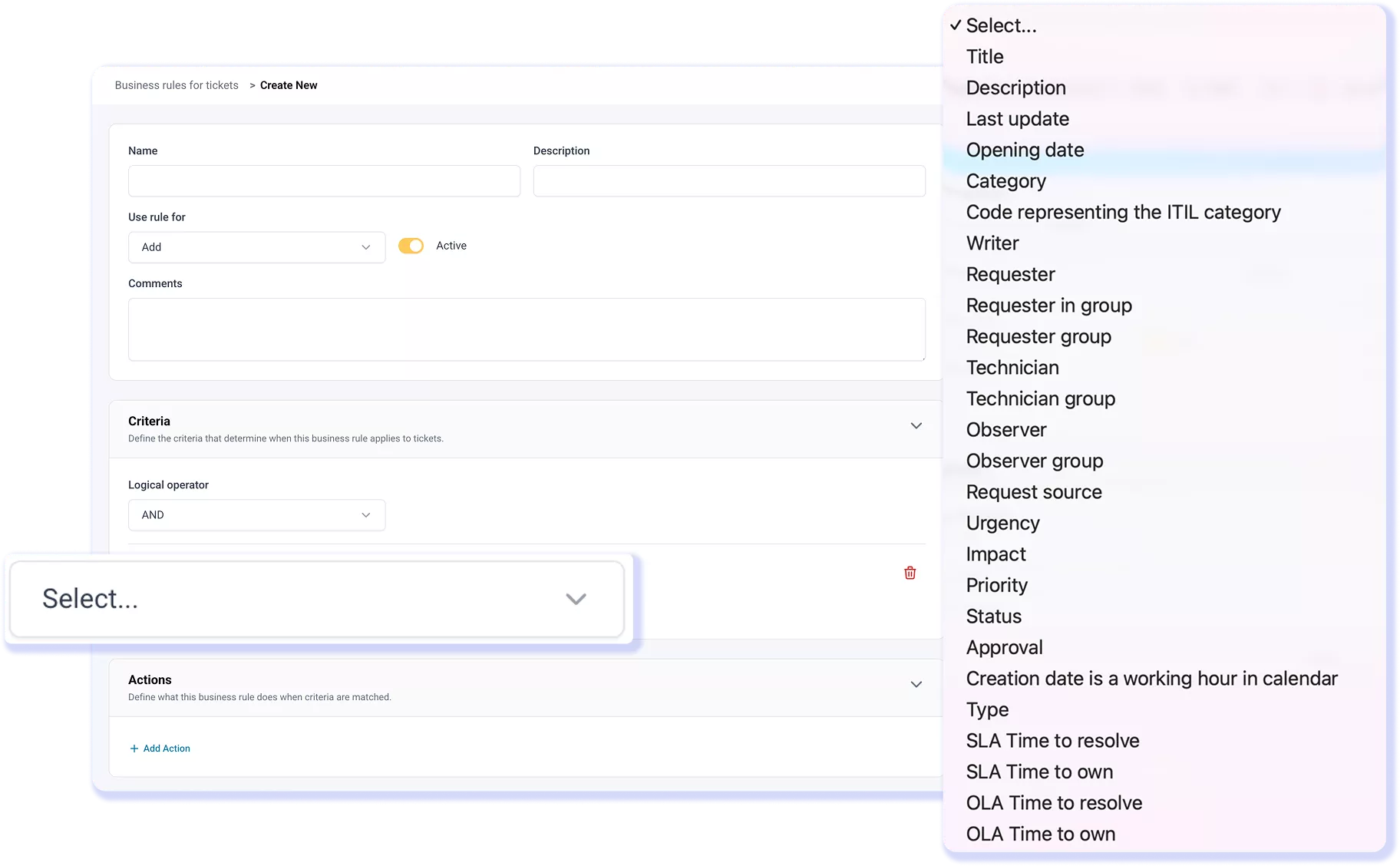
Structured intake speeds up routing. AssetSonar uses details such as category, requester group, urgency, description keywords, and source to route tickets with AND/OR rules. It can then assign a technician group, set priority, or add an observer to a request. Smart Field Suggestions recommend category, urgency, priority, and requester tone, which technicians can review or change.
Customer Testimonials
Stop Parsing Requests. Start Fulfilling Them.
Explore More IT Service Catalog Resources
Frequently Asked Questions
Yes. Admins can use form access settings to make each form available to All Users, Agents & Admins, End User, or Specific Groups. For targeted access, select one or more ITSM Groups mapped from ITAM Teams. Only members of those groups can see and submit the form. This lets IT offer specialized services without showing every form to everyone.
No. When the form uses an Item response configured for User Devices, AssetSonar shows computers, phones, or monitors assigned to that requester rather than the full inventory. Selecting a device associates it with the resulting ticket, giving technicians direct access to the linked AssetSonar record and its available specifications and assignment details.
Yes. After submission, related work can be organized as parent-child tickets, with child tickets assigned to different technicians or teams and progress tracked from the parent. This supports requests such as onboarding, where device preparation, account access, and software tasks require separate owners while remaining part of a single coordinated request.
AssetSonar keeps routing rules and Smart Field Suggestions separate. Rules evaluate ticket attributes, route matching requests to a technician group, and update fields. Ticket Routing then assigns unassigned tickets within that group using load balancing or round robin. Smart Field Suggestions populate classification fields when a ticket is created, and technicians can review or override them before proceeding.
No. AssetSonar Service Catalog does not calculate or display catalog-item prices, inventory availability, or estimated fulfillment times. Admins can use custom fields to collect information needed for review, but those fields do not create pricing or delivery estimates. The resulting request can still follow defined tasks, approvals, routing, and SLA policies.
Yes. Admins can attach an AssetSonar SLA policy directly to a Service Catalog form in Form Builder under Form Properties. When an employee submits the form, the created ticket starts with that SLA policy applied. Templates can also prefill SLA details during ticket creation. This gives IT clear response and resolution targets from the moment the request enters the queue.
AssetSonar Service Catalog defines which services are available, what each form asks, who can see it, and which records, tasks, or approvals a submission creates. Service request management takes over after the ITSM record is created and handles routing, assignment, approvals, tasks, and fulfillment. The request data moves from the catalog into that work.