








AssetSonar Features Patch Deployment
Patch Deployment and Scheduling
Fix What Matters. Patch on Your Timeline.
Proven Impact Across IT Teams
95%
Automated Asset Discovery
20%
Faster Ticket Resolution
100%
Automated CMDB Setup
Your Complete Toolkit for Patch Deployment and Scheduling
One Console for Every OS You Manage
Deploy patches to Windows, macOS, and Linux from a single cloud console through the ITAM Agent. No on-prem patch server to run, and no separate tool for each operating system.
Risk-Ranked Fixes, Tied to Real Devices
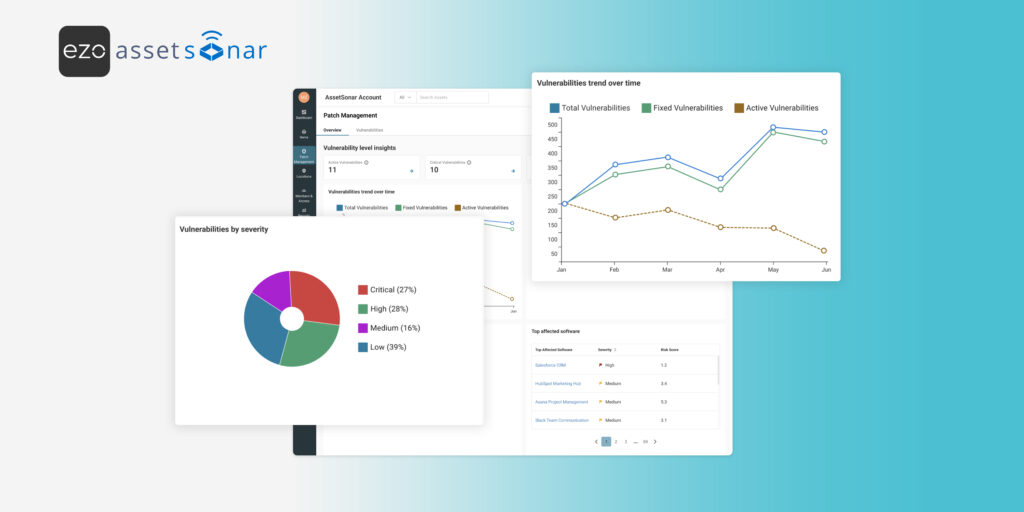
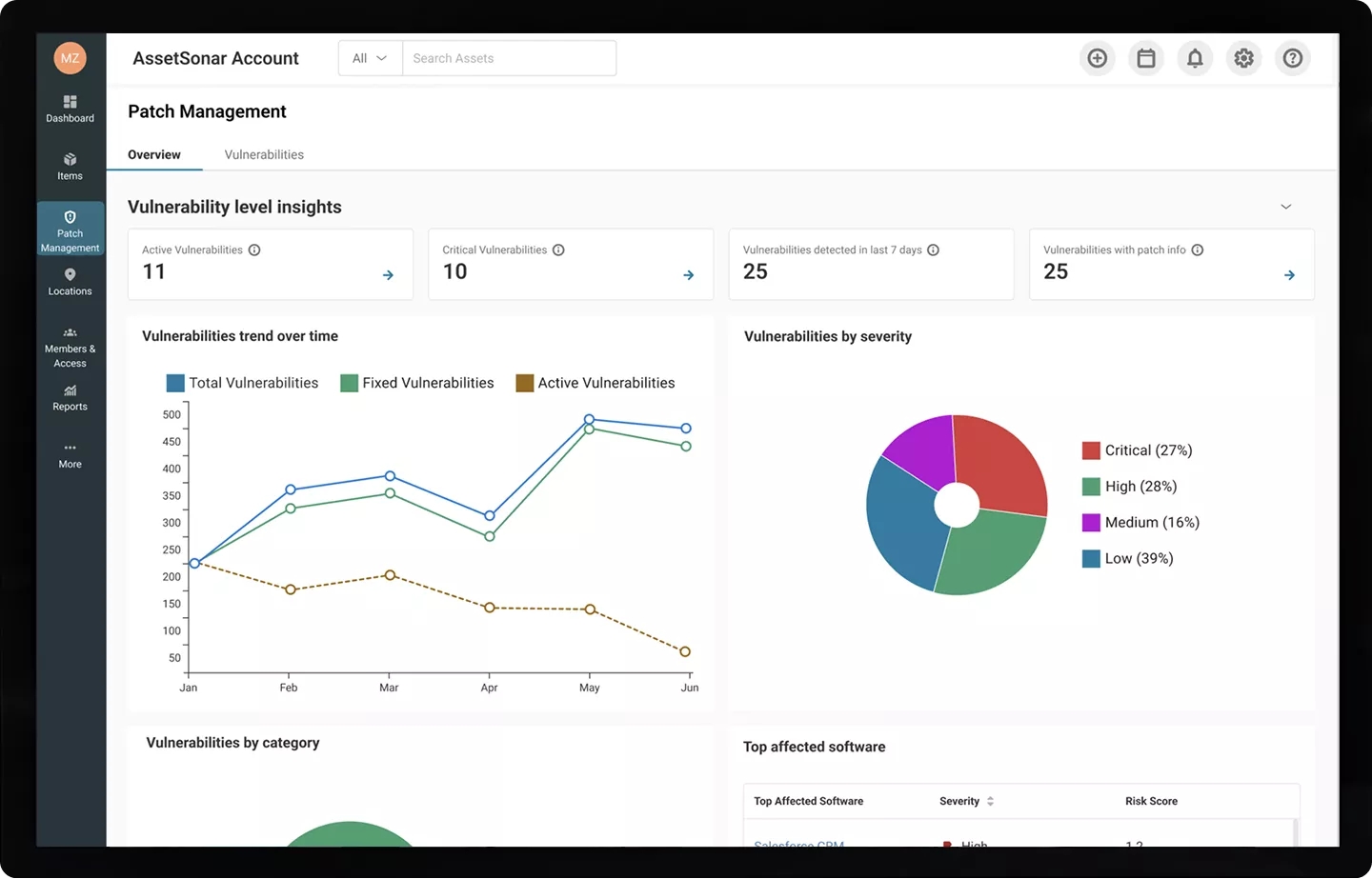
Map NIST and CVE data to your devices and software, scoring each vulnerability from Critical to Low, so you deploy fixes where exposure is highest rather than working down a generic list.
Immediate Push or Timed Deployment
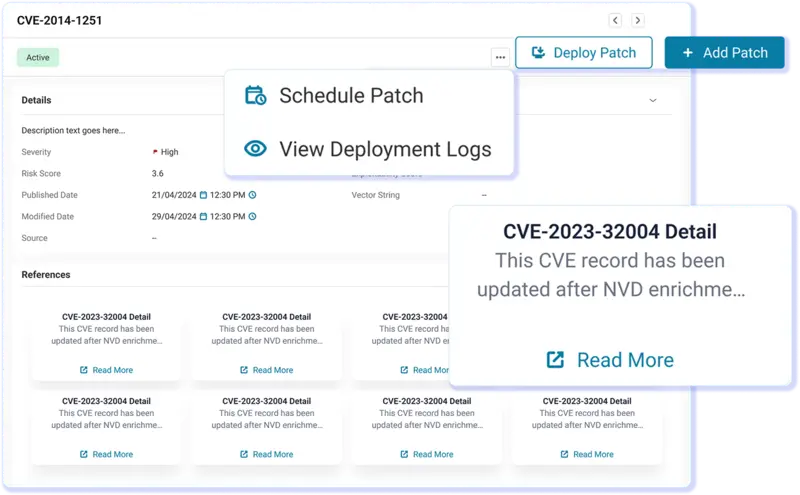
Push an urgent fix to affected devices immediately, or open the Schedule Patch modal to pick a future date and time. Scheduled patches run silently, without interrupting the users.
Patches Aimed at the Right Devices
Select the exact devices affected by a vulnerability as your deployment target. Deploy the patch only to devices selected for that deployment and directly tied to the CVE that exposed them.
Verified Success, Not Just a Completed Installer
Mark a deployment “Success” only after AssetSonar verifies the version or CVE closure, not just because the installer ran. Failed flags errors, timeouts, and failed verification so nothing slips through.
Keep Audit-Ready Patch Records
Each patch action is recorded against the device with a timestamp and the identity of who ran it. Evidence for compliance frameworks is assembled automatically, ready the moment an auditor asks.
Trusted by High-Performing IT Teams


See How AssetSonar Closes Vulnerabilities
From a Vulnerability to a Verified Fix
Multi-OS Deployment
CVE-Grounded Remediation
Deploy or Schedule
Verified Deployment
Alerts & Audit
Multi-OS Deployment
Deploy Across Windows, macOS, and Linux
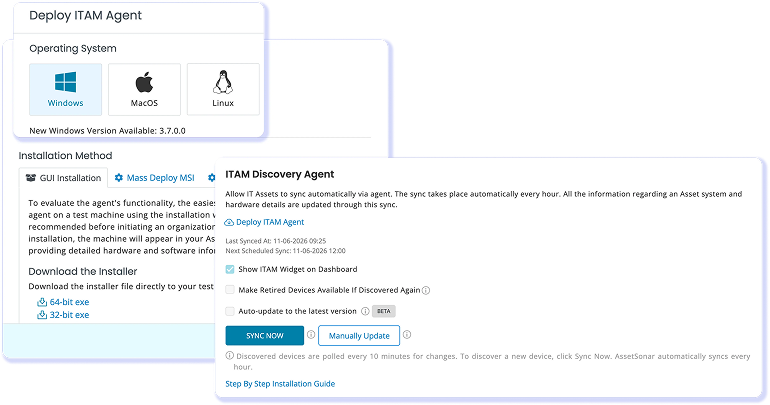
Deploy patches to Windows, macOS, and Linux through the AssetSonar ITAM Agent that already discovers and inventories them. Every fix draws on existing asset context, so you can patch the right machines without running on-premises servers or juggling separate tools for each operating system.
CVE-Grounded Remediation
Remediate Directly Inside the Vulnerability Record
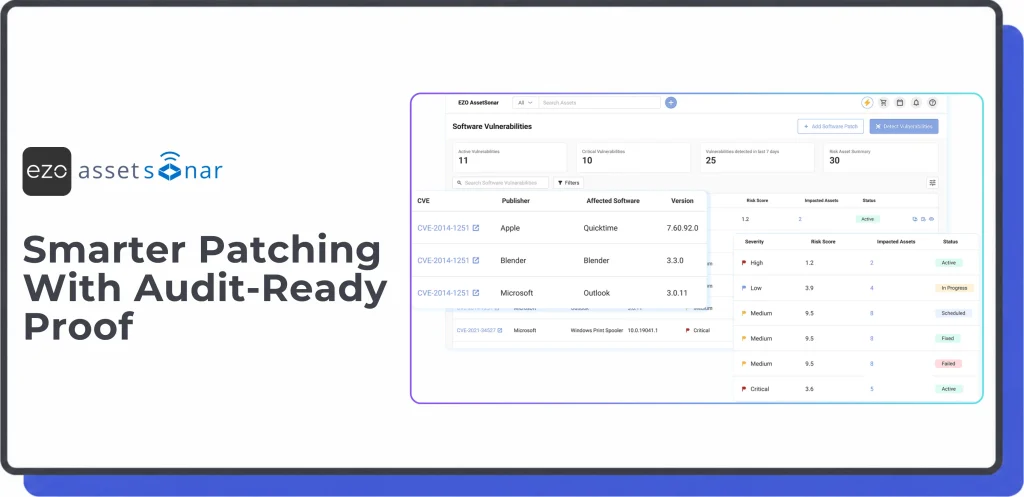
Start with the vulnerability, not a generic patch list. AssetSonar maps NIST and CVE data to devices and software in your environment, showing where exposure exists. AssetSonar surfaces direct links to NIST entries and vendor advisories, helping IT teams review vulnerability details and identify appropriate fixes. Once you identify the correct patch, upload it to the vulnerability record and deploy without leaving the console. Each patch stays linked to the vulnerability it resolves.
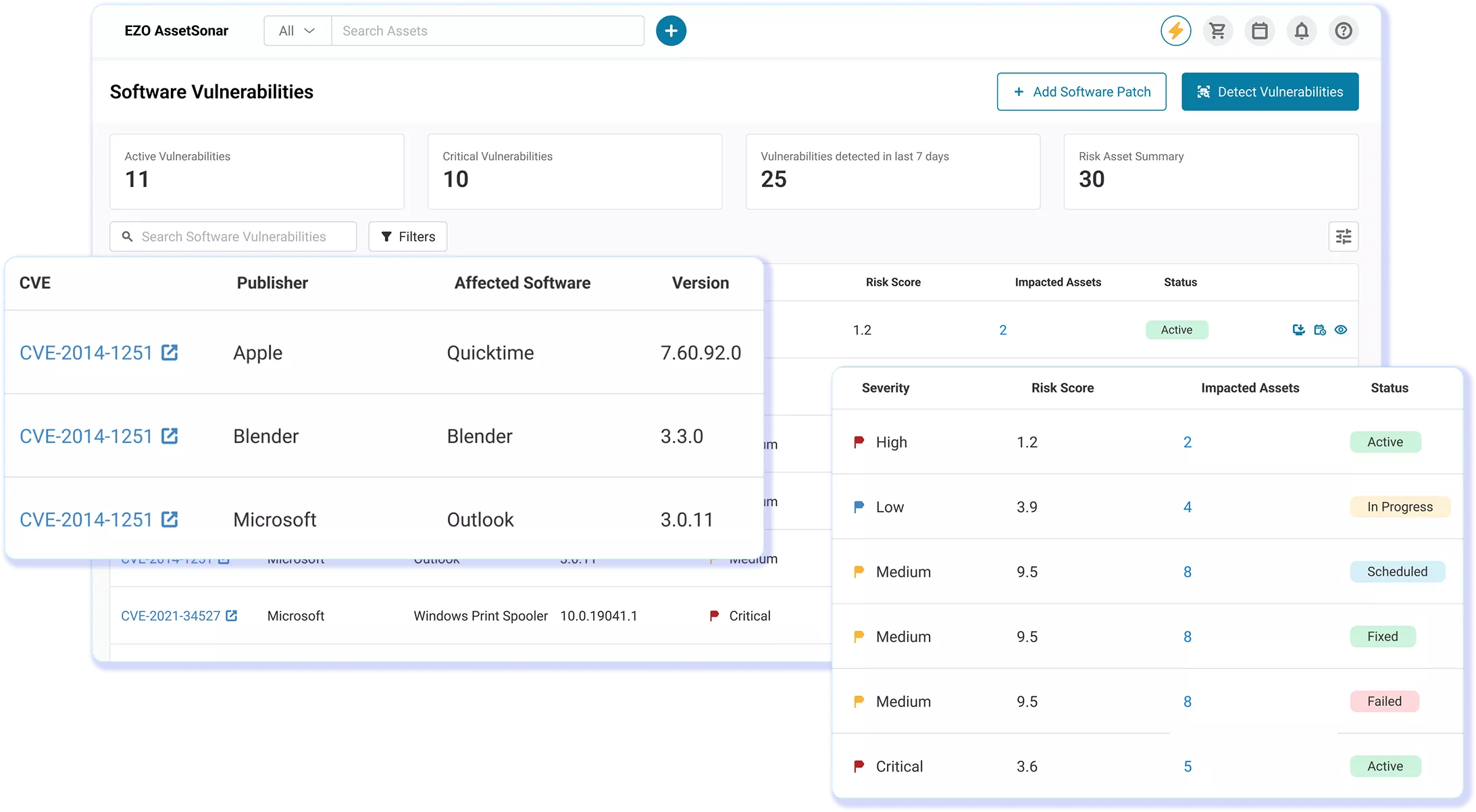
Deploy or Schedule
Push Patches Immediately or Set a Window
Critical patches can’t wait. Deploy them immediately to affected devices, or schedule less urgent fixes for off-hours. Simply choose the patches, select the devices, and set the time. Patches run silently, helping you close security gaps without disrupting users or causing delays for your IT team. For urgent vulnerabilities, deploy to a selected set of devices or accelerate deployment per your change policy.
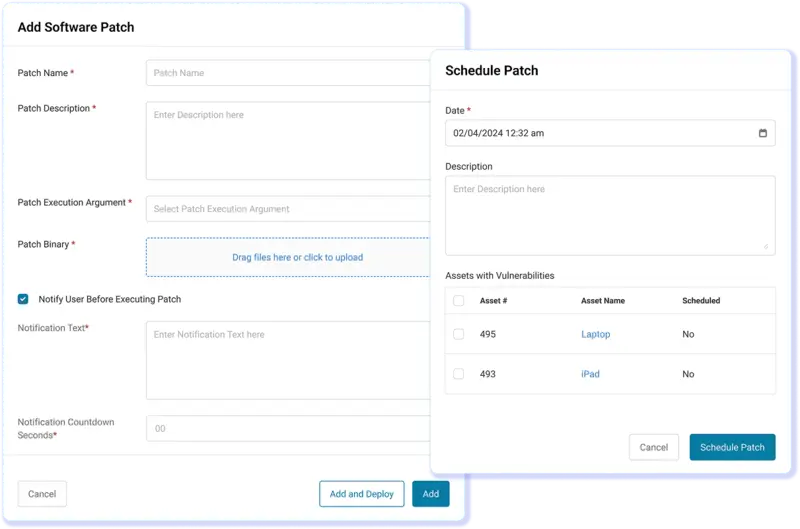
Verified Deployment
Verified CVE Closure, Not Just an Installer Exit Code
Track every patch through its full lifecycle: Active, In Progress, Pending, Scheduled, Success, or Failed. AssetSonar confirms the software version or CVE closure before marking a deployment successful, not just the installer’s exit code. Errors, timeouts, and failed checks identify devices that need another pass, proving each fix landed and closed the risk.
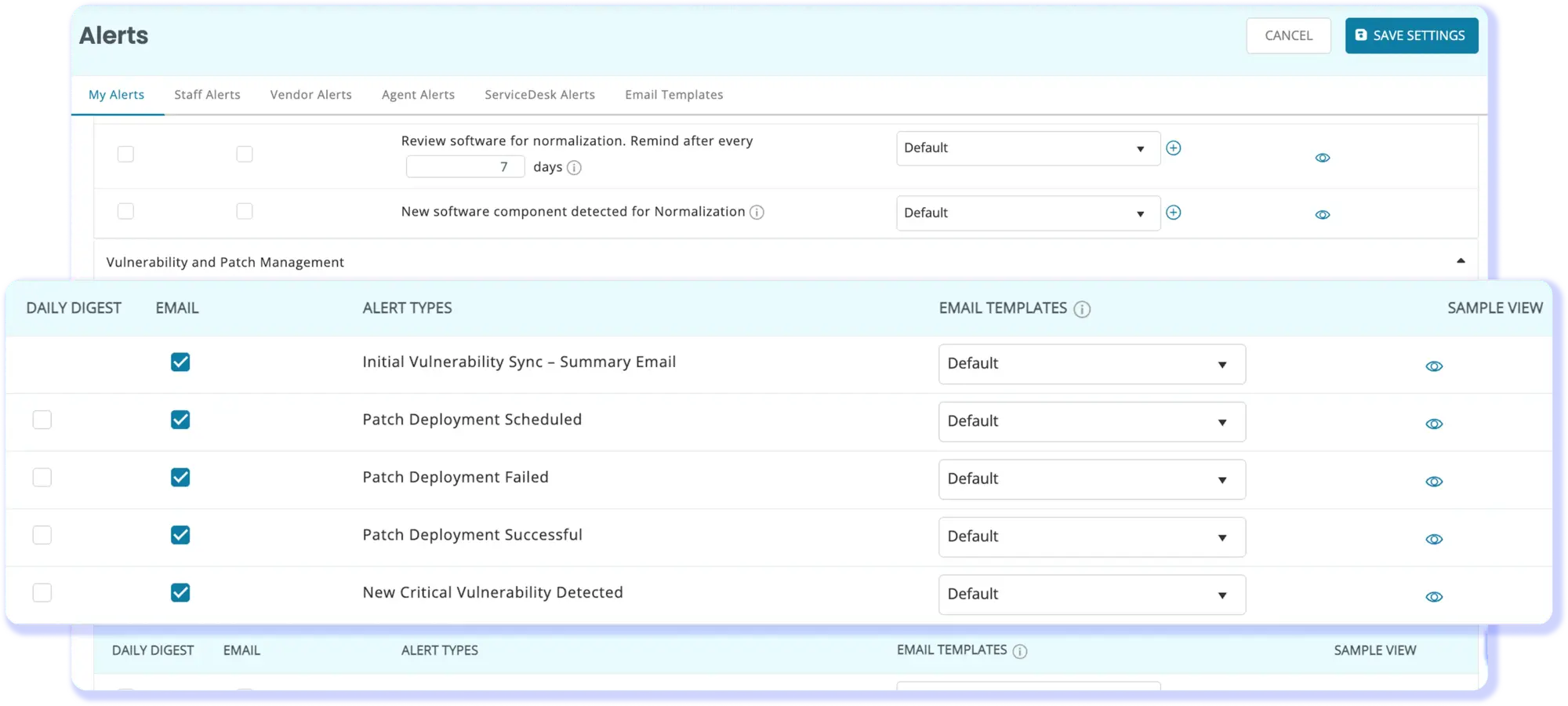
Alerts & Audit
Stay Informed and Audit-Ready
Stay informed about upcoming patches without manual reviews. Account owners and admins receive alerts when patches are scheduled, succeed, or fail, while the daily digest emails highlight upcoming critical vulnerabilities. Every action is time-stamped and linked to a user and device, creating an audit-ready record for SOC 2 and ISO 27001 compliance.
Customer Testimonials
See How AssetSonar Closes Vulnerabilities
Read More on Patch Deployment and Scheduling
Frequently Asked Questions
Yes. In AssetSonar, you can select target devices from the vulnerability or patch view, rather than deploying to every affected machine at once. This supports staged rollouts: patch a pilot group, review the results, and then extend deployment to the remaining devices. Each deployment stays linked to the relevant CVE and selected endpoints, helping you control which devices receive the patch and when while reducing the impact of unexpected installation issues.
When a patch deployment fails, AssetSonar marks it as Failed and displays the cause, such as an installation error, a connection timeout, or a failed version check. The affected devices are identified so you can retry deployment directly. AssetSonar only marks a deployment successful after confirming the software version or CVE closure, preventing incomplete fixes from being accepted. Account owners and admins also receive failure alerts by email.
Yes. Because deployment runs through the ITAM Agent, which communicates with AssetSonar, physical proximity to the network is not required. Patches reach remote and distributed endpoints as long as the device has internet connectivity and the ITAM Agent is installed and running at the minimum required version. There is no need for VPN access to an on-premises patch server, and no separate configuration is required for remote devices compared with on-site ones.
Scheduled patches run silently at the configured time without interrupting users. Immediate deployment behavior depends on the patch, as some OS-level fixes may require a reboot. AssetSonar tracks each deployment as Active, In Progress, Pending, Scheduled, Success, or Failed, so you can confirm completion. Schedule restart-dependent patches for off-hours to minimize disruption during the workday.
AssetSonar pulls NIST National Vulnerability Database (NVD) data and maps it directly to the software and operating system versions installed on your real devices. Each vulnerability receives a severity rating from Critical to Low based on its CVSS score, tied to the specific machines in your environment rather than applied generically. This means a Critical CVE affecting five of your devices is surfaced above a Medium CVE with no active instances in your estate. The deployment workflow begins inside the vulnerability record, so you move directly from risk context to remediation.
AssetSonar maps discovered software and OS versions to known CVE records via the ITAM Agent and NIST CVE data, so a separate scanner is not required for patch deployment. AssetSonar can integrate with Qualys, Tenable, or Rapid7 via APIs. Its native detection, however, covers OS and software CVEs across Windows, macOS, and Linux through the same agent used for asset inventory.
AssetSonar Patch Management is offered as an add-on to an AssetSonar plan. Pricing depends on the number of assets you manage and the capabilities included in your package. Contact the AssetSonar team for current pricing and to confirm whether Patch Management can be included in your trial.