Businesses, regardless of their size, need to reserve items frequently to smoothly run their daily operations. EZO offers Reservations that allow you to book items in advance so they are available when you want to check them out.
You can make clash-free and conflict-free reservations by simply checking the availability calendar for your assets. This way you know what items are available to be reserved and you can set the reservation quantity accordingly. In addition to this, you can reserve a certain quantity of inventory stock items at a particular location and date.
Benefits
Here are a few major benefits of Reservations in EZO:
- Prevent double bookings: You can manage your assets well by reserving them for specific periods and avoid overlapping bookings. No one asset will be reserved for two different purposes at the same time, ensuring a smooth flow of operations.
- Increased coordination: By avoiding inter-departmental clashes for commonly used assets, you can improve resource utilization and foster collaboration within teams. All teams will have clear visibility of the reservations, allowing them to plan their activities accordingly.
- Enhanced accountability: You can easily assess what user has reserved a particular item and for what purpose. This increases transparency and makes it easier to trace the person responsible for the asset in case of asset loss or misuse.
- Reporting: You can generate detailed reports to assess where, how, and when an asset has been used. Reports provide a comprehensive summary of your reserved assets allowing you to know the number of reservations, self-serve reservations, and average time to resolve them.
- Quick analysis: Users can immediately assess the duration of their reservations, date, and location on the reservations details page. They can make edits to their reservations – cancel or extend them as per their need. With the new ‘Proximity’ option, they can even set the time period/number of days for which they want to view their reservations for easier analysis.
Note: This blog takes you through Reservations based on the updated UX/UI. You can use the Reservations module now faster and better.
1. Item Reservation
You can take several actions on your assets using the Reservations feature. Read below!
1. Reservation via Item’s detail Page:
You can reserve an item by going to its Asset Detail Page. Click ‘Reserve’ and the following overlay will appear.

In the overlay, mention the reservation period and for whom the reservation will take place. You can also add a note to a reservation which can be viewed under the location’s tab.

You can enable the flexible reservation toggle to specify the asset you want to specify if you have multiple items with the same asset name.
2. Add New Users and Locations On Reservation
You can add a new User and Location when reserving an item. Simply click ‘Add’ next to ‘Location’ or ‘Reservation For’ on the above overlay. Another dialog box will pop up, prompting you to create a new User or Location for that reservation.
You can add new Users and Locations while reserving items in the following ways:
- Asset Reservation (from the Asset Details page)
- Mass Reservation (From the Item Listings page)
- Cart Reservation (from the Cart Details page)
Note: To add new Locations, the ‘Ask on Checkout’ option must be enabled in Settings → Company Settings → Locations.

3. Mass Reservation
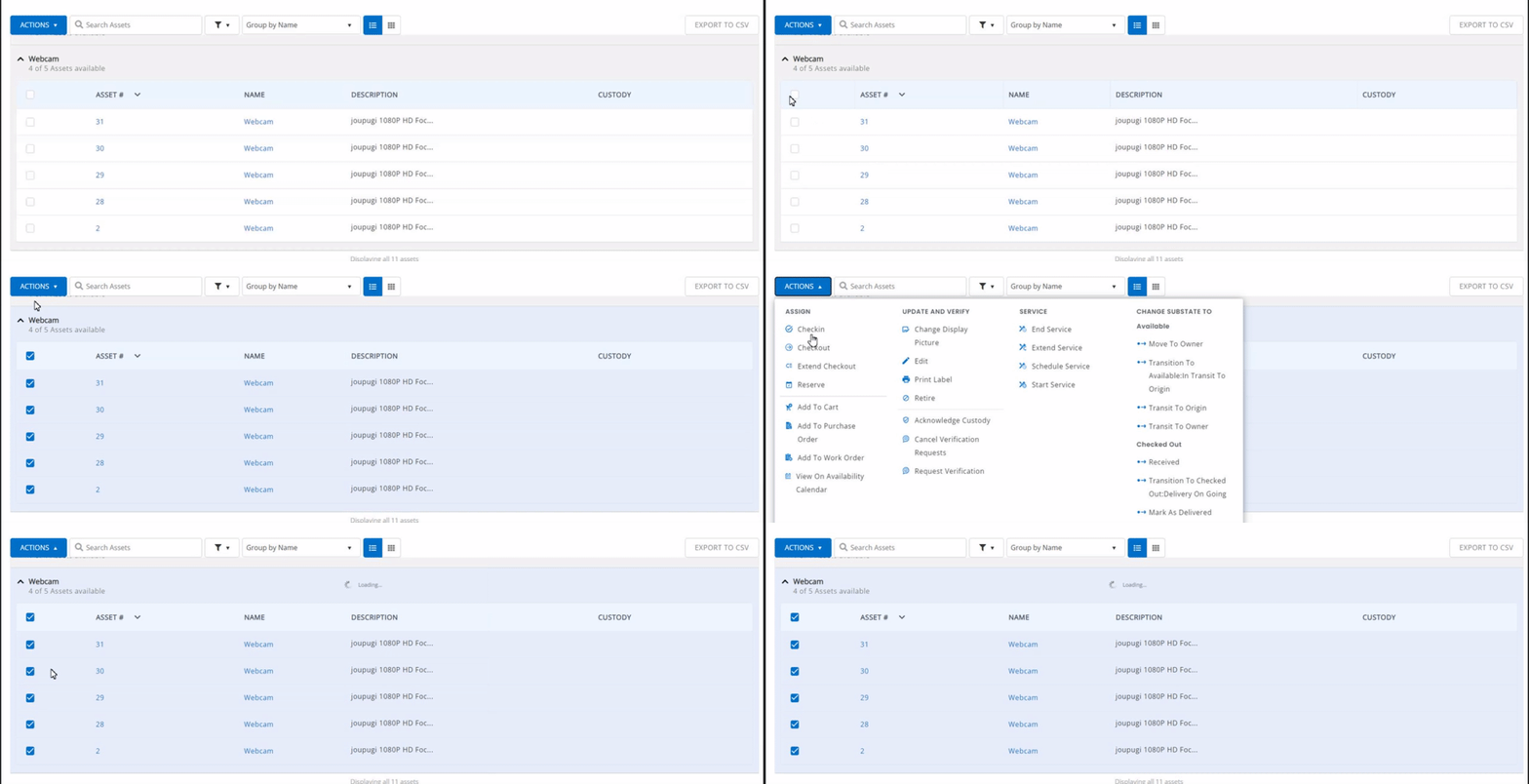
Multiple items (assets only) can be reserved in one go.
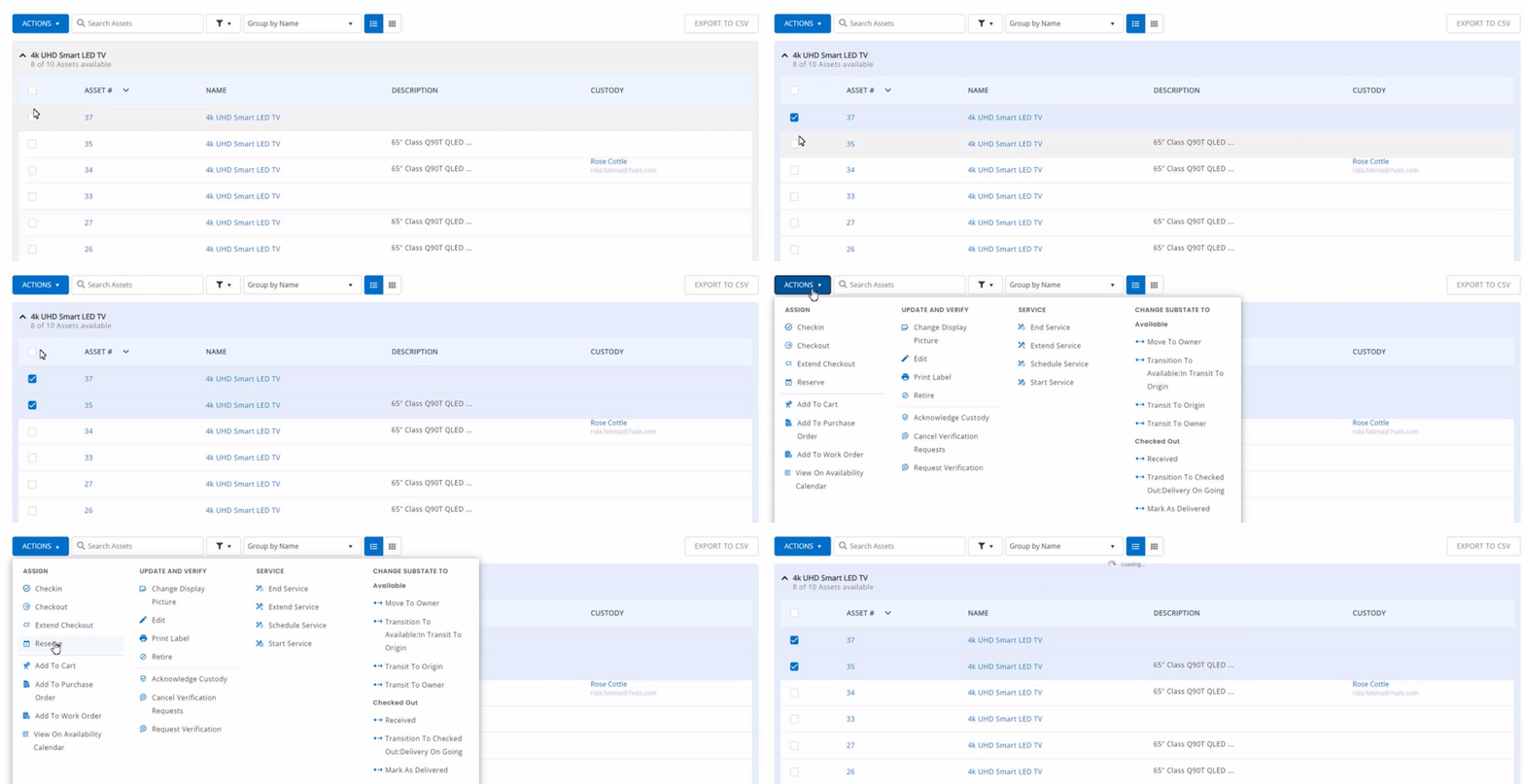
However, an error message will show up if the items have any conflict with other reservations. Enable conflict-free reservations from Settings → Company Settings → Reservations.

4. Items reservation via Cart
You can also add multiple items to a cart and then reserve it. This comes into play if the ‘Cart Module’ is enabled from Settings → Add Ons.

Select relevant items and click ‘Add to Cart’. You can now go the Cart and click ‘Reserve’ to reserve the cart.
Reserved cart items can be edited on the overlay. Items can be removed or added, giving you more control over their equipment management.
Say you reserved items for a CES exhibition but underestimated the number of VR headgear you would need. With the latest enhancement, last-minute reservations to a cart are nothing to fret over.
5. Reservations tab within the Asset Details Page
While reserving an asset, easily view its availability schedule i.e. other reservations and current checkouts. You can do so by clicking the Reservations tab on the details page.

With this information, one may choose a suitable date for a reservation and avoid conflicts. Notice in the screen below, how the Reservation Tab on the Asset Detail page provides a bird’s eye view of this information.

You can take actions within this view to edit or cancel a reservation and checkout a reserved asset as shown below:

If multiple reservations result in clashes at checkout time, you may override them as an administrator. A staff user can only do so for their reservation (if this asset is visible to this staff user as per company settings). Alternatively, one could choose a different checkout date and hence avoid any scheduling conflicts.
2. Reservation Actions
You can access the reservations page from the bell icon on the top-right of your screen.

When you click on ‘My Reservations’, you will be taken to the following Reservation Details Page that shows details of all the reservations. You can take multiple actions from here, like filter and edit the reservation.

Moreover, as an Admin, you may review reservations made by all members and take necessary actions.

You can check ‘Reserved’, ‘Fulfilled’, ‘Denied’, reservations and ‘Recurrences” as well.
Here are some important elements on the Reservation Details Page that are important to note:
1. Proximity
You can define the time period for which you want to display the reservations. These are the number of days between the current date and the reservation starting date (both in the past and future). For instance, if we select ‘Within 15 days’, then all reservations 15 days from now and 15 days before the current date will be displayed.

2. Reserved for
When you click on the ‘Reserved for’ filter, you will be able to access all the reservations. This field is searchable, so you can type the member’s name to see reservations against their name:

3. Filters
You can apply multiple filters to look for your reservation. Simply click on the filters icon.

This will take you to a window where you can enter the reservation duration, user name, asset name, and type of reservation (single or recurring) to look for the relevant reservation.

4. Editing item quantity
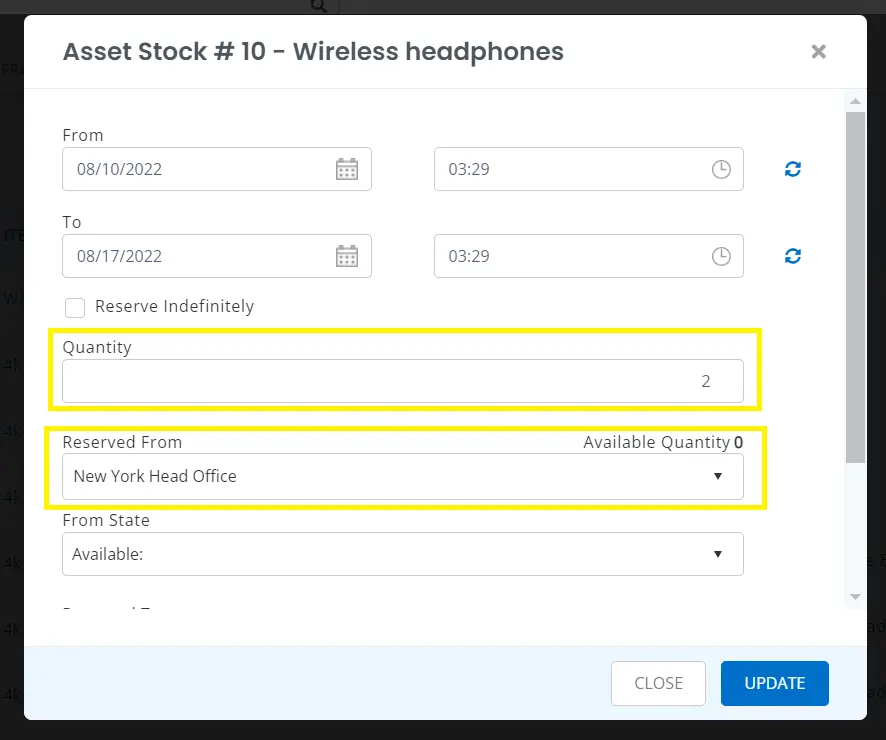
An admin may edit the quantity and location for a reservation at any time and remedy such situations. To do this go to the Reservation details page → Click on the edit icon.

You will be taken to the following page where you can edit the quantity.
5. View icon
You can cancel a reservation by clicking on the following eye icon.

3. Reservations from asset details page using Carts
You can take actions on asset reservations directly from the details page. In case an asset is part of a reserved Cart and you want to cancel the reservation, you can do so without canceling the whole Cart.
Go to the asset details page, open the Reservations tab, and click on the 3 ellipses below:

This will open a pop up showing the following options:

Click on ‘Cancel Item Reservation’ to remove the reserved asset from the Cart.
As a staff user, you may only review your reservations and take action on them. A record of past reservations is also available under the ‘Fulfilled Reservations’ Tab.
Some reservations may appear in red. This is because the quantity reserved is not available at the time of the new sale at that location. You can find out what other color dates/stock quantity means from the help section on the reservations page.
4. Staying on top of Reservations
Always stay updated on reservations with the Dashboard Calendar. You can toggle for actionable metrics between the ‘Items’ and ‘Carts’ widgets.

5. Reservations with Group by Name
You can reserve items using the ‘Group by Name view’.
1. Reserving single items
To do so, go to Items → Assets → Click on Group by Name.

To create a new reservation. Go to Asset → Asset Details Page → Reserve.
Once you select the Reserve option, an overlay will appear where you can enter the details of your reservation. You will have the option to reserve specific items of the selected asset based on their identification number with the ‘flexible reservation’ option disabled.

You can reserve an item without specifying its identification number. To do so, enable ‘Flexible Reservation’ and any item in that particular category will be selected. This is especially helpful when you are looking to reserve an item amongst items with the same name.

Also, if you wish to select the item from a location, enable the Select from a specific location option under the advanced dropdown and choose the location. Select the location from “From Location” and define the quantity.
2. Mass Reservations in Group by Name
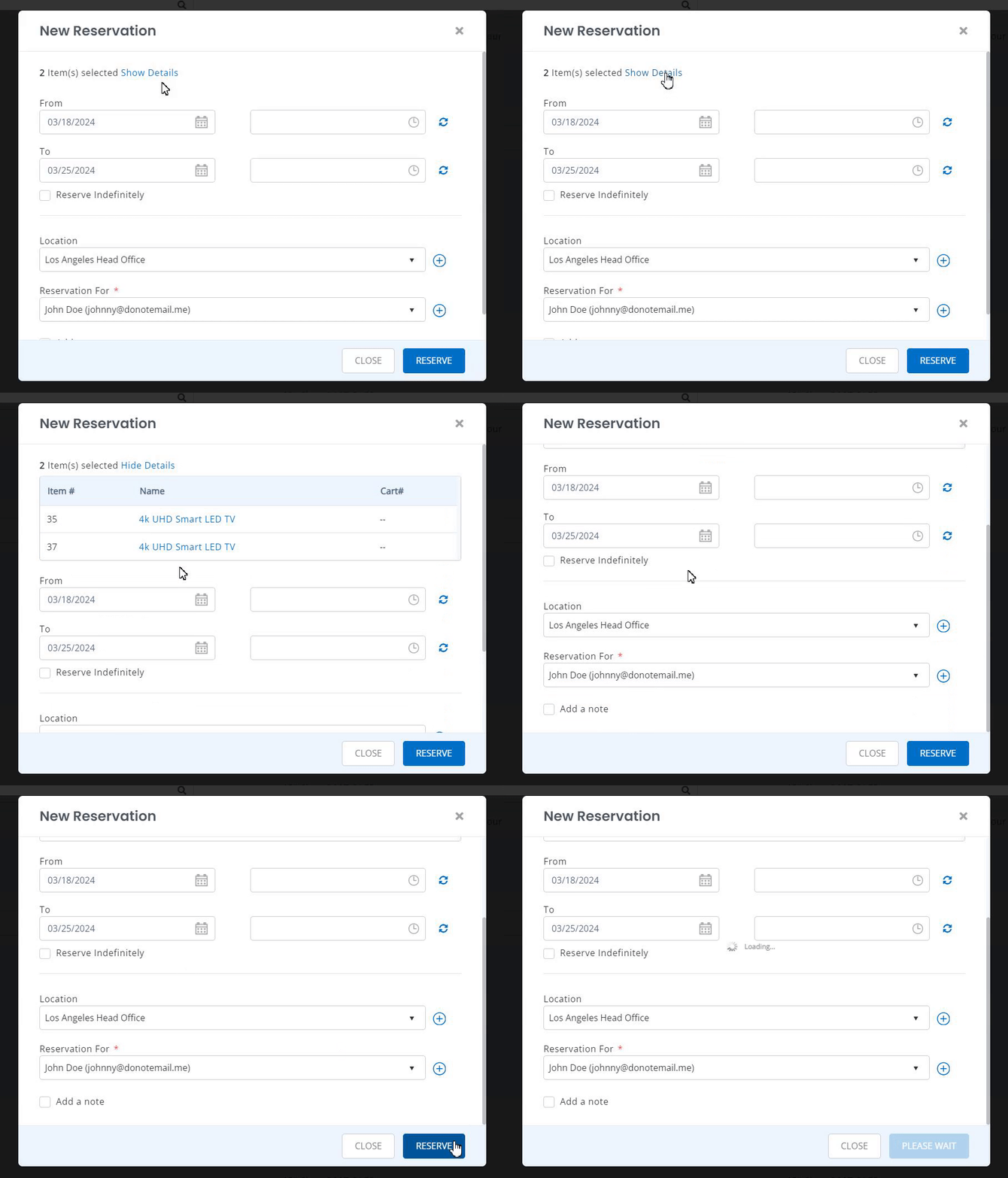
In order to reserve multiple assets simultaneously with the ‘Group by Name’ view enabled:
Go to Items→ Assets → Select the assets you want to reserve.
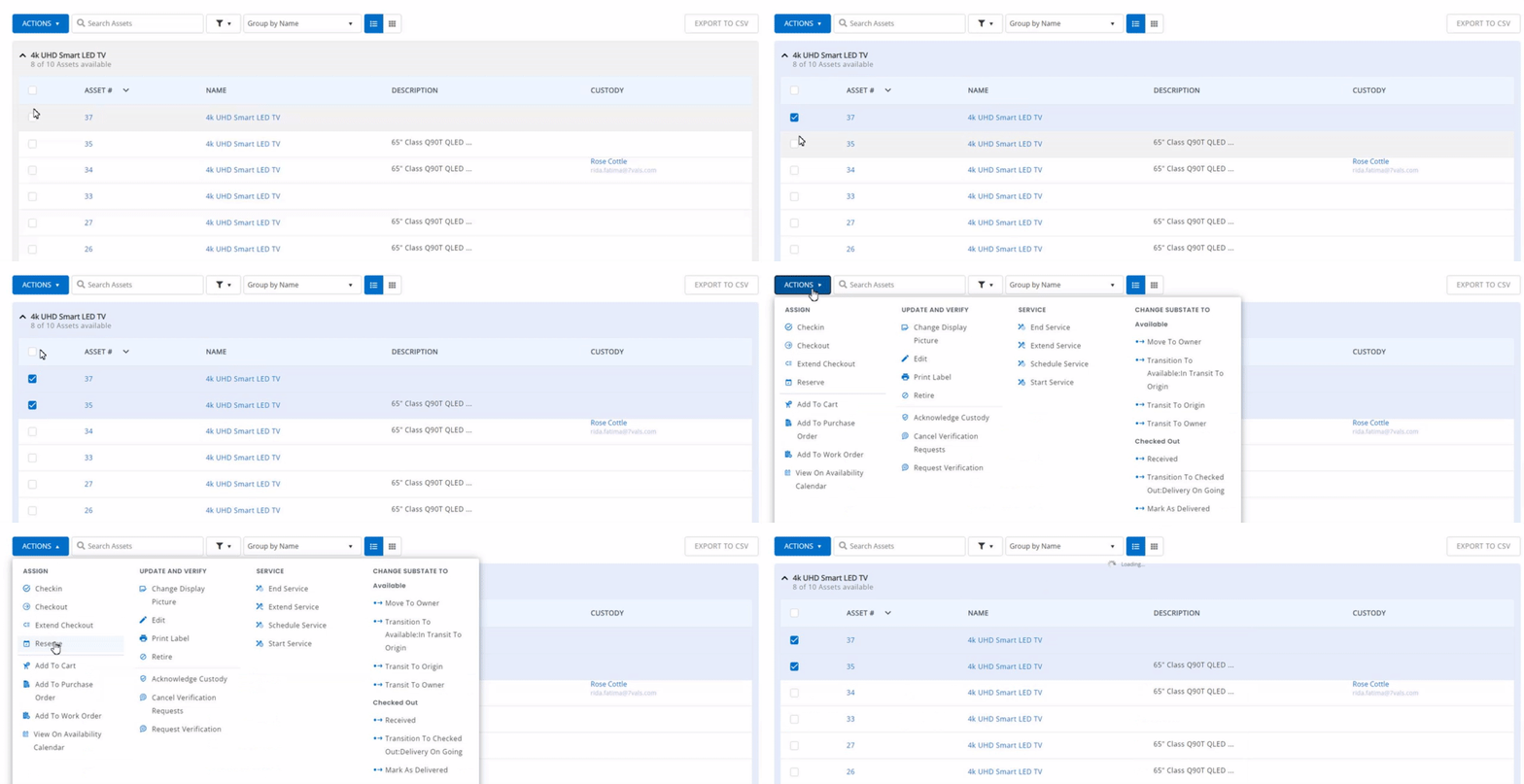
The Reservation Overlay will show you the assets selected after you click on ‘Show Details’.
6. Import Reservations in Bulk Using a CSV
If you need to create a large number of reservations, you can import them in bulk using a CSV file instead of creating each reservation manually. You can also use the import to group multiple items into the same cart reservation and use Flexible Reservations when you don’t need to reserve a specific asset.
1. Download the CSV Template
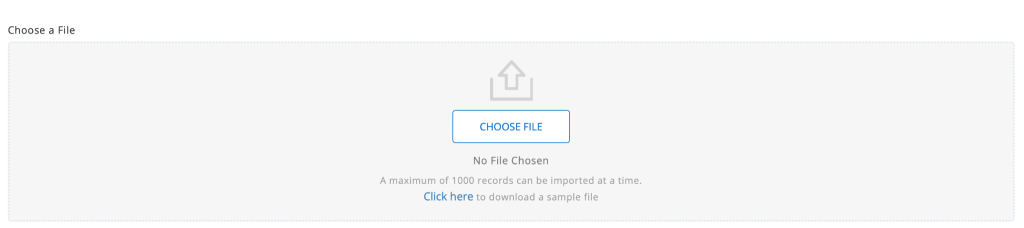
To get started, navigate to the Carts module and click the Import Reservations via Carts button. Download the CSV template by clicking Click here to see the supported fields and use it to prepare your reservation data.
2. Import Your CSV
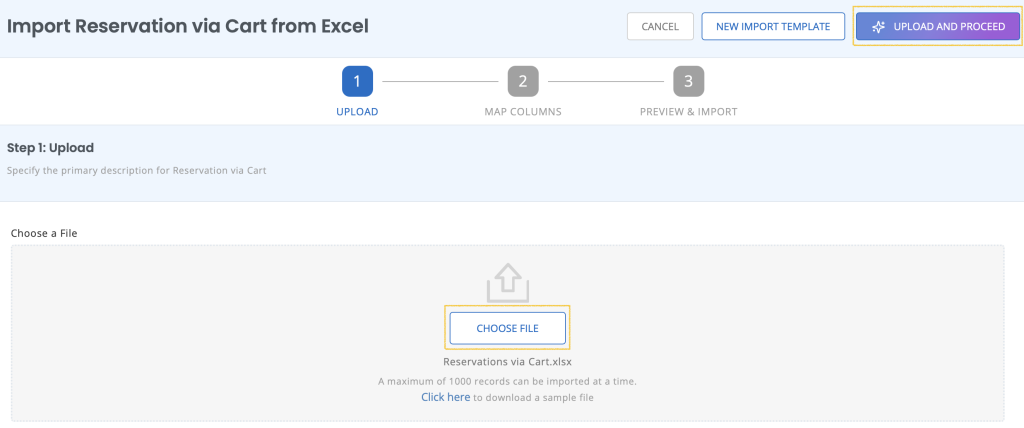
Once your CSV is ready, click the CHOOSE FILE button and upload your CSV file. Once your file is uploaded, click the UPLOAD AND PROCEED button to map your columns.
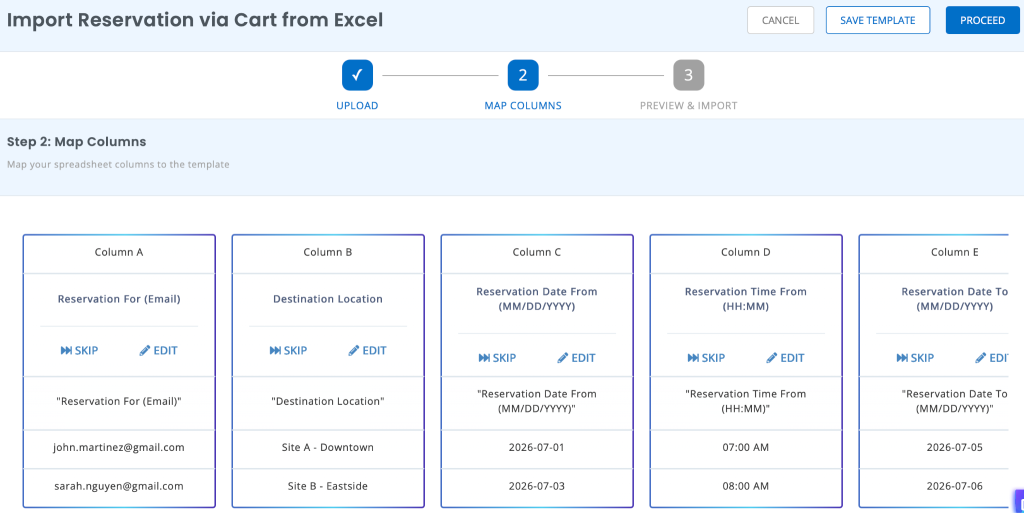
EZO automatically suggests mappings when your CSV column headers match the corresponding system fields. Review the mappings on the MAP COLUMNS page and then click the PROCEED button.
The system validates your data during import and flags rows that contain errors, such as an invalid user, unrecognized item, conflicting reservation dates, or unavailable inventory.
Once you’ve reviewed the mapping click IMPORT on the PREVIEW & IMPORT page.
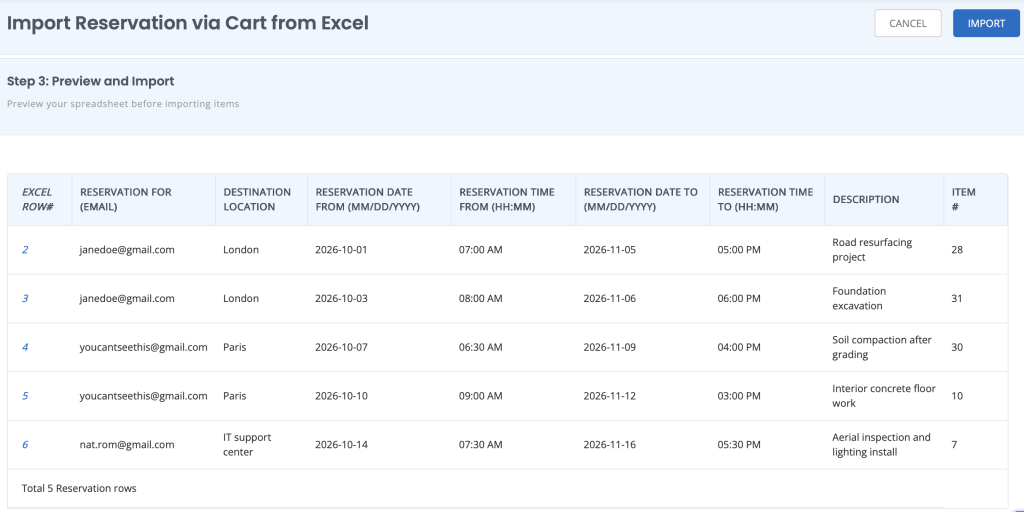
The import supports partial success, so valid reservations can be created even when some rows contain errors. The review results show which rows were imported and which were skipped, along with the reason for each failure.
3. Group Items into Cart Reservations
You can use the Identification # column to group multiple CSV rows into a single cart reservation.
Rows with the same Identification # are grouped together, provided their reservation details and other required values are consistent.
For example, if you need to reserve a laptop, keyboard, and mouse for the same user and reservation period, you can assign the same Identification # to each row. EZOfficeInventory will group those items into one cart reservation.
4. Common Import errors
If an import cannot be completed, the review screen will show the affected rows and the reason for the error. Common errors include:
| Error | How to fix it |
|---|---|
| Conflicting cart details | Make sure rows with the same Identification # have matching reservation details. |
| Invalid user or item | Check that the user email, Item name, or Item # matches an existing record. |
| Missing required field | Make sure all required fields are mapped and contain values. |
| Invalid reservation dates | Ensure the end date and time are after the start date and time. |
| Item unavailable | Check the item’s availability for the selected reservation period. |
7. Capture Signatures on Reservations
Add an extra layer of security to asset tracking by recording signatures with reservations and reservation approvals from Settings → Add Ons → Capture Signatures. This enables a user to sign whenever he/she makes a reservation on an item or when an admin approves a reservation (if arbitration on the reservation is enabled).
8. Reservation Cancellation
Reservations can be canceled by staff users and admins both. Simply go to the notification bell and click on ‘Pending Reservations’ as shown below:

This will redirect you to the Reservations page.
You can checkout a reserved item directly by clicking on the ‘eye icon’ on the reservation details page. It will take you to the following screen, where you can cancel the item reservation or checkout the item.

9. Reports Summary
You can get a comprehensive view of your reservations easily with ‘Reservations Summary’. To view the summary of your reservation reports, go to Reports → Reservations Reports→ Reservations Summary → ‘View Report’.

You can summarize your report based on particular criteria. To do this, click on the filter sign on the Report Details page.

A pop-up window will appear on the left side showing the filters applicable to your report. You can select your requirement from the drop-down in ‘Available Filters’ and ‘Applied Filters’.
For instance, if you click on ‘Reservations – Creation Source’, you can select the creation source data for the report to be imported from. You can choose sources, such as ‘API’, ‘Web app’, ‘Mobile app’, and ‘Request Portal’. N/A can be selected if there is no creation source set.
Note: If you want to gather data from all the sources, then clear all the filters.

Similarly, you can select options from ‘Created On’, ‘Location’, and ‘Reserved to Location’.
Once you have selected the relevant options, hit ‘Apply Filters’.

For example, the following image shows the summary of the total number of reservations created. Here, ‘Total Self Serve’ is the requests where the recipient and requester are the same, and ‘Average Time to Resolve’ is the amount of time taken to respond to a reservation request.

To get a detailed view of the report, click on ‘View Details’. Here’s what a detailed Reservations Report looks like:

By following these simple steps, you can generate report summaries easily and improve your data analysis.