
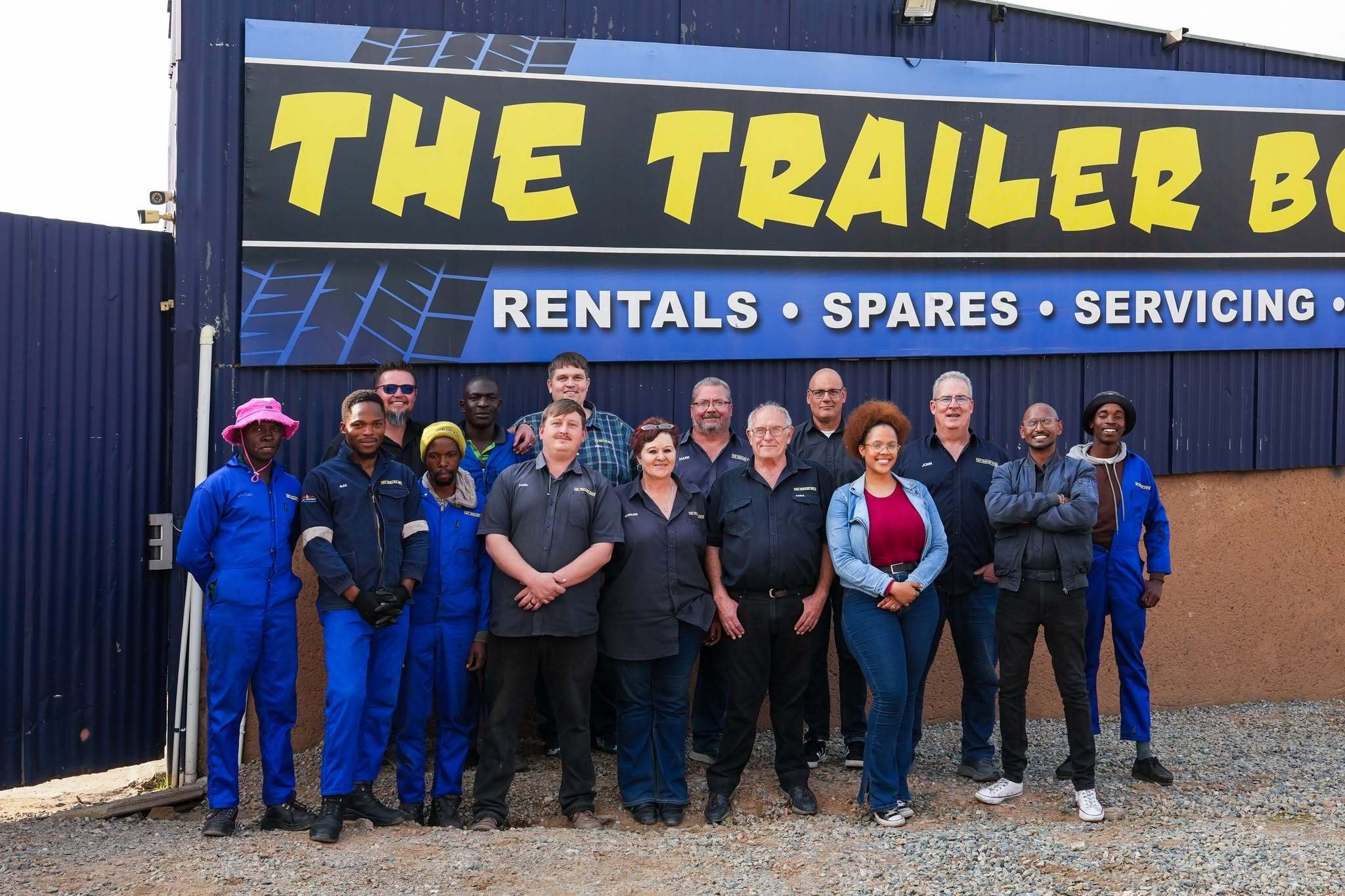
With nine branches, about 300 trailers, and around 3,000 monthly rental transactions, The Trailer Boys moved more of its rental process out of the branch and estimates the change saves about 1,000 staff hours per month.
A customer arrives at The Trailer Boys to collect a trailer.
Today, much of the rental work has already happened before they get there.
The rental information is in the system. The paperwork that once had to be handled manually is no longer part of the process. And for a new customer, processing now takes about five minutes.
For a returning customer, it can take about one.
“About one minute in and out.”
— Jady Stieler, Regional Manager at The Trailer Boys
Five minutes is what the customer notices, but across nine branches and approximately 3,000 rental transactions every month, the bigger story is what had to change behind those five minutes.
For The Trailer Boys, the answer was to move more of the rental process out of the branch and build the operation around a shared rental record.
The company estimates that the resulting efficiencies save approximately 1,000 staff hours every month.
When the rental started at the counter
Founded in 2014, The Trailer Boys has grown to nine branches across Gauteng, South Africa, with a fleet of approximately 300 vehicles and utility trailers. Its customers include both individuals and companies.
The company already had rental software. The problem was that the software had been built around an earlier version of the business.
It ran on a local server. Online bookings still involved manual work, rental agreements required manual signatures, and information that could have been handled before collection often had to be completed upon the customer’s arrival.
As the company expanded, those steps became harder to manage across multiple locations.
“The previous one was running on a server. If you go and do online bookings, it’s all manual. Everything was manual; even the contracts required a manual signature. We don’t do paperwork at all anymore.”
— Jady Stieler, Regional Manager at The Trailer Boys
The Trailer Boys wanted customers to be able to book online while giving its branches access to the same rental information.
It also wanted a system that could connect with the tools it was building around its operation. That became the starting point for the change.
The goal: get more of the rental done before arrival
EZRentOut became the system of record for The Trailer Boys’ rentals, customers, trailers, inventory, and branch operations.
Its web-based access and APIs also gave The Trailer Boys the flexibility to build its own booking platform and internal dashboard around that information.
That distinction is important.
The Trailer Boys built the customer-facing booking experience and supporting internal tools. EZRentOut provides the rental records, availability, multi-location inventory, maintenance workflows, work orders, and APIs that those tools connect to.
The company’s online booking platform uses EZRentOut’s APIs to let customers select their rental period, trailer, and preferred branch based on availability as shown in EZRentOut.
When a booking is made, the relevant customer and rental order information is entered into the rental system before collection.
The branch therefore starts with information already in place rather than having to build the rental from scratch when the customer arrives.
That change in timing is what ultimately made the five-minute interaction possible.
The rental order became the thread running through the operation
Ask The Trailer Boys what sits at the center of its operations, and the answer is straightforward:
“Rental orders are at the center of our operations.”
— Jady Stieler, Regional Manager at The Trailer Boys
A rental order brings together the customer, selected trailer, availability, and branch handling the rental.
That gives each location a common record to work from as the rental moves from booking toward return.
The same information also feeds The Trailer Boys’ connected internal dashboard, which helps branch teams identify incomplete orders and rentals that have not been returned on time.
This matters because the rental doesn’t end when the customer drives away.
A trailer can move into the workshop. A rental can become overdue. An order can remain incomplete.
Those events still need to be managed in relation to the rental operation.
The trailer doesn’t disappear when it enters the workshop
When a trailer moves out of the rental flow and into maintenance, The Trailer Boys uses maintenance periods and work orders in EZRentOut to record servicing and identify booking conflicts before work begins.
That keeps maintenance activity tied to the equipment’s place in the rental operation.
The same principle applies across locations.
With nine branches, Head Office needs to know where trailers and other stock are held. Multi-location inventory tracking in EZRentOut gives the central team a view of inventory across those locations.
So the system supports more than the initial reservation.
It connects the information surrounding the rental: the customer, the trailer, the branch, availability, maintenance activity, and follow-up.
That is what allowed The Trailer Boys to build a common operating process across its locations rather than treating each rental as an isolated transaction.
Then the number changed: 20–25 minutes became five
Before the change, much of the rental administration happened at the branch.
Customers could spend 20 to 25 minutes being processed while staff completed the required steps.
Now, The Trailer Boys says the same interaction takes about five minutes for a new customer.
“We used to take about 20 to 25 minutes per customer. It’s now down to five minutes for the new customer.”
— Jady Stieler
For returning customers, the process can be faster still:
“About one minute in and out.”
— Jady Stieler
The company also reports fewer missed bookings and data capture errors, alongside a more consistent rental process across its locations.
The five-minute interaction is the visible result.
The less visible change is that more of the work now happens before the customer reaches the branch.
Five minutes at the counter. Approximately 1,000 hours across the business.
The Trailer Boys estimates that EZRentOut saves its team approximately 1,000 staff hours per month across its branches.
The company describes this as an estimate based on efficiencies gained through its connected processes.
The figure is therefore broader than the time saved during customer collection alone. Online bookings, paperless agreements, rental information, and follow-up all form part of the administrative work surrounding thousands of monthly rentals.
At approximately 3,000 rental transactions a month, those changes accumulate.
The result isn’t simply a faster interaction at the branch. It is a rental process in which less of the work has to wait for the customer to arrive.
With nine branches in, the company is already thinking about what’s next
The Trailer Boys is looking toward expansion into Durban.
A new location still requires the practical work of setting up the branch, its trailers, inventory, and team.
But the company’s rental structure is designed around multiple locations.
A new multi-store location and its users can be added to EZRentOut, while The Trailer Boys’ custom dashboard was built to work with that multi-location structure.
Jady describes the process simply:
“If we’re gonna open a new location, it’s just a matter of adding a new location and users, and that’s it. Everything’s done.”
— Jady Stieler
The significance isn’t that opening a new branch becomes effortless, but that the rental operation doesn’t have to be designed from scratch for every location.
The same structure can extend to another branch.
The five-minute rental is only the part customers see
A customer sees five minutes. A returning customer may see one. What they don’t see is everything that changed before they walked through the door.
The Trailer Boys moved from a server-based rental system with manual booking administration and paper agreements to an operation where online bookings feed into rental records before collection.
Rental orders sit at the center of the process. Customer, trailer, availability, and branch information stay together. Maintenance activity can be recorded against equipment. Inventory can be tracked across locations. And The Trailer Boys’ own booking platform and internal tools can integrate with rental data via EZRentOut’s APIs.
Across nine branches and approximately 3,000 monthly rental transactions, the company estimates that these changes save about 1,000 staff hours per month.
The faster customer handoff is the part that’s easy to see. The real transformation happened behind it.
“EZRentOut is more than just our rental management system; it has become the operational backbone of our business.”
— Jady Stieler, Regional Manager at The Trailer Boys

