EZO EAM vs Asset Panda
Beyond Records: Built for Seamless Equipment Routing
Answer “What do we have?” in thirty seconds. Know where it is, who has it & what’s happened to it. Then run everything that happens next from a system that doesn’t just track assets, but puts them to work.
We're Trusted by the Best





EZO vs Asset Panda: Head-to-Head Comparison
|
Table Header
|
||
|---|---|---|
|
Barcode/QR Code Asset Tracking |
✔ |
✔ |
|
Depreciation |
✔ Two methods available |
⚠️ Straight-line only |
|
Self-Service Request Portal |
✔ Custom storefront portal |
❌ Uses workaround |
|
Multi-tier Approvals |
✔ |
⚠️ Single-tier approvals |
|
Work Orders & Services |
✔ Meter PM, parts, tech log |
⚠️ Basic work orders |
|
Project Grouping |
✔ |
❌ |
|
Mobile App |
✔ |
✔ |
|
Multi-Currency Procurement |
✔ |
❌ |
|
Contract Management |
✔ |
✔ |
|
Single-screen Request Fulfillment |
✔ |
❌ |
|
Pricing Transparency |
✔ |
❌ Not publicly available |
|
Table Header
|
|
|---|---|
|
Barcode/QR Code Asset Tracking |
|
|
✔ |
✔ |
|
Depreciation |
|
|
✔ Two methods available |
⚠️ Straight-line only |
|
Self-Service Request Portal |
|
|
✔ Custom storefront portal |
❌ Uses workaround |
|
Multi-tier Approvals |
|
|
✔ |
⚠️ Single-tier approvals |
|
Work Orders & Services |
|
|
✔ Meter PM, parts, tech log |
⚠️ Basic work orders |
|
Project Grouping |
|
|
✔ |
❌ |
|
Mobile App |
|
|
✔ |
✔ |
|
Multi-Currency Procurement |
|
|
✔ |
❌ |
|
Contract Management |
|
|
✔ |
✔ |
|
Single-screen Request Fulfillment |
|
|
✔ |
❌ |
|
Pricing Transparency |
|
|
✔ |
❌ Not publicly available |
Legend:
✔ = Explicitly offered
❌ = Not offered or documented
⚠️ = Supported, but narrower in scope or context

Why EZO EAM?
EZO turns asset records into action. Give employees a storefront-style portal to request equipment, route approvals across multiple tiers, and fulfill requests from a single screen, with asset history, approval context, and project associations attached. Unlike Asset Panda, which is focused mainly on barcode tracking, mobile scanning, and configurable records, EZO connects requests, reservations, checkouts, audits, depreciation, maintenance, and retirement in a single system. Work orders and preventive maintenance stay tied to the asset record, while automations, controls, and audit-ready reports keep every step traceable. The result: 80% less item loss, 90% same-day request fulfillment, and 70% of requests are self-serve.
What We Bring to the Table
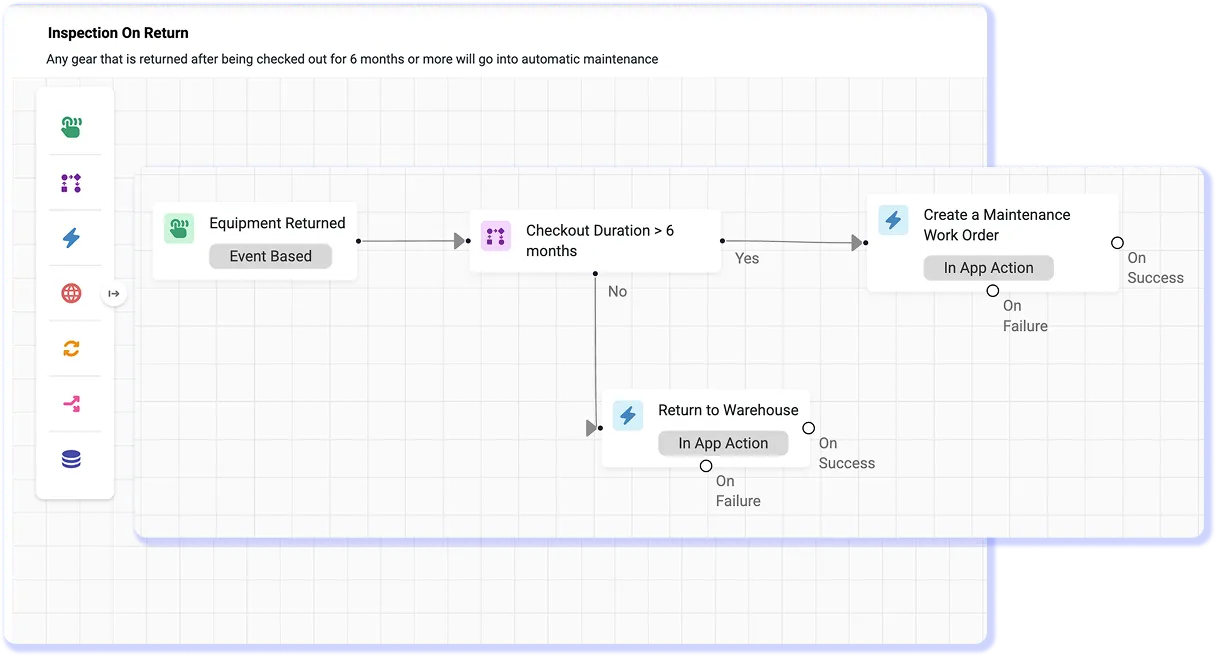
Turn Asset History Into Confident Action
Turn every asset record into a trusted, actionable history. See where an asset is, who has it, what has happened to it, and what it is worth without piecing together data across systems. Track custody, maintenance, reservations, audits, depreciation, and retirement in one connected record. Mobile updates keep data current, while timestamped reports give leaders evidence they can trust. Asset Panda tracks records; EZO connects them to the work that comes next.

Move Every Equipment Request Forward

Scale Access Across Teams and Locations

A Partnership Built to Scale With You
Our Customers Tell Their Stories


Civil Engineer
Mid-Market (51-1000 emp.)


Fleet Manager
Mid-Market (51-1000 emp.)


Network Administrator
Enterprise (> 1000 emp.)
Proven by Teams. Recognized by Experts.



Don’t Just Track Assets. Put Them to Work.
Frequently Asked Questions
EZO is a better fit when asset tracking needs to drive day-to-day equipment operations. It connects asset records with requests, approvals, reservations, checkouts, inventory, maintenance, RFID/GPS tracking, utilization, and other operational workflows. Asset Panda is particularly strong when the priority is a highly configurable asset system of record with custom fields, workflows, mobile scanning, audits, and support for many asset types. The key difference is therefore operational structure versus configuration flexibility: EZO provides more packaged workflows around equipment movement and maintenance, while Asset Panda gives teams greater freedom to model asset records around their existing processes.
Choose EZO when your team needs to do more with asset data than maintain a configurable record. EZO is designed around equipment operations such as custody, availability, reservations, employee requests, approval routing, fulfillment, stock, preventive maintenance, work orders, GPS, telematics, and utilization. This makes it particularly relevant to equipment-heavy, multi-team environments where an asset frequently moves between people, sites, projects, and maintenance states. Asset Panda remains a strong option when the main requirements are flexible asset data modeling, custom workflows, mobile audits, or managing many asset categories within a highly configurable system.
Asset Panda may be the better fit when your biggest requirement is customization rather than prebuilt operational workflows. Its strengths include configurable fields, workflows, forms, permissions, broad asset-type coverage, mobile barcode and QR scanning, offline field activity, and audit workflows. That can work well for organizations with highly different asset structures across departments or teams that want software to closely mirror an existing process. EZO becomes more compelling when requests, reservations, stock, equipment movement, maintenance, GPS or telematics, and utilization need to operate as connected workflows. Neither product wins every use case; the decision depends on whether flexibility or operational depth is the higher priority.
EZO has the stronger maintenance proposition when maintenance is an operational workflow rather than simply information attached to an asset. EZO supports preventive maintenance, work orders, technician management, service histories, inspections, maintenance scheduling, and higher-tier CMMS capabilities, while keeping that activity connected to custody, availability, inventory, and the asset lifecycle. Asset Panda can support maintenance-related workflows through configurable records, smart forms, inspections, work orders, and repair tickets, but its product positioning is more centered on configurable asset management. Buyers running maintenance-intensive equipment should compare the specific CMMS functionality and plan requirements they need rather than simply asking whether both systems can record maintenance.
EZO EAM uses item-based pricing and publishes prices through its online pricing calculator, while Asset Panda primarily uses a personalized quote process. EZO’s current public plans include unlimited users subject to a fair-usage policy, with pricing increasing according to the number of tracked items and the selected plan. Some capabilities, including the Request Portal, integrations, CMMS functionality, offline workflows, GPS, telematics, and automation, can depend on the EZO plan or add-on selected. EZO also currently offers a 15-day free trial without requiring a credit card. Buyers comparing total cost should match equivalent functionality, asset volumes, integrations, and implementation requirements rather than comparing headline starting prices alone.
Yes. EZO supports data import and export, allowing teams moving from Asset Panda or another asset system to bring existing asset information into EZO. The exact migration scope depends on what needs to be retained, such as asset records, custom fields, locations, users, assignments, maintenance information, and historical data. Because Asset Panda can be heavily customized, not every field or workflow should be assumed to map one-to-one into EZO. EZO provides guided onboarding and implementation support, so migration should begin with field and history mapping, data cleanup, workflow configuration, and a representative test import before the final cutover.
EZO EAM supports integrations including Jira, Zendesk, Google Workspace, Okta, OneLogin, Dropbox, OneDrive, Zapier, and selected GPS and telematics systems such as John Deere and SkyBitz. Asset Panda has documented support around systems including Microsoft Entra ID, Apple Business Manager, Jamf, Intune, Kandji, several ERP platforms, and a REST API. Because the two platforms emphasize different ecosystems, integration fit should be evaluated by the actual systems your workflow depends on. For each critical integration, confirm the supported data, sync direction and frequency, authentication method, plan requirements, and whether configuration or implementation services are required.
Both support mobile asset workflows, but Asset Panda has a particularly strong offline-field-work proposition. Asset Panda documents mobile barcode and QR scanning, audits, check-in/check-out, repair tickets, inspections, and offline workflows. EZO EAM supports mobile equipment operations, barcode and QR workflows, RFID (where applicable), custody transfers, audits, maintenance activities, and other field updates. EZO also offers offline capabilities, but availability can depend on the plan and workflow; current packaging places broader offline functionality in higher tiers. Teams working at job sites, warehouses, plants, or low-connectivity locations should therefore test their actual offline workflow, including scanning, updates, maintenance completion, and synchronization, before choosing either product.
