

EZO Government Asset Management Software
Government Asset Management Software
Keep Public Equipment Accountable and Ready
Connect property records, custody, maintenance, work orders, and lifecycle history across departments and sites. Help state, local, and federal operations teams reconcile assets, prepare for audits, and keep equipment ready.
Trusted by Public Sector Operations Teams


When Public Asset Records Fall Behind Operations
Property Records Drift From Reality
Asset registers, departmental files, and physical equipment fall out of sync as assets move. Audit preparation then becomes a manual search for locations, custodians, transfers, and retirement records.
Equipment Write-Offs Become the Norm
When teams cannot locate assets during reconciliation, they may write off equipment before recovering it. Over time, unresolved losses can become a recurring entry in disposition reports.
Maintenance Work Falls Behind
Keeping schedules separate from equipment records makes it harder to see what is due, what is in service, and what can return to work. Gaps become visible when equipment is needed or records are reviewed.
Oversight Reports Take Too Long
Leadership, Finance, and auditors need answers about location, condition, utilization, and cost. Separate departmental records force teams to reconcile data before they can respond.
Control Every Stage of Public Equipment Operations
Property Accountability
Custody & Checkout
Preventive Maintenance
Multi-Site Operations
Lifecycle Management
Reporting & Oversight
Property Accountability
Align Records With Physical Equipment
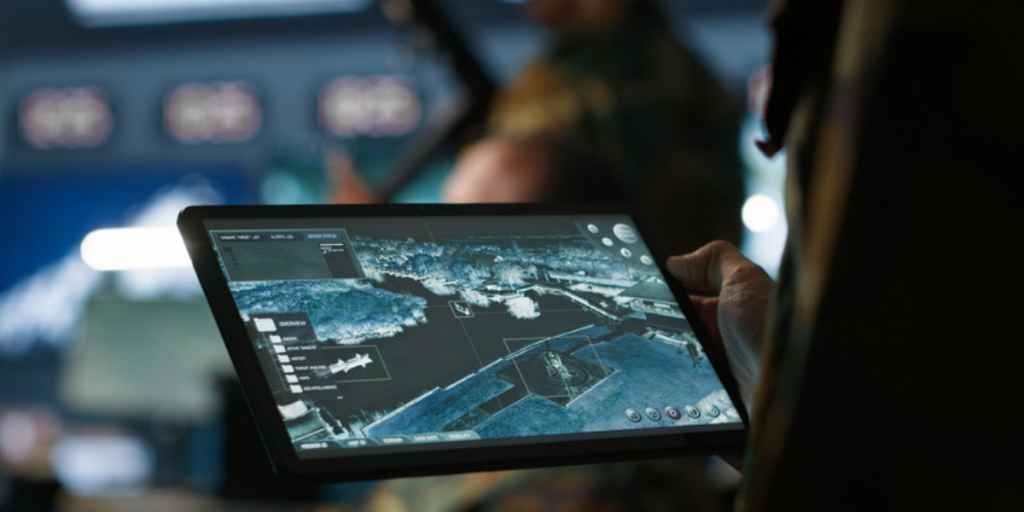
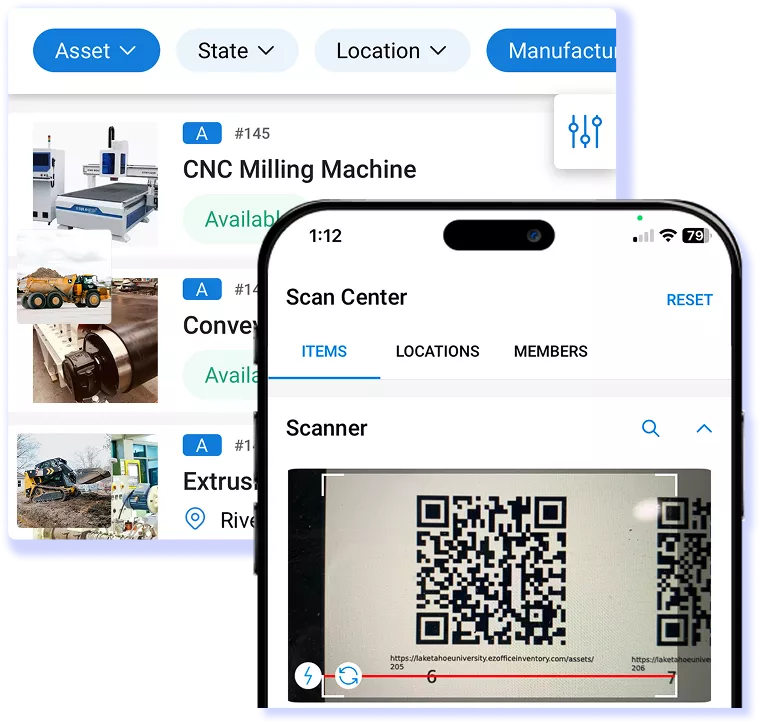
Keep each asset tied to one record for location, custody, status, documents, and lifecycle history. Identify equipment with barcodes, QR codes, or supported RFID workflows, then record assignments, transfers, audits, and retirements. Property teams can compare physical equipment against records, avoiding the need to reconstruct or investigate exceptions from separate files.
Custody & Checkout
Record Every Equipment Handoff
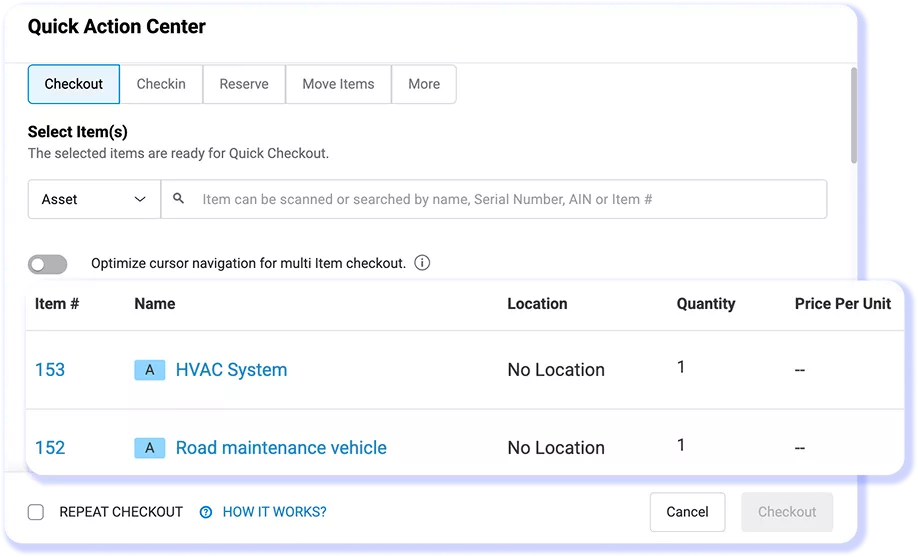
Use assignments, checkouts, returns, transfers, signatures, and reservations to connect shared equipment with the responsible person, team, or location. Staff can record movement between shifts and sites, check current availability, and review prior custody when an item is returned, reassigned, overdue, missing, or cannot be located during reconciliation.
Preventive Maintenance
Keep Equipment Ready For Assigned Work
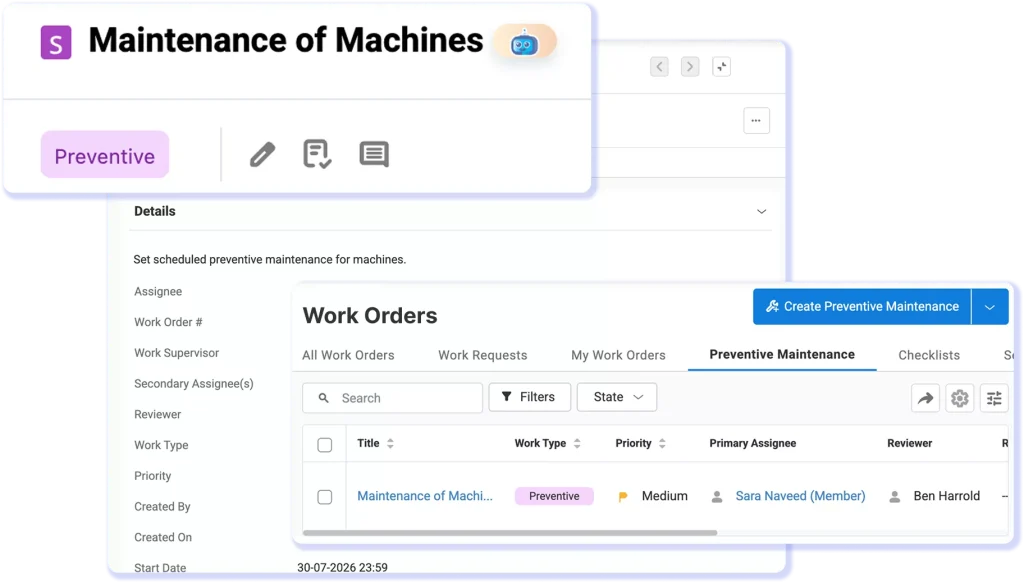
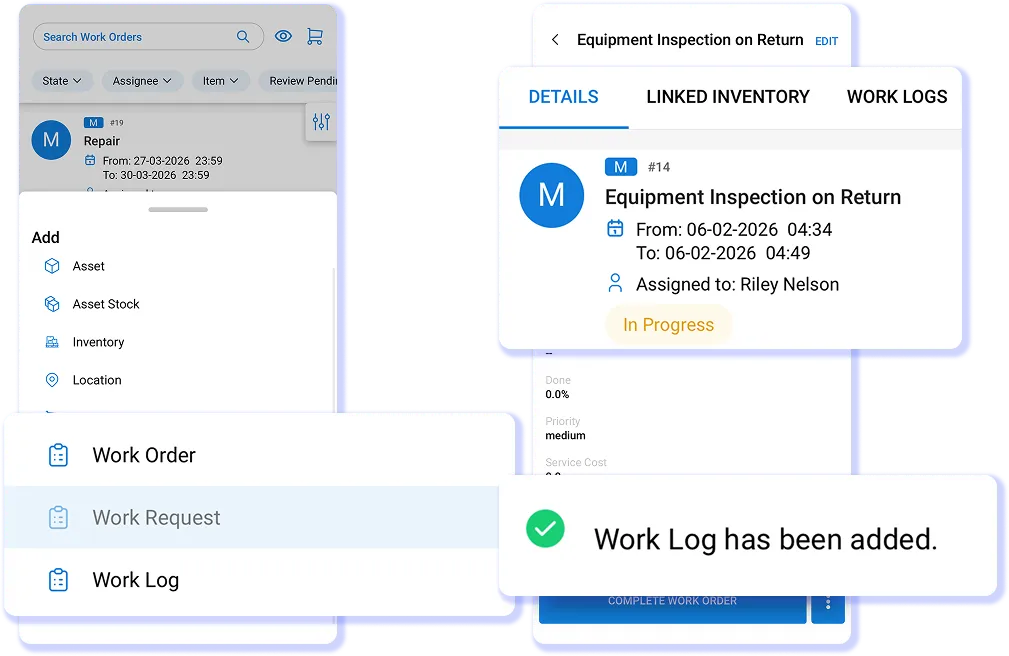
Connect preventive maintenance, service alerts, inspections, and work orders to custody and availability records. When Service Triage is configured for an applicable asset group, checked-in equipment can enter maintenance for a defined service period. Teams can review due work, service status, and history before equipment returns to circulation.
Multi-Site Operations
Unify Records Across Departments
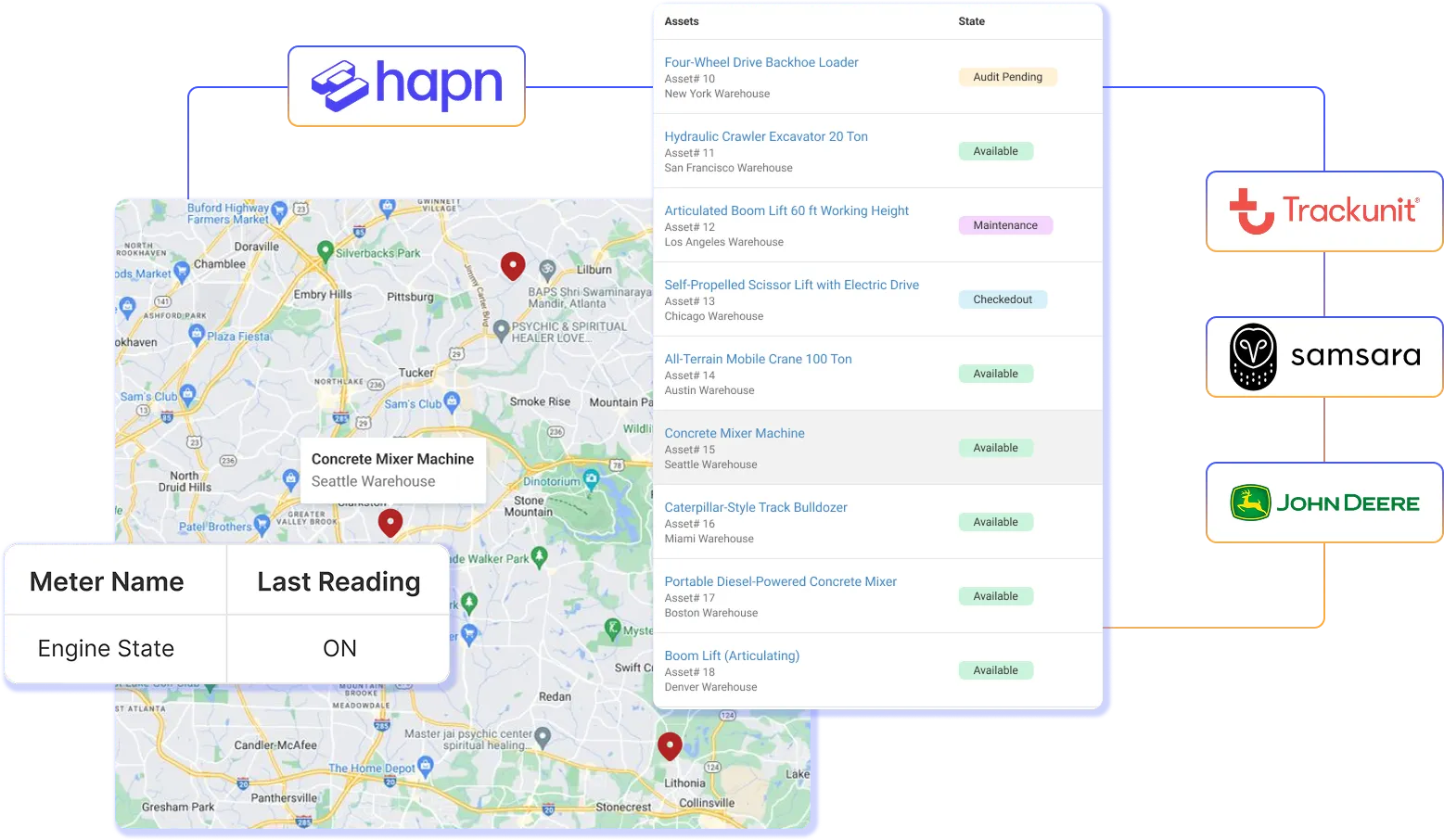
Structure locations, sublocations, groups, and permissions around agency operations. Department and site teams can work easily with relevant assets, while authorized central teams retain broader visibility. Shared naming standards and record structures help leadership compare status and activity without combining separate departmental spreadsheets.
Lifecycle Management
Track Equipment From Purchase To Disposal
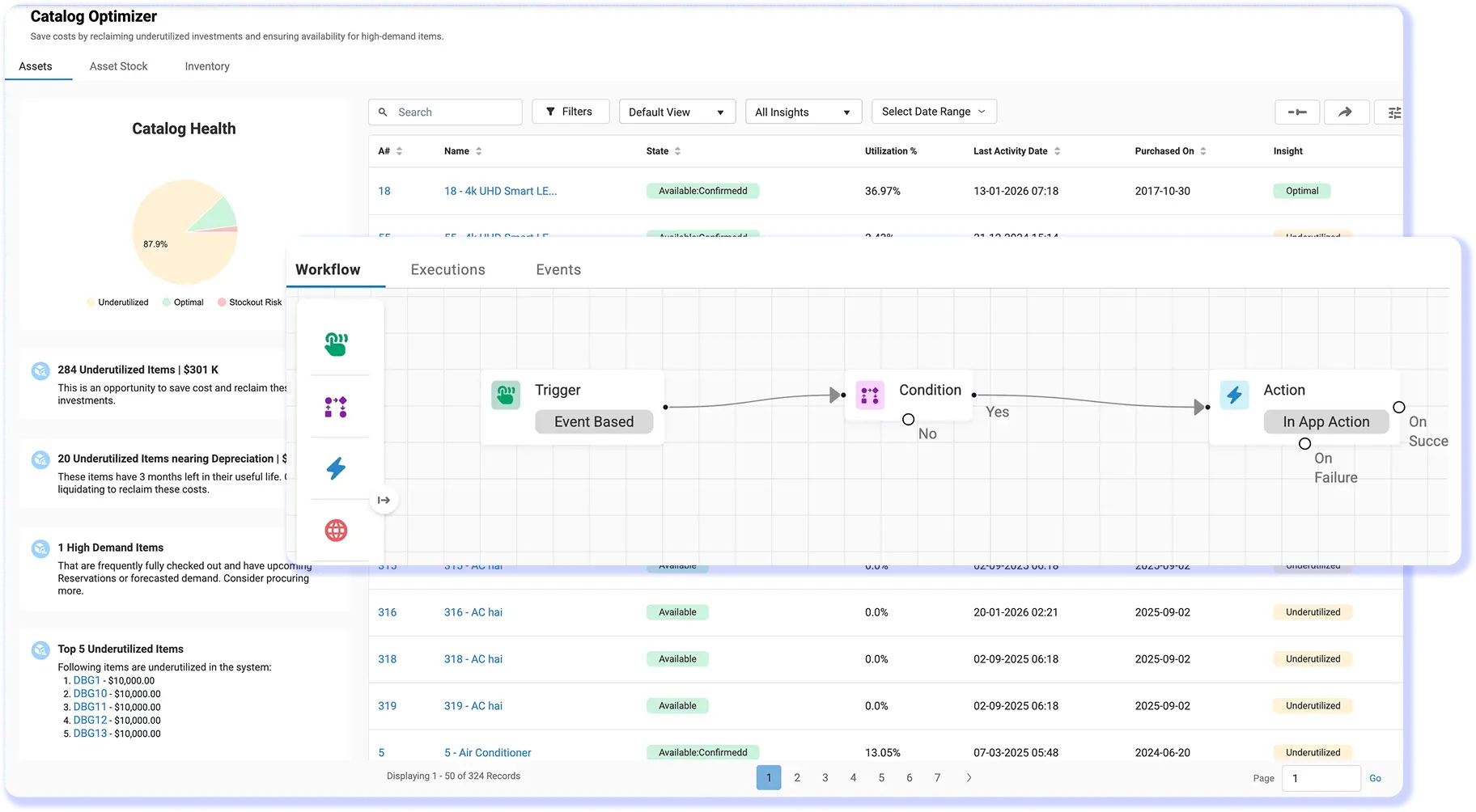
Connect acquisition details, warranties, assignments, transfers, maintenance history, retirement, and disposition connected to the asset record. Fleet, facilities, and operations teams can maintain history as equipment moves through service, while Finance retains ownership of accounting records in the agency’s financial system.
Reporting & Oversight
Answer Operational Questions With Current Records
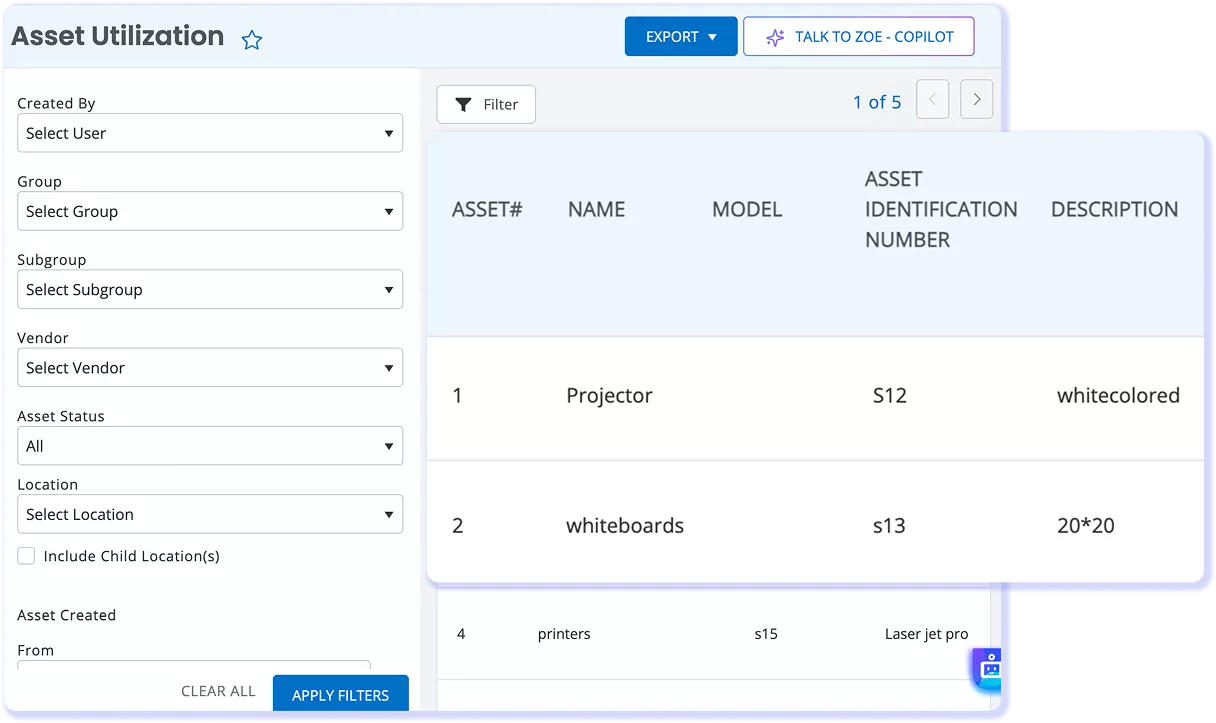
Bring asset status, custody, utilization, maintenance, downtime, cost, and location data into reports filtered by department, site, or asset class. Operations leaders can work from consistent records when responding to Finance, audit, council, board, or internal oversight requests, reducing the need to rebuild answers from disconnected departmental files.
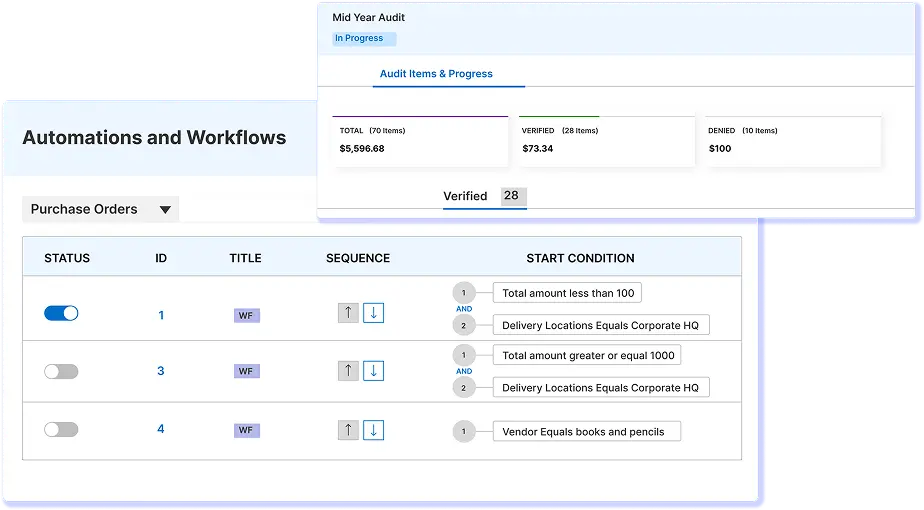
Manage Public Equipment Through Connected Workflows
PROPERTY ACCOUNTABILITY & AUDITS
Stay Audit-Ready, Year-Round
CUSTODY & FIELD OPERATIONS
Follow Equipment Across Every Handoff
MAINTENANCE & READINESS
Review Service Status Before Reassignment
SYSTEMS & OVERSIGHT
Keep Operational and Financial Records Aligned
Bring Accountability and Equipment Readiness Into One System
Measure the Outcomes Government Operations Teams Need to Improve
2,000+ hours
Saved Annually via Automation
Up to $200K
Cost Savings Annually
100%
Increase Operational Efficiency
Township of Hamilton Keeps Rescue Gear Service-Ready
The Township of Hamilton Dive Team, an all-volunteer water rescue and recovery team in New Jersey, needed a better way to manage critical gear and servicing. Its small team oversees scuba, ice rescue, swift-water, and boating equipment.
With EZO EAM, it created digital records for 126 items, added barcode labels, and used mobile scanning to capture details, location, custody, and condition. Custom fields and alerts track recurring inspections and service dates, while inventory records keep smaller consumables visible without individual tags. The team can plan maintenance, support funding requests with current records, and keep mission-critical gear ready for use.
What Public Sector Operations Teams Say
Frequently Asked Questions
EZO EAM helps government agencies verify what property they hold, where it is, and who is responsible for it. Centralized asset records retain identifiers, locations, custody details, condition, and transaction history. With location and custody audits, designated auditors can scan barcode labels to check property against recorded locations and quantities, while custodians confirm possession of checked out items. These workflows help teams identify discrepancies and gather evidence for property accountability reviews.
Agencies still define their audit scope, resolve discrepancies, and determine whether the system meets their internal control and reporting requirements.
Yes. EZO EAM centralizes asset records across government departments and sites, with locations and sub-locations showing where equipment belongs and custody records identifying who holds it. Teams can track asset movements and conduct location and custody audits to verify property across offices, storage facilities, and field locations. This shared record helps departments coordinate asset oversight and investigate discrepancies.
EZO EAM tracks shared equipment through check-ins, checkouts, and custody transfers. At a shift handoff, the incoming employee can take custody of equipment already checked out to another user, keeping responsibility recorded as it changes hands. Transfers can include location details and signatures, with optional admin approval. Supervisors can review transfer history to trace handoffs and confirm who currently holds each item.
EZO EAM supports public works equipment maintenance with recurring schedules based on dates, usage, or meter readings. Teams can assign work orders and use maintenance inspection checklists to standardize checks across crews. Findings, photos, parts, costs, and completed work stay linked to each asset, helping managers plan follow-up repairs and review service history. Full preventive maintenance and work order functionality requires the CMMS add-on with Premium or is included with Enterprise.
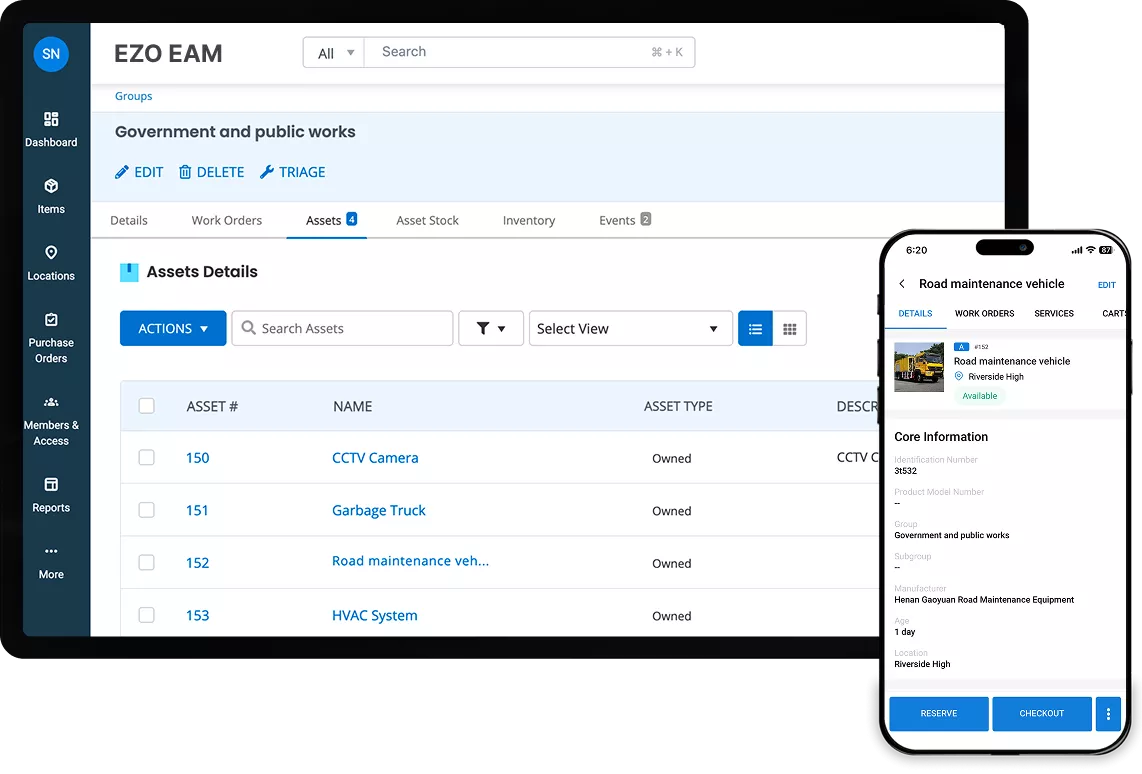
EZO EAM can manage vehicles, machinery, power tools, cameras, computers, furniture, and other operational equipment, along with spare parts and consumable supplies. Its three item types support different tracking needs: Assets for individually tracked equipment, Asset Stock for interchangeable reusable items tracked by quantity, and Inventory for supplies consumed during use. This lets teams manage equipment custody and supply levels in one system.
Yes. EZO EAM supports government equipment from procurement and assignment through maintenance and retirement. Teams can retain purchase orders, vendor details, custody records, locations, service history, and lifetime costs through asset lifecycle management. This connected history helps agencies review equipment use, plan replacements, and document retirement decisions. Full preventive maintenance and work order functionality requires the CMMS add-on with Premium or is included with Enterprise.
EZO EAM connects with identity providers through SAML single sign-on and supports user provisioning through Microsoft Entra ID and Okta. Service desk integrations, including Zendesk, connect equipment records with support workflows. For government finance or other agency-specific systems, its REST API supports custom connections; the records exchanged, sync direction, and update frequency depend on the implementation.
Government agencies should evaluate data hosting and residency, encryption, user permissions, SSO and MFA requirements, audit logging, backups, incident response, and data retention and deletion. EZO publishes security documentation covering SOC 2 Type 2, ISO 27001, and TX-RAMP Level 1 and 2; agencies should request current evidence and confirm its scope applies to EZO EAM and their intended use. These credentials do not establish FedRAMP authorization or agency-specific approval.
Implementation involves organizing departments and sites, preparing and importing equipment records, configuring user permissions and SSO, and setting up labels, custody workflows, audits, and maintenance where required. EZO’s setup process supports bulk imports, custom fields, and location hierarchies. Agencies should also plan security review, integration testing, staff training, and a pilot before wider rollout. Timing depends on data quality, scope, integrations, and agency approvals.
Resources for Government Asset Management Teams
Manage Public Assets With Greater Accountability
Connect custody, maintenance, lifecycle, and audit records across departments so teams can keep public equipment ready and make reconciliation easier.