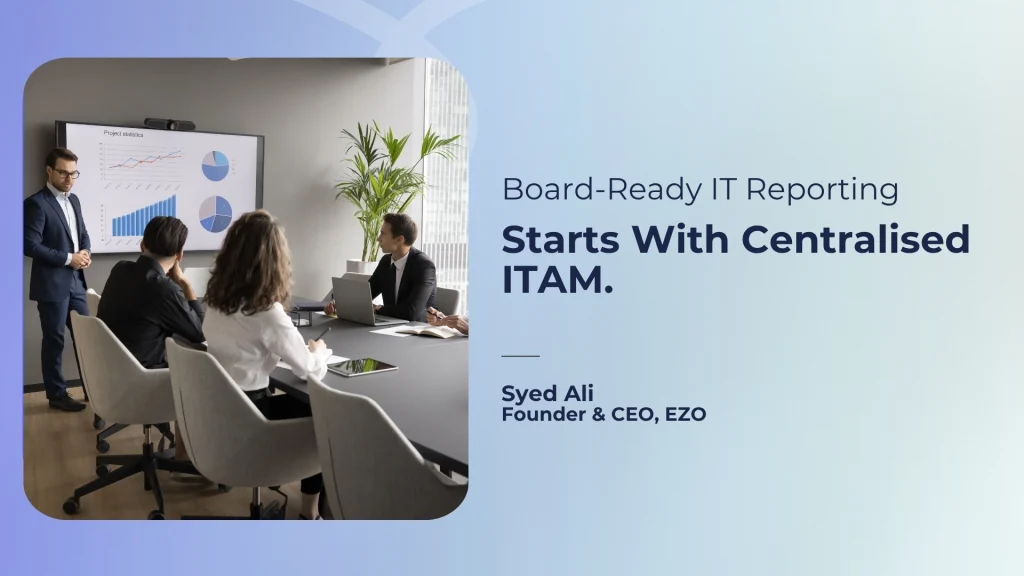
In my experience, board reporting rarely fails because a chart is difficult to read. It fails when a director asks a simple follow-up question:
Where did this number come from?
At that moment, confidence does not come from the presentation. It comes from the records underneath it.
If IT spend is assembled from finance exports, software inventories, device-management tools, and spreadsheets that do not agree, the report may look precise while remaining difficult to defend. A polished dashboard cannot compensate for incomplete ownership records, duplicate software entries, or asset data that was already stale when the report was compiled.
This is why I believe board-ready IT reporting does not begin with reporting software. It begins with a centralized IT asset management foundation.
Centralized ITAM gives the organization a governed view of its hardware, software, SaaS applications, licenses, users, contracts, and lifecycle activity. More importantly, it creates the evidence behind the figures executives are being asked to trust.
A board does not need more IT data
Most IT teams can produce a large amount of data. They can report device counts, ticket volumes, software installations, patch status, and upcoming renewals.
But volume is not the same as usefulness.
A board generally needs IT reporting to answer four business questions:
- What are we spending?
- Where are we exposed?
- What has changed since the last report?
- Can management substantiate the answer?
A count of 4,000 laptops may be operationally useful, but it is not yet a board-level insight. The number becomes meaningful when leadership can see how many are assigned, idle, missing, approaching replacement, outside policy, or supporting critical roles.
The same principle applies to software. Knowing that an organization has 300 applications matters less than knowing which applications are sanctioned, which duplicate one another, which carry sensitive data, which are approaching renewal, and which are no longer being used.
Board-ready reporting converts inventory into cost, risk, and accountability.
Most reporting problems begin as reconciliation problems
The difficulty is that no single operational tool usually holds the entire picture.
An MDM platform may know that a laptop exists and when it last checked in. Procurement may know what it cost. Finance may know when it was capitalized. HR may know which employee should have it. The service desk may hold its repair history. An identity platform may know which applications the employee can access.
Each system may be correct within its own scope. None is necessarily sufficient on its own.
Before a board meeting, someone has to reconcile those records. Duplicate entries have to be removed. Departed employees have to be separated from active users. Installed software has to be matched with entitlements. Subscription costs have to be connected to actual usage.
By the time that work is complete, the resulting report may already describe yesterday’s environment.
SaaS has made the problem more difficult. Software can now enter an organization through department budgets, corporate cards, free trials, browser extensions, and AI-enabled features inside tools the company already owns. In Zylo’s 2026 benchmark, organizations used only about 54% of the licenses they paid for, representing an average of $19.8 million in annual unused-license spend among the organizations included in its dataset.
The issue is not simply that waste exists. It is that many organizations cannot reliably locate it, attribute it, or explain why it continues.
Centralization is necessary, but it is not sufficient
There is an important distinction here.
Putting multiple data feeds into one platform does not automatically create a source of truth. It may simply create a larger collection of conflicting records.
A centralized ITAM system becomes trustworthy only when four disciplines are in place.
1. Every important record has an authoritative source
The organization must decide which system governs each type of information.
An MDM may be authoritative for device configuration. HR may govern employment status. Procurement may govern purchase records. The ITAM platform should reconcile those inputs rather than silently choosing whichever record arrived last.
2. Data freshness is visible
Different sources update at different speeds. That is unavoidable.
What matters is whether the report shows when the underlying information was last refreshed. A number based on data from this morning should not be presented with the same level of confidence as one based on an export from three weeks ago.
3. Conflicts become exceptions, not hidden compromises
When two systems disagree about the owner, status, or location of an asset, the platform should surface the conflict for resolution.
Trust improves when uncertainty is visible. It deteriorates when the reporting system quietly converts uncertainty into false precision.
4. Metric definitions remain consistent
“Active license,” “managed device,” “returned asset,” and “completed offboarding” must mean the same thing from one board meeting to the next.
Otherwise, leadership may think a trend has changed when only the calculation changed.
Centralization therefore needs governance. The platform creates the connected record; ownership and operating discipline make that record defensible.
What changes when ITAM becomes reporting infrastructure
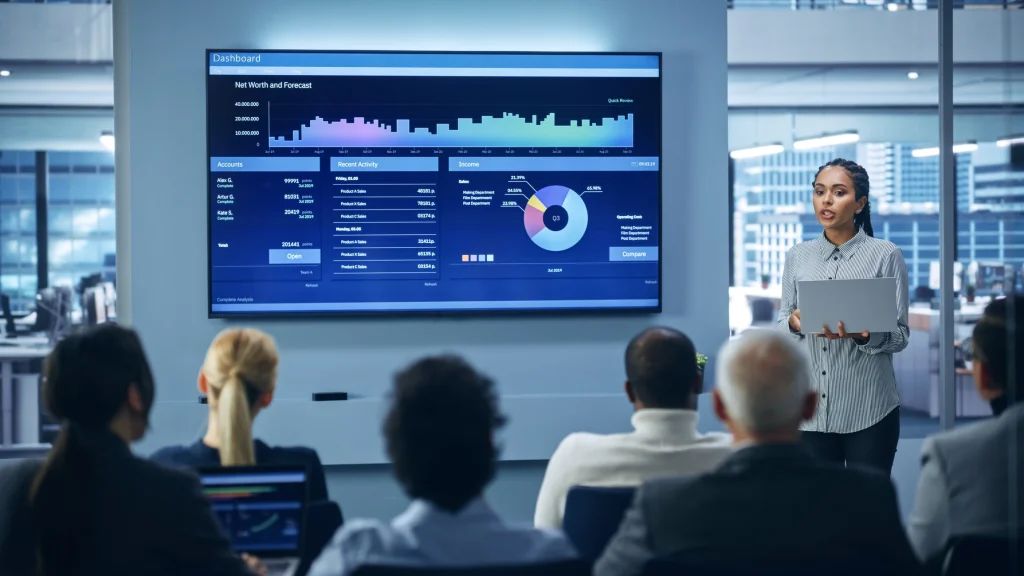
When ITAM is treated as reporting infrastructure rather than administrative housekeeping, four important changes occur.
Spend becomes attributable
Instead of reporting one total software figure, IT can connect spend to applications, contracts, departments, owners, and utilization.
That allows leaders to distinguish between technology that is expensive because it is strategically important and technology that is expensive because no one has reviewed it.
Unused seats, overlapping applications, and unowned renewals become specific actions rather than general concerns.
Risk becomes measurable
An unmanaged device or unsanctioned application is not merely missing from inventory. It may also sit outside normal patching, access, procurement and offboarding controls.
Trend Micro reported that 74% of the cybersecurity leaders it surveyed had experienced an incident associated with unknown or unmanaged assets.
Boards do not expect IT to eliminate every risk. They do expect management to explain the size of the known exposure, the controls in place, and the exceptions still being addressed.
A connected ITAM record makes that discussion more concrete.
Audit readiness becomes an operating state
Audit evidence should not have to be reconstructed from screenshots, email threads and spreadsheets immediately before a review.
Asset ownership, custody changes, license assignments, approvals, lifecycle status and completed actions should be retained as work occurs. That does not replace the auditor’s judgment or satisfy every control automatically. It does make the evidence easier to retrieve, review, and defend.
Accountability crosses departmental boundaries
Many IT control failures occur during handoffs.
HR records that an employee has left. IT disables the primary account. A laptop remains with the employee. A software seat renews three months later. An application owner assumes someone else removed access.
A centralized record connects those actions to the same person and the same event. The organization can see what has been completed, what remains open, and who owns the next step.
What should actually appear in a board-ready IT report?
A board report should not reproduce an IT operations dashboard. It should present a limited number of metrics that explain business impact and control quality.
I would focus on five reporting dimensions.
1. Coverage and confidence
Show what percentage of the estate has been discovered, reconciled, and assigned an owner.
Include the age of the underlying data and the number of unresolved exceptions. This tells the board how much confidence to place in the other figures.
2. Spend and utilization
Report hardware and software spend by category, owner and business function.
Show unused or underused licenses, idle devices, overlapping applications and upcoming renewals where a decision is required.
3. Technology risk
Track unmanaged devices, unsanctioned applications, unsupported systems, material patch exceptions and assets with unclear ownership.
The objective is not to overwhelm directors with vulnerabilities. It is to explain which exposures could materially affect the business and what is being done about them.
4. Lifecycle control
Show whether onboarding, transfers and offboarding are closing correctly.
Relevant measures may include device-recovery rates, outstanding employee exits, license reclamation and overdue asset acknowledgments.
5. Evidence readiness
Report unresolved audit exceptions, missing ownership records and the time required to produce supporting evidence.
A useful board report does not merely say that the organization is audit-ready. It shows why management believes that to be true.
Each measure should include a trend, an agreed threshold and an accountable owner. A number without those elements is only an observation.
The role of technology
Technology matters because manual reconciliation does not scale.
A capable ITAM platform should connect discovery, identity, procurement, software, service and lifecycle data. It should normalize duplicate records, retain change history, expose exceptions and connect an asset to the user, contract, license or ticket that gives it business context.
Disclosure: My company, EZO, provides AssetSonar, and other companies provide ITAM platforms as well. We built the AssetSonar IT Graph around this connected model, linking assets, users, software, licenses, contracts, tickets, locations and lifecycle history so that operational work and reporting draw from the same context.
But the product is not the whole answer.
A platform can identify a duplicate record. Someone must decide how it should be resolved. It can surface an unused license. An owner must determine whether to reclaim it. It can show that an offboarding task remains open. The organization must hold someone accountable for closing it.
Technology provides the structure. Governance turns that structure into trust.
A practical way to begin
Organizations do not need to centralize every IT record before improving board reporting.
Start with the metric the board already questions most.
It may be total software spend. It may be the number of unmanaged devices. It may be offboarding completion or audit evidence.
Then:
- Define exactly what the metric includes and excludes.
- Assign an executive and operational owner.
- Identify the systems that contribute to the calculation.
- Reconcile duplicate, stale and conflicting records.
- Record unresolved exceptions rather than hiding them.
- Report the same definition and trend at the next meeting.
Once one number becomes defensible, apply the same discipline to the next.
Credibility compounds.
The bottom line
Board-ready IT reporting does not start in the boardroom. It starts in the everyday systems and workflows that record what the organization owns, who is responsible for it, what it costs, and how its status has changed.
Centralized ITAM provides the foundation, but centralization alone is not the goal. The goal is a governed chain of evidence from an executive metric back to the operational record that supports it.
The best report is not the one that sounds the most certain.
It is the one that can show where its certainty comes from.