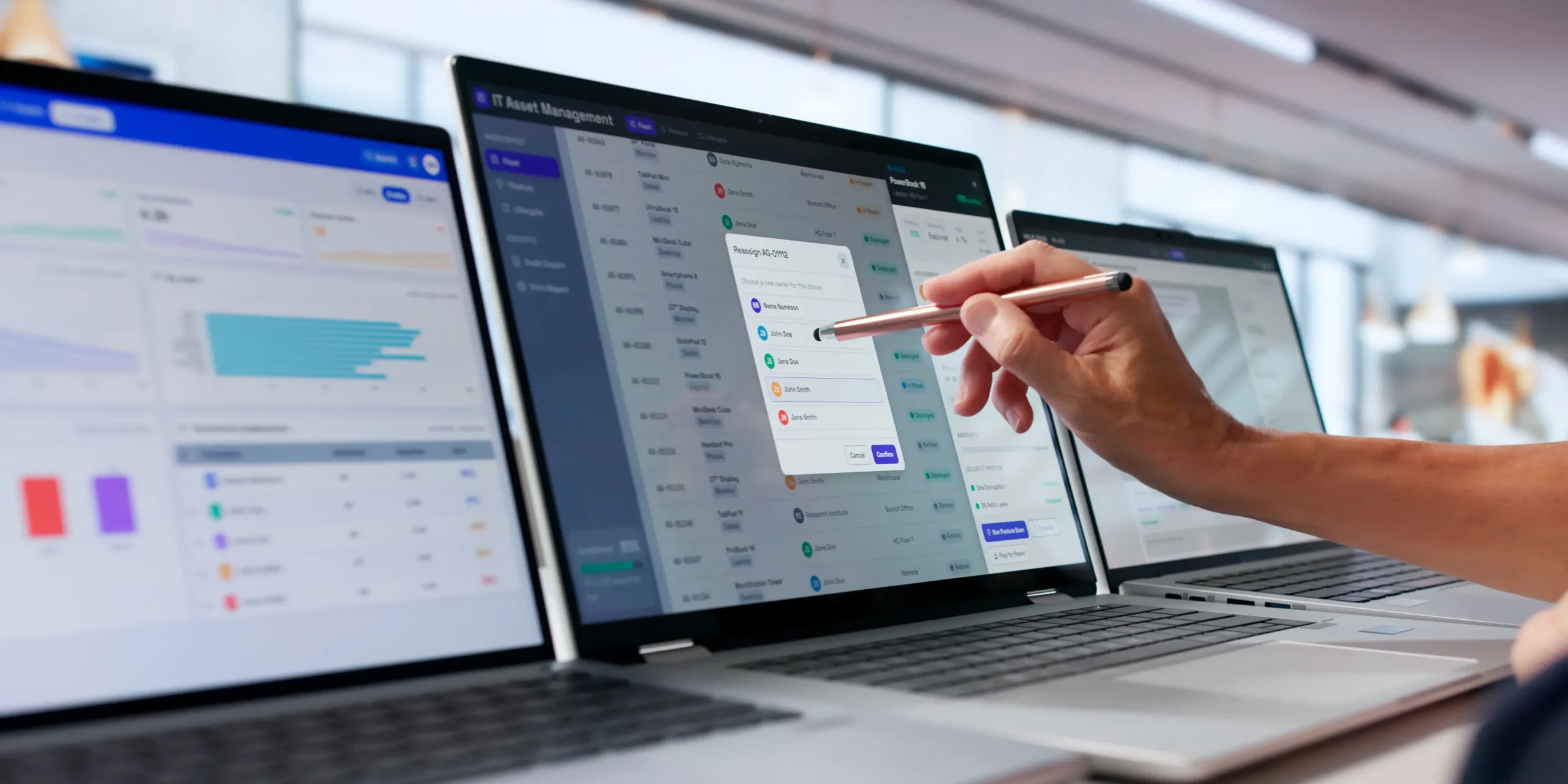
The overnight discovery job ran cleanly. The CMDB now lists every EC2 instance, every Azure VM, the managed databases, the Kubernetes clusters, and the load balancers in front of them. By CI count, the project is a success.
Then a change request arrives to adjust a production database on Thursday night.
IT Operations wants to know which business service depends on that database. Cloud Operations wants to know whether the relationships on the map were verified after last week’s redeployment. The CIO wants to know why answering either question still takes three consoles and a Slack thread.
Discovery found the infrastructure. It hasn’t connected those resources to the services, owners, and change operations decides on. My argument is that this connection, not resource coverage, separates a useful cloud CMDB from an expensive inventory. The strongest platform keeps dependencies accurate enough to support incident, change, and architecture decisions.
What is the difference between CMDB cloud discovery and operational context?
CMDB cloud discovery collects resources from AWS, Azure, and other providers, usually through their APIs, and answers “what exists?” Operational context answers a harder question: “If this resource changes or fails, which service is affected, and who owns the decision?” A CMDB can do the first well and still leave the second to people.
A useful way to separate the two is what I call the Cloud Operations Context Ladder.
- Inventory: what exists? VMs, databases, storage, load balancers, accounts, and subscriptions.
- Infrastructure topology: how are resources structurally connected? A VM in a subnet, the subnet in a VPC or VNet, a load balancer and its targets.
- Runtime dependencies: what communicates with or relies on what? Application to database, service to API, process to process.
- Service context: which components deliver a business service, and who owns it? A customer portal might rely on Azure identity, an AWS API tier, an AWS database, and an on-prem ERP connector.
- Operational action: does the model change what IT does? Incident priority, change-risk review, and migration planning, each with an accountable owner.
Cloud APIs report structure, so API-based discovery on its own mostly reaches level two. Levels three and four need host, process, or traffic evidence plus human service modeling. Incident and change decisions happen at levels four and five.
Where does a cloud CMDB break during a real change?
Consider a hypothetical sequence. A payments team redeploys its AWS API tier behind a new load balancer. The instances are recreated with new IDs. Discovery adds them to inventory correctly on its next run. The team manually modeled the relationship linking the API tier to the Customer Payment Service on the old CIs, which are now retired. Nothing carries it over.
Two days later, the database change goes to review. The change manager runs an impact check. The map shows the database connected to the new API instances, but those instances belong to no business service, so the check returns no affected services. The change is approved as low risk.
Every record was accurate when it was written. The failure lies in the handoff between discovery, the service model, and the change workflow, and no one owned it.
Why does IT Operations need dependency context instead of more inventory?
During an incident, an inventory record tells an operator that a database exists. A dependency chain tells them the database feeds the payments API, which feeds checkout. The first starts a search. The second starts triage.
Root-cause analysis, change impact, and outage scoping all depend on relationships and service ownership. Without either, operators have to rebuild the chain from memory.
Why do cloud dependency maps go stale so quickly?
Cloud resources autoscale, redeploy, get recreated with new IDs, change tags, and pick up new dependencies with each release. A topology correct on Monday can be wrong by Wednesday without anyone touching the CMDB.
For Cloud Operations, the evaluation questions are about upkeep:
- How often does discovery refresh, and can it respond to cloud events instead of a fixed schedule?
- When a resource is recreated, what happens to the relationships and service assignments on the old CI?
- How are conflicting records from multiple sources reconciled, and who reviews the exceptions?
- Can you see what the topology looked like before an incident?
Cloud topology is operational data with a shelf life.
How much should you trust each line on a dependency map?
Each relationship on a map carries a different kind of evidence:
- API-derived: structure reported by the cloud provider. Reliable for architecture, silent about runtime behavior.
- Tag-derived: grouping and ownership inferred from tags. Only as good as your tagging discipline.
- Process-derived: what runs on a host and what it calls. Strong evidence, usually needing agents or credentials.
- Traffic-derived: observed network communication. Strong for runtime dependencies, can miss rarely used paths.
- Manually modeled: relationships an architect declared. Essential for business services, and the first to go stale.
The map is only as trustworthy as the evidence behind each line. A platform that records each relationship’s source, last-verified date, and owner gives reviewers something to check.
Is AWS and Azure discovery the same as cross-cloud dependency mapping?
No. A vendor can discover resources in both AWS and Azure and still hold them as two separate inventories. Cross-cloud dependency mapping means modeling one service chain that runs from AWS to Azure to an on-prem system, with relationships that stay continuous across each boundary. The only convincing demonstration uses your own architecture.
How should a CIO decide how much discovery depth to buy?
Match discovery depth to the operating model. A lightweight connected CMDB fits when you need to link assets, users, software, service records, and basic infrastructure relationships. An infrastructure-discovery platform fits when hybrid visibility, migration planning, and dependency analysis are core. A full ITOM and service-mapping platform fits when high change volume, expensive outages, and automated impact analysis justify the implementation, licensing, and governance overhead. The right level matches your operational risk.
Which CMDB platforms provide the strongest operational cloud context?
These five platforms sit at different points on the Context Ladder. Each description reflects the vendor’s public documentation as of October 2026. Disclosure: I work on AssetSonar at EZO.
ServiceNow: best for full ITOM and service-aware multi-cloud operations
ServiceNow Discovery uses cloud discovery patterns for AWS, Azure, Google Cloud, and other providers, while Service Mapping maps dependencies top-down from an application service (ServiceNow docs). Both feed native incident and change workflows. The trade-off is investment: these functions require an ITOM Visibility subscription (release notes), plus implementation and ongoing governance.
BMC Helix Discovery: best for hybrid and multi-cloud discovery depth
BMC Helix Discovery combines cloud API data with host-level scans and links applications that span more than one cloud provider (BMC docs). It suits organizations that treat discovery accuracy as a strategic priority.
Device42: best for infrastructure-centric discovery and ADM
Device42 offers agentless discovery with optional agents, an application dependency mapping (ADM) module, and impact charts built for migrations and change control (Device42). It sits between lightweight CMDBs and full ITOM suites. Confirm cloud-native dependency coverage for the specific AWS and Azure services you run.
Jira Service Management Assets: best for Atlassian-centric IT Operations
Assets is included in Jira Service Management Standard and above and keeps CMDB context next to incidents and changes (Atlassian). Assets Discovery is an agentless network scanner, and AWS, Azure, and Google Cloud data arrive through import integrations (Atlassian docs). Clarify which relationships those imports create and which your team models by hand.
AssetSonar: best for connected ITAM, ITSM and CMDB context without enterprise ITOM overhead
AssetSonar’s IT Graph connects assets, users, software, licenses, tickets, contracts, and CIs in one model. Its AWS Cloud Integration connects an AWS account through an IAM role, imports supported AWS resources on scheduled syncs, and maps supported relationships between them. Some relationships still need to be added manually (IT Graph guide). EZO’s public CMDB documentation lists AWS as its cloud infrastructure source, so Azure-heavy teams should confirm coverage. AssetSonar is not built to match ServiceNow or BMC on automated multi-cloud dependency mapping. It fits mid-market and growing IT teams that need connected context without a separate enterprise ITOM architecture.
What should you test before buying a cloud CMDB?
Run three tests on your own architecture.
The change test. Give each vendor this scenario: our customer payment service uses an AWS-hosted application tier, Azure identity services, an AWS database, and an on-prem ERP integration, and we are changing the database configuration tonight. Ask which dependencies were auto-discovered, imported, inferred, or modeled by hand, when each was last verified, and which downstream services are at risk. Then ask what happens if the Azure component is recreated tomorrow.
The incident test. Checkout latency spikes. Can the platform show which CIs are implicated, which service is affected, and which recent changes touched those dependencies? Can a service desk agent move from incident to CI to dependencies without leaving the ticket?
The CIO test. What operational problem disappears, such as manual impact analysis or war-room reconstruction? What new burden appears, such as collectors, credentials, reconciliation, and licensing? What decision does this map improve that your monitoring tools cannot already answer?
Which cloud CMDB should you choose?
| If your main need is | Consider | Cloud evidence in public docs (Oct 2026) |
| Deep service-aware ITOM tied to ITSM, with budget for the complexity | ServiceNow | Cloud discovery patterns for AWS, Azure and GCP; Service Mapping |
| Hybrid and multi-cloud discovery depth | BMC Helix Discovery | Cloud API plus host scans; cross-provider application linking |
| Infrastructure discovery and ADM for migration and impact analysis | Device42 | Agentless AWS and Azure discovery; ADM module and impact charts |
| Atlassian ITSM context with moderate CMDB needs | Jira Service Management Assets | AWS, Azure and Google Cloud import integrations |
| Connected ITAM, ITSM and CMDB context without the deepest ITOM topology engine | AssetSonar | AWS Cloud Integration with supported relationship mapping |
What is the one question to ask a cloud CMDB vendor?
Cloud Operations needs a map that stays current. IT Operations needs a map it can act on during an incident or a change. The CIO needs that map to create more value than burden.
So pick one production service and ask: for every dependency on this map, can you show where the evidence came from, when it was last verified, and who is accountable for keeping it right?
Match the CMDB depth to the operations problem
Bring one AWS service architecture to an AssetSonar demo and trace it through the IT Graph. If the connected context covers your incidents and changes, you have your answer. If not, you likely need a deeper standalone ITOM discovery layer. Compare with the Atlassian option. See AssetSonar vs. Jira Service Management.